


16mm vs 14mm Pickleball Paddles

You feel paddle thickness before you fully understand it. One paddle gives you a softer, more settled contact point on dinks and resets. Another comes off the face quicker, feels livelier on speed-ups, and asks you to stay a little more precise. That is the real conversation around 16mm vs 14mm pickleball paddles - not hype, not buzzwords, just how the paddle responds when the ball gets fast and your margin gets thin.
If you are shopping intelligently, thickness is one of the most useful filters you can use. It affects touch, stability, pop, forgiveness, and how confident you feel in different parts of the court. But it is not a magic stat by itself. Core material, face material, foam, thermoforming, swing weight, and handle construction still matter. Thickness helps shape feel. It does not tell the whole story.
16mm vs 14mm pickleball paddles: the real difference
At the simplest level, a 16mm paddle has a thicker core than a 14mm paddle. That extra thickness usually creates a more muted, cushioned feel at contact. Players often describe 16mm paddles as more control-oriented because they absorb a bit more of the ball's energy and can make drops, resets, and soft game exchanges feel easier to manage.
A 14mm paddle usually feels quicker and more explosive. The ball tends to rebound faster off the face, which can translate to more pop on counters, drives, and hand battles. That does not automatically mean more raw power on every shot, but it often means a livelier response that feels more aggressive.
The key word is usually. Paddle construction has changed fast. A well-built 16mm thermoformed paddle with foam support can still bring serious power, and a 14mm paddle with thoughtful weighting can feel surprisingly stable. Thickness matters, but it works together with the rest of the build.
Why 16mm paddles are so popular
There is a reason so many all-court and control-focused players lean 16mm. The thicker core tends to widen the margin for error. Off-center contact often feels less harsh, and the paddle face can stay more composed when you are blocking pace or trying to reset from your feet.
That matters in real points. If you are facing a hard third-shot drive, digging out a volley at your right hip, or trying to keep a backhand dink low under pressure, a 16mm paddle often feels calmer. The ball stays on the face a touch longer, which can help with directional control and touch.
This is also why many improving players do well with 16mm. It gives feedback without feeling punishing. You can develop better soft game habits, trust your drops more, and handle incoming pace with less drama.
That said, 16mm is not automatically the better choice for everyone. Some players hear control and assume they should default to the thickest core available. Then they realize they miss the faster response they liked on flicks, counters, and punch volleys. Control only helps if you like the feel enough to swing with confidence.
Best fit for 16mm
A 16mm paddle tends to suit players who prioritize resets, dinks, consistency, and a bigger sense of stability through contact. It is often a strong match for intermediates who are building a complete game, former tennis players trying to soften their hands at the kitchen, and competitive players who want to absorb pace without losing placement.
Where 14mm paddles shine
A 14mm paddle is often the more lively option. You notice it on fast exchanges first. The face feels crisp, the rebound comes sooner, and the paddle can feel easier to activate when you want to attack. If your game includes aggressive counters, quick hand speed, and taking balls out of the air, 14mm can be a lot of fun.
There is also a case for 14mm if you generate your own touch well already. Skilled players with confident hands do not always need extra cushioning. Some prefer cleaner, more direct feedback because it helps them stay connected to the ball. They want response, not softness.
The trade-off is forgiveness. In many 14mm paddles, mishits are a little more noticeable, and touch shots can require a more disciplined hand. If your contact point wanders or your reset game is still developing, the extra liveliness can occasionally work against you.
Still, that does not mean 14mm is only for advanced players. Plenty of recreational players simply like a more energetic paddle. If a 16mm model feels too muted or sluggish to you, a 14mm option may help your game feel more natural.
Best fit for 14mm
A 14mm paddle tends to work well for players who want pop in hand battles, quicker feedback, and a more aggressive feel on drives and put-aways. It often appeals to singles players, speed-up heavy doubles players, and anyone who dislikes overly dampened paddles.
Control, power, and pop are not the same thing
This is where a lot of paddle comparisons go off the rails. Players use power and pop like they mean the same thing, but they do not.
Pop is the quick rebound you feel on shorter, compact shots like counters, blocks, and hand-fight exchanges. Power is more about put-away potential when you take a fuller swing on drives, serves, and overheads. A 14mm paddle often feels poppier. A 16mm paddle can still generate plenty of power, especially if the paddle has a strong carbon layup, thermoformed structure, or added perimeter stability.
Control is not just softness either. Real control comes from predictability. You want the paddle to respond the same way on clean contact, pressured contact, and slightly off-center contact. Many players find 16mm paddles more predictable in those situations, but again, build quality matters. Cheap thick paddles can feel dead. Well-designed thinner paddles can feel extremely playable.
How thickness affects spin and sweet spot
Thickness alone is not the main driver of spin. Face material and surface texture matter more, especially if you are looking at raw carbon or textured carbon fiber faces. Spin comes from friction, dwell characteristics, and your mechanics. A 16mm paddle may feel like it holds the ball a fraction longer, which some players like for shaping drops and rolling topspin. A 14mm paddle may feel faster through contact and more direct on flicks and attacking rolls.
Sweet spot is a little more connected to thickness, but not perfectly. Many 16mm paddles feel more forgiving across the face because the core and construction help stabilize contact. But foam walls, edge weighting, shape, and balance can do a lot to improve forgiveness on both thicknesses.
That is why smart buyers do not stop at 14mm or 16mm. They ask a better question: what kind of 14mm or what kind of 16mm?
Which one should you actually buy?
If your biggest goal is to improve consistency, especially in the soft game, start by looking at 16mm. It is often the safer recommendation because it gives you more control-oriented feel, more comfort on blocks and resets, and generally better forgiveness for the average doubles player.
If your game is built around attacking, quick exchanges, and an energized response off the face, 14mm deserves real consideration. The paddle can feel faster and more alive, which some players immediately prefer.
If you are stuck between the two, think about the shots that break down most often in your matches. If you pop up resets, struggle to absorb pace, or feel rushed in the transition zone, 16mm probably helps more. If you leave speed-ups short, want easier punch on counters, or feel like your current paddle is too muted, 14mm may be the better move.
You should also be honest about preference. Some players simply play better with a crisp feel. Others need a more plush response to trust their touch. There is no bonus for choosing the thickness that internet debates say is more advanced.
A better way to think about 16mm vs 14mm pickleball paddles
Do not treat thickness like a ranking system where 16mm is for serious players and 14mm is for everyone else, or the other way around. Think of it as a feel and performance lever.
A thicker paddle usually gives you more cushion, more stability, and an easier path to control. A thinner paddle usually gives you more immediacy, more pop, and a more aggressive response. Neither one is automatically better. The right one supports the way you win points.
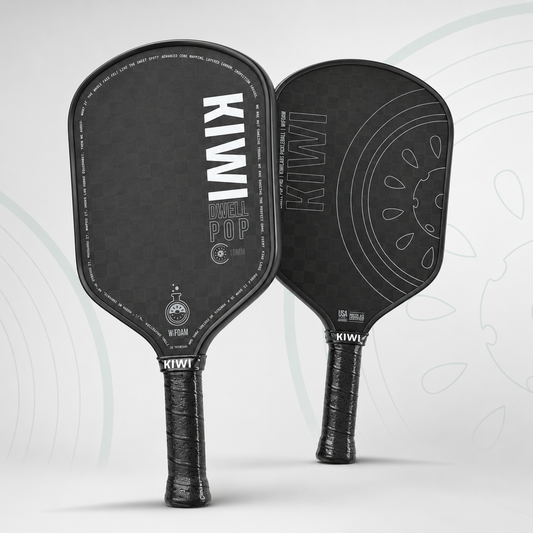
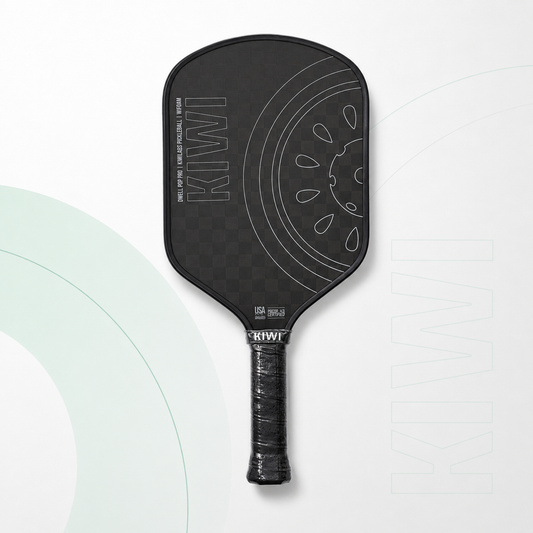
That is also why well-designed brands focus on total construction, not just one spec. At Kiwi Labs Pickleball, the goal is not to sell you a thickness trend. It is to help you get the combination of feel, spin, sweet spot, and value that actually fits your game.
If you want one practical takeaway, use this: choose 16mm when you want the paddle to calm the game down, and choose 14mm when you want the paddle to speed it up. The best paddle is the one that makes your next shot feel simpler, not the one with the loudest marketing attached.