


Best Pickleball Paddle for Beginners

A lot of beginners buy the wrong paddle for one simple reason - they shop for power before they learn what control feels like. That is usually how the search for the best pickleball paddle for beginners gets sidetracked. The right starter paddle should make the game easier, not louder. It should help you find the sweet spot more often, keep resets from popping up, and give you enough forgiveness to build real confidence fast.
That does not mean beginners need a cheap, dead-feeling paddle. It means you need the right mix of control, comfort, spin access, and stability at a price that makes sense. A beginner paddle should support learning proper mechanics, not force you to compensate for harsh feel, a tiny sweet spot, or random inconsistency across the face.
What makes the best pickleball paddle for beginners?
The short answer is balance. Beginners usually improve faster with a paddle that feels stable through contact, offers a generous sweet spot, and does not punish off-center hits. If a paddle is too poppy, too head-heavy, or too stiff, it can make the game feel harder than it is.
Control matters most early on because the first skills that separate a new player from a stuck player are placement, touch, and consistency. You need to be able to block pace, drop balls into the kitchen, and keep serves and returns deep without spraying balls long. A beginner-friendly paddle should help with all of that before it starts chasing maximum put-away power.
Spin also matters, but maybe not in the way marketing makes it sound. You do not need pro-level RPMs on day one. What you do want is a surface that gives you enough grip to learn topspin on serves, shape your returns, and add margin to your drives. That is very different from buying the most aggressive paddle face on the market and assuming it will fix your technique.
Start with feel, not hype
A lot of paddle shopping advice gets buried under buzzwords. Thermoforming, foam injection, raw carbon, unibody construction - these things can matter, but only if they lead to better on-court results for your level.
For most new players, the best first impression comes from a paddle with a controlled response and a larger effective hitting area. When you are still learning timing, ready position, and contact point, forgiveness beats flash every time. You want a paddle that lets you miss slightly and still stay in the rally.
This is where many overpriced paddles miss the mark. They sell advanced tech as if every player needs the same build. That is just not true. The best pickleball paddle for beginners is the one that helps you hit cleaner shots more often, not the one with the most aggressive spec sheet.
Weight: lighter is not always better
Many beginners assume a lightweight paddle is the safest choice. Sometimes it is, especially if you have wrist or elbow concerns, but lighter does not automatically mean more beginner-friendly.
Very light paddles can feel quick in hand, but they may also feel less stable against hard shots. That instability shows up on blocks, volleys, and off-center contact. A slightly heavier or more balanced paddle often gives beginners a more planted feel, which can improve consistency right away.
The sweet spot for many new players is a midweight paddle that feels maneuverable without getting pushed around. Enough mass helps with depth and stability. Too much can slow hand speed and tire you out. It depends on your strength, reaction speed, and whether you play mostly doubles or singles, but balance matters more than chasing the lightest number on the label.
Shape and sweet spot matter more than most beginners realize
Elongated paddles get attention because they can offer extra reach and leverage, but that does not make them the default best choice for a new player. They often come with a narrower face and a less forgiving sweet spot.
A wider or more standard shape is often easier to learn with because it gives you more margin across the face. That helps on dinks, resets, and defensive counters when contact is not perfect. Beginners miss the center more often. That is normal. A paddle that stays playable on those slight misses will keep you developing instead of getting frustrated.
If you are choosing between reach and forgiveness, forgiveness usually wins for a first paddle. You can always move into a more specialized shape later once your contact quality improves.
Surface and core: what actually helps you improve
This is where material quality starts to matter. A beginner paddle should not feel slick, hollow, or unpredictable. Better surfaces and better core construction usually create a more consistent response, and consistency is everything when you are learning touch.
Carbon fiber faces are popular for good reason. They tend to offer a controlled feel with useful spin potential, especially compared with entry-level fiberglass paddles that can feel jumpy. Raw carbon surfaces in particular can help beginners learn to shape the ball without feeling overly wild.
Core construction matters too. A well-built honeycomb core with good stability helps soften impact, expand usable feel across the face, and reduce that cheap trampoline effect that sends blocks flying. You do not need the most advanced build on the market, but you do want a paddle that feels solid, not flimsy.
That is one reason more value-focused players are skipping legacy brand markups and looking harder at brands that offer premium materials at realistic prices. If you can get a carbon fiber paddle with a big sweet spot and controlled feel without overpaying, that is a smarter beginner buy than a bargain paddle you outgrow in a month.
Grip size and comfort are easy to overlook
If your paddle grip feels wrong, everything feels harder. A grip that is too large can reduce wrist mobility and make spin harder to generate. One that is too small may feel unstable unless you build it up.
Most adults will do well in a standard grip range, but comfort is personal. The best beginner paddle should feel secure in your hand without forcing you to squeeze too tightly. If you finish a session with hand fatigue, forearm tension, or discomfort around the elbow, your setup may be working against you.
Handle length can matter too. Players with tennis backgrounds sometimes prefer extra room for a two-handed backhand, while many pure beginners care more about simple comfort and control. Again, it depends. There is no one-size-fits-all answer, but there is a wrong fit for your hand, and it shows up fast.
What beginners should avoid
The biggest mistake is buying for the player you hope to be six months from now instead of the player you are today. Ultra-powerful paddles can be fun in a demo, but they often make short game control harder. Tiny sweet spots can feel exciting on flush contact, then brutal everywhere else.
You should also be careful with ultra-cheap starter sets. They may get you on court, but many have poor face grit, weak durability, and inconsistent feel. That kind of paddle can hide your progress because you never get reliable feedback from shot to shot.
If you are serious enough to research gear, buy something that gives you room to grow. Not the most expensive option. Not the cheapest. Just a paddle with honest materials, stable construction, and enough control to help your game mature.
How to choose the right beginner paddle for your game
If your main goal is keeping the ball in play and building touch, lean toward a control-first paddle with a wide sweet spot and a softer feel. If you already have racquet sports experience and generate your own pace, that is still probably the right starting point. Skilled hands usually benefit from control first because power can already come from mechanics.
If you know you like driving the ball and playing aggressively, you can move slightly toward an all-court paddle with a little more pop, as long as it still feels stable and forgiving. The key is avoiding extremes. Beginners rarely need max power or max spin at the expense of feel.
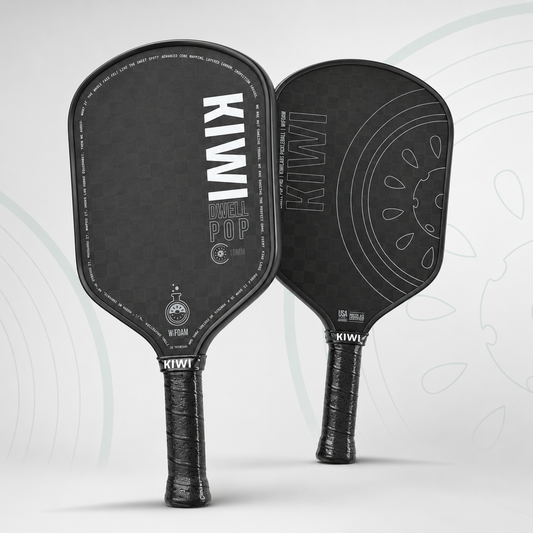
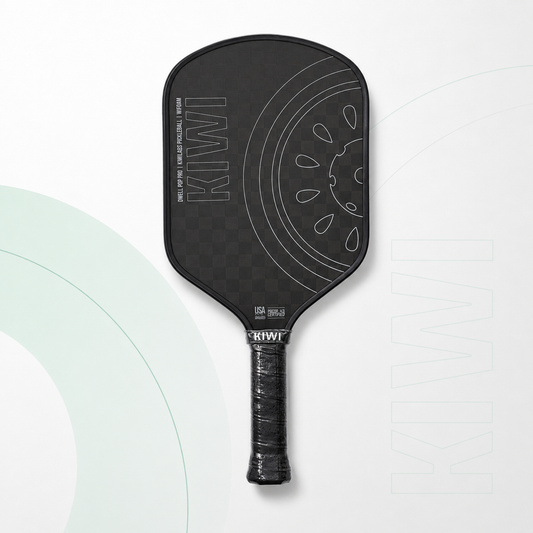
This is also where a well-designed brand lineup matters. A company that clearly separates beginner-friendly control paddles from advanced high-pop models is doing shoppers a favor. Kiwi Labs Pickleball is one example of that approach, offering paddles that span from accessible, confidence-building options to more advanced builds for players who want extra pop, spin, and speed later on.
The real answer to the beginner paddle question
The best pickleball paddle for beginners is usually not the paddle with the loudest marketing, the highest price, or the most extreme performance claim. It is the paddle that makes the game feel more repeatable. Better contact. Better resets. Better depth. Better confidence under pressure.
When your paddle helps you control the easy ball, defend the tough one, and learn what a clean strike should feel like, improvement gets a lot less mysterious. Pick one that supports your game now, and your future self will have a much better foundation to build on.