
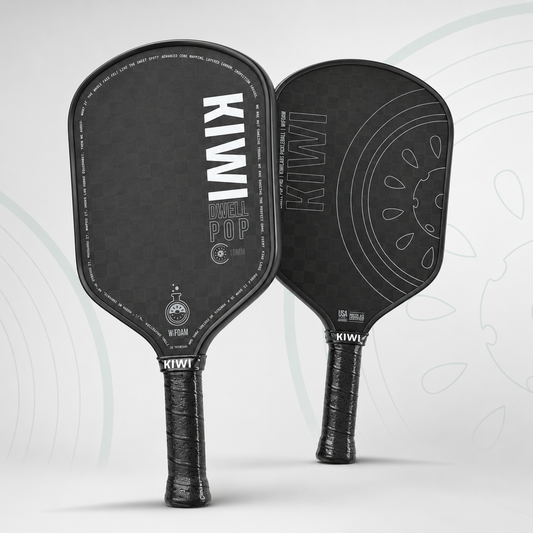


Best Pickleball Paddle for Spin in 2026

If your third-shot drop keeps floating or your serve sits up instead of kicking through the court, you are not really shopping for hype - you are shopping for the best pickleball paddle for spin that matches how you swing. That distinction matters, because spin is not just about a gritty face. It is about how long the ball stays on the paddle, how confidently you can accelerate through contact, and whether the paddle gives you enough control to swing aggressively without spraying shots.
A lot of players get sold on one simple idea: more texture equals more spin. That is only part of the story. Surface texture helps, but spin comes from a full package that includes face material, dwell time, paddle shape, balance, swing weight, and even core construction. If one of those pieces is off, the paddle may look like a spin machine on paper and still feel average in your hand.
What makes the best pickleball paddle for spin?
Start with the face. Raw carbon fiber has become the standard for serious spin players because it tends to grip the ball better and deliver a more connected feel than smoother fiberglass faces. That does not mean every raw carbon paddle is automatically great. Some generate excellent bite but feel too stiff or too dead, which can make it harder to shape the ball consistently.
The next piece is dwell time. This is the tiny window where the ball stays on the face before leaving. More dwell time usually gives you a better chance to brush and roll through contact, especially on drops, resets, and topspin drives. Thermoforming, foam edge walls, and full-foam designs can all influence this feel. Some constructions add stability and pocketing. Others create extra pop, which is useful, but can shorten the sensation of control if the paddle is too lively.
Shape also matters more than most players think. Elongated paddles often help with spin because they give you extra reach and can reward faster hand speed. But they usually come with a slightly smaller sweet spot and a higher swing weight. Hybrid and wider-body shapes can feel more forgiving, which helps players produce repeatable spin even if the maximum RPM ceiling is a bit lower.
Then there is balance. A head-heavy paddle may help some players drive through the ball with more force, but it can also slow down hand speed at the kitchen. A more balanced paddle can make it easier to accelerate quickly and brush up the back of the ball. For many players, usable spin comes from that repeatable acceleration, not just raw paddle grit.
The biggest mistake people make when buying for spin
They buy the most aggressive paddle they can find, then wonder why their touch disappears.
Spin and control are connected. If a paddle gives you huge cut on serves but feels jumpy on resets, that trade-off may cost you more points than the extra RPMs are worth. The best spin paddle is not necessarily the harshest or most textured one. It is the one that lets you swing with confidence from every part of the court.
That is especially true for intermediate players. If you are still building consistency, a paddle with slightly more forgiveness and a stable sweet spot often leads to better real-world spin than a demanding paddle that only shines on perfect contact. Advanced players can usually handle a narrower margin for error because their mechanics are cleaner and their contact point is more repeatable.
How to judge spin beyond the marketing
Ignore exaggerated claims and pay attention to what happens on four shots: topspin serves, roll volleys, dipping drives, and sliced returns. Those shots expose whether a paddle creates true ball bite or just feels crisp.
A good spin paddle should let you hit a serve that jumps after the bounce, not just a flat serve with pace. On roll volleys, it should help you bring the ball down inside the baseline without feeling like you have to over-muscle the shot. On drives, you want enough bite to shape the trajectory and enough stability to keep the face from twisting. On slices, the paddle should stay predictable instead of floating the ball.
If a paddle only feels good on full swings but gets vague in transition, it is not as complete as the marketing suggests. The best spin setup supports offense and touch.
Which paddle traits fit which player?
If you are a newer player, the best pickleball paddle for spin is usually not the most explosive option. Look for a larger sweet spot, balanced weighting, and a raw carbon face that helps you learn topspin mechanics without punishing mishits. You want easy access to spin, not a paddle that demands pro-level timing.
If you are an improving intermediate, this is where the choice gets more interesting. A thermoformed paddle with a responsive core can give you stronger drives and heavier serves, but only if you still feel confident resetting pace. Many players in this range do best with an all-court paddle that blends spin, stability, and moderate pop.
If you are a more advanced player, you can be pickier about feel. Some want maximum whip through the contact zone with an elongated shape. Others want extra dwell time and a plush response so they can manipulate the ball at the kitchen. At that level, the best paddle for spin depends on whether you create pressure with speed, shape, or both.
Surface grit matters, but it is not forever
This part gets glossed over too often. Spin surfaces wear down. Some paddles hold their bite longer than others, but no textured face stays fresh forever. That is another reason not to chase spin through one feature alone.
A well-built paddle should still help you create shape through its feel, balance, and construction even as the face breaks in. If a paddle relies entirely on an ultra-gritty top layer, its performance may drop faster than you expect. Better designs create spin with both texture and mechanics-friendly response.
That is one reason many value-focused players are frustrated with legacy brand pricing. Paying premium money for branding is one thing. Paying premium money for a paddle that loses its magic too quickly is another. Smart buyers should care about long-term playability, not just out-of-the-box excitement.
Why carbon fiber and foam are changing the spin conversation
Modern carbon fiber paddles are not just about stiffness anymore. The better designs use carbon strategically to improve feel, ball pocketing, and directional consistency. Add foam around the perimeter or throughout more of the structure, and you can get a paddle that stays more stable through contact while expanding the sweet spot.
That matters for spin because off-center contact kills shape. If the paddle twists, you lose control of the face angle and the quality of the brush. Stability keeps the contact cleaner, and cleaner contact means more reliable spin. Full-foam and foam-enhanced builds can also create a more connected response that helps players feel the ball instead of just slapping at it.
The catch is that not every foam-heavy paddle feels the same. Some lean plush and controlled. Others feel springy. Neither is automatically better. It depends on whether you want your spin paddle to prioritize resets and rolling counters or speed-ups and aggressive drives.
A practical way to narrow your choice
Think about the shots you win with most often. If you win with heavy serves, dipping drives, and aggressive counters, a faster, more responsive paddle with a spin-friendly face probably makes sense. If you win through drops, resets, and kitchen pressure, you may benefit more from a paddle with longer dwell time and a softer, more controlled response.
Also be honest about your current level. Buying a paddle for the player you want to become can work, but only if the paddle still supports the player you are today. There is no prize for choosing a demanding shape or construction that makes the game harder than it needs to be.
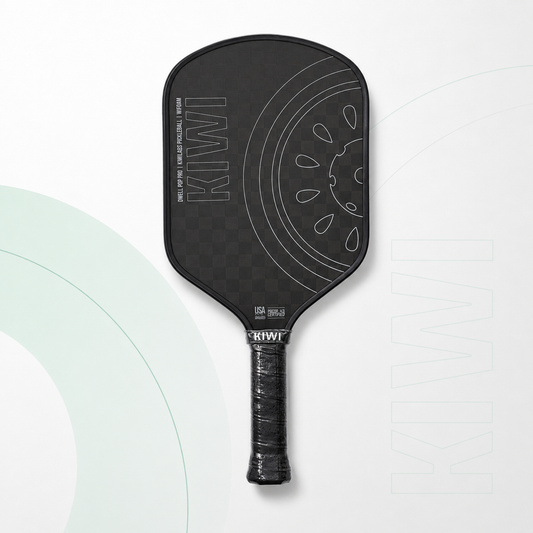
Brands that actually explain materials and performance trade-offs tend to be more useful than brands that just throw around buzzwords. Kiwi Labs has leaned into that more transparent approach, which is good for players who want to understand what they are paying for instead of just trusting inflated pricing and vague claims.
So what is the best pickleball paddle for spin?
The honest answer is that there is no single best paddle for every player. The best pickleball paddle for spin is the one that combines a spin-friendly face with the right blend of dwell time, stability, sweet spot size, and swing speed for your game.
If you are still developing consistency, lean toward forgiveness and control. If you are attacking more and generating your own pace, you can move toward a livelier build with faster acceleration. Either way, do not reduce spin to surface roughness alone. Real spin comes from a paddle that helps you swing freely, contact cleanly, and shape the ball on purpose.
The right paddle should make your topspin feel heavier, your slices stay lower, and your confidence show up shot after shot - not just for the first few games, but after the honeymoon period is gone.