


Best Pickleball Paddle for Tennis Elbow

That sharp ache on the outside of your elbow usually shows up after the game, not before it. One bad session becomes three, then suddenly you are searching for the best pickleball paddle for tennis elbow because your drives still feel fine for 20 minutes, but resets, serves, and off-center hits start talking back.
The hard truth is that no paddle can cure tennis elbow. If your arm is irritated, mechanics, recovery, and total workload matter too. But paddle choice absolutely changes how much shock reaches your arm, how hard you have to squeeze, and how punishing mishits feel. That makes the right paddle less of a luxury and more of a smart way to keep playing.
What causes elbow pain in pickleball?
Tennis elbow is usually tied to overuse of the forearm tendons, especially from repetitive gripping and impact. In pickleball, that stress builds fast because the game is full of short swings, quick reactions, firm blocks, and repeated contact in front of the body. If your paddle is too stiff, too head heavy, or has a tiny sweet spot, your arm often pays the price.
A lot of players assume the problem is only power. It is not that simple. Some powerful paddles feel surprisingly stable, while some control paddles still send a lot of vibration into the arm if they twist on contact. The better question is not just, "How powerful is this paddle?" It is, "How much effort and shock does this paddle demand from my arm over two hours?"
How to choose a pickleball paddle for tennis elbow
If you are shopping for a pickleball paddle for tennis elbow, start with feel and forgiveness before you chase raw pop. The specs that matter most are weight, balance, grip size, face material, and overall stability.
Weight matters, but lighter is not always better
Many players with elbow pain assume they should buy the lightest paddle possible. Sometimes that helps, especially if a heavier paddle is fatiguing your forearm late in games. But super light paddles can also create another problem - they may feel less stable on contact and force you to grip harder to control the face.
For most players dealing with elbow issues, the sweet spot is often in the light-to-midweight range, roughly around 7.7 to 8.2 ounces, depending on balance and swing style. Enough mass helps the paddle absorb impact, but not so much that your forearm and wrist are doing extra work every point.
Balance can be as important as static weight
Two paddles can weigh the same on a scale and feel completely different in your hand. A head-heavy paddle asks more from your arm during hand battles, flicks, and quick exchanges. That extra leverage can irritate the elbow, especially if you already feel soreness after fast play.
A more evenly balanced paddle or one that carries less mass in the head usually feels easier to maneuver and easier on the arm. If your pain spikes during speed-ups and volleys, balance deserves serious attention.
A larger sweet spot reduces punishment on mishits
This is one of the biggest factors people miss. Mishits are brutal when you have tennis elbow because the paddle twists, vibration jumps into the forearm, and your tendons absorb the mess. A paddle with strong stability and a generous sweet spot helps flatten that out.
That is why many players with elbow pain do better with paddles designed for forgiveness rather than ultra-narrow, highly specialized shapes. You can still get spin and plenty of performance, but a more stable face gives your arm fewer ugly surprises.
The best paddle features for tennis elbow
Softer feel beats harsh feedback
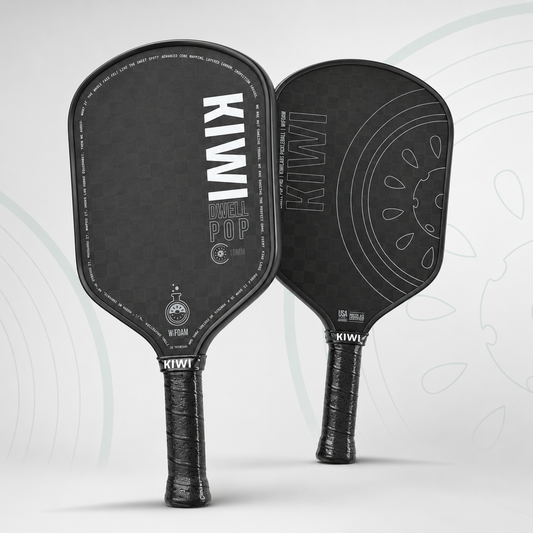
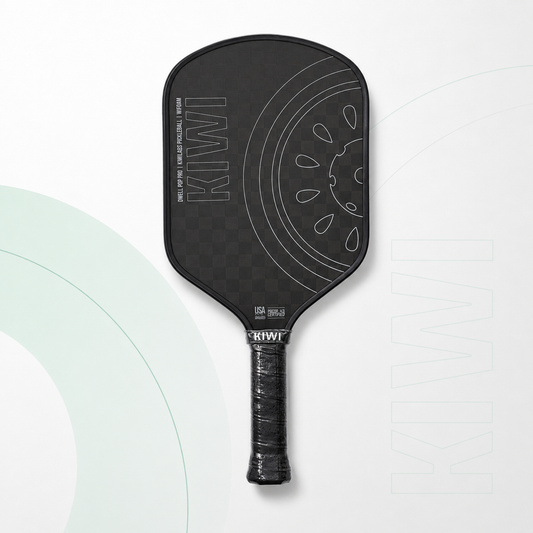
When players say a paddle feels "soft," they usually mean impact feels more muted and less jarring. That can be a huge win for irritated elbows. Raw carbon fiber faces, foam-enhanced constructions, and paddles built for dwell time often produce a more controlled response than stiff, overly crisp faces.
This does not mean every soft-feeling paddle is low performance. A good modern build can still give you spin, put-away ability, and plenty of pace. The difference is that the ball stays on the face a touch longer, and the hit feels less like a slap to the arm.
Stability is your friend
A stable paddle resists twisting. That matters every time you contact the ball outside the center, which is often more than players think. If your elbow flares up even on routine blocks, stability may matter more than a few extra RPMs of spin.
Thermoformed paddles can be a mixed bag here. Some are very lively and crisp, which certain players love, but if the build is too rigid for your arm, it may not be the best fit. Others combine foam around the perimeter and more refined layups to create a bigger sweet spot and a less harsh response. That is the kind of construction worth looking for.
Grip size changes how hard you squeeze
If the grip is too small, many players unconsciously clamp down harder to stabilize the paddle. That extra tension travels straight into the forearm. If the grip is too large, hand and wrist mobility can suffer, which also creates strain.
The right grip size lets you hold the paddle securely without death-gripping it. If you are between sizes, adding a thin overgrip can sometimes be the easiest way to fine-tune comfort without changing paddles.
What to avoid if your elbow already hurts
The wrong setup can keep the cycle going. Very stiff paddles with a hard, pingy feel can aggravate symptoms, especially if you hit hard and often. Extremely head-heavy builds can wear down the forearm over a long session. Tiny sweet spots make every mishit more expensive.
Also watch out for the mindset that more power solves everything. If a paddle gives easy pace but makes your arm work harder to control resets, blocks, and touch shots, the trade-off may not be worth it. For a lot of players with elbow pain, the best-performing paddle is the one that lets them swing easier, defend cleaner, and stay on court longer.
A smart setup is more than just the paddle
The best pickleball paddle for tennis elbow will help, but it works best as part of a broader fix. Technique matters. If you are arming the ball instead of using your body, your elbow keeps getting overloaded no matter what paddle you buy.
Stringent, wristy roll shots and late contact can also make things worse. So can playing through fatigue. Once your forearm is cooked, even a forgiving paddle cannot fully protect you from bad contact and tension.
It also helps to check your grip wrap and overgrip condition. A slick handle makes you squeeze harder. A fresh overgrip is cheap insurance for both comfort and control.
Who should choose control over pop?
If your elbow pain is active right now, lean toward control, softness, and stability. You want a paddle that keeps the ball on the face a little longer, gives you a wider margin on resets, and does not feel harsh when you miss the center. That usually means fewer fireworks on full swings, but also less strain over the course of a match.
If your elbow is mostly recovered and you just want to avoid another flare-up, you may be able to handle a more poppy paddle, provided it still has good balance and enough forgiveness. This is where player type matters. A former tennis player with fast hands and compact mechanics may tolerate a livelier build better than a newer player who hits late and off-center.
What a good arm-friendly paddle should feel like
You should notice three things pretty quickly. First, the paddle should feel easy to maneuver without making your forearm tense up. Second, off-center hits should feel more muted and less twisty. Third, you should not need to grip the handle like you are hanging from a cliff.
That combination is what many serious players are actually chasing when they say they want comfort. Not a mushy paddle. Not a dead paddle. A paddle that gives control, spin, and enough put-away power without beating up the arm.
Brands building with modern carbon fiber layups and foam-enhanced perimeter designs are moving in the right direction here, especially when they focus on dwell time and sweet spot size instead of just marketing maximum power. That is a big reason many informed players now look past legacy price tags and focus harder on construction details.
Final thought on finding the right fit
If your elbow is barking, do not shop for hype. Shop for a paddle that feels stable, comfortable, and easy to swing for two hours, not just one that looks explosive in a review clip. The right choice will not just help you play better - it can help you keep playing at all, which is the whole point.