
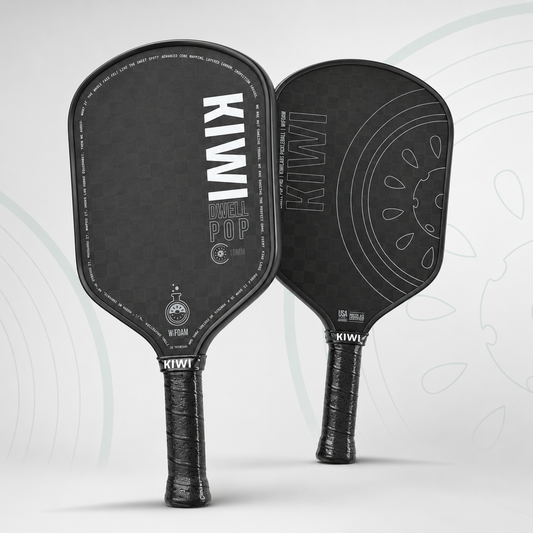
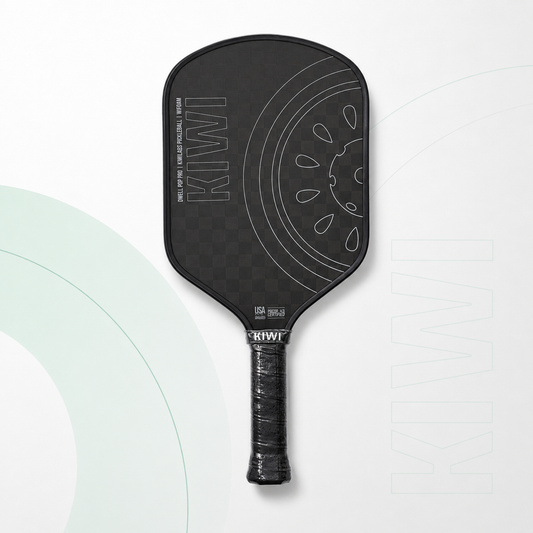


Carbon Fiber vs Graphite Pickleball Paddles

You feel it fastest on resets. One paddle seems to grab the ball for a split second and send it back with confidence. Another feels crisp, fast, and a little less forgiving when your contact is off. That is the real conversation behind carbon fiber vs graphite pickleball paddles - not just what the face is made of, but how that material changes spin, control, pop, and trust under pressure.
A lot of paddle marketing muddies this topic. Brands throw around material names as if they tell the whole story, when the face material is only one part of performance. Core thickness, layup, foam, thermoforming, surface texture, and paddle shape all matter. Still, if you are comparing carbon fiber and graphite, there are clear differences worth understanding before you spend premium money.
Carbon fiber vs graphite pickleball paddles: what changes on court?
The simplest way to frame it is this: carbon fiber paddles are usually chosen for spin, control, and a more connected feel, while graphite paddles are often associated with a lighter, crisp response. That does not mean every carbon paddle is soft or every graphite paddle is poppy. It means the material tends to push the paddle in those directions.
Carbon fiber is known for strength and stiffness, and in pickleball it is often paired with textured or raw surfaces that help players create heavy topspin and slice. It also tends to produce a more stable, confidence-building feel, especially when the paddle is built for dwell time and control.
Graphite, by contrast, has long been popular because it is light and responsive. Many graphite-faced paddles feel quick in the hand and clean off the face. For some players, that translates to easy hand speed and a snappy response at the kitchen. For others, especially players trying to improve consistency, it can feel less planted and less spin-friendly than modern carbon constructions.
Why carbon fiber has taken over premium paddle design
There is a reason so many high-performance paddles now lean into carbon. Modern players want more than a paddle that simply feels light. They want spin on serves, shape on drives, confidence on drops, and enough forgiveness to survive fast exchanges. Carbon fiber has become a favorite because it supports those goals well when the rest of the paddle is designed correctly.
Raw carbon surfaces are a big part of that shift. They tend to create stronger ball bite than many traditional graphite finishes, which helps players generate more topspin and keep aggressive shots in play. That matters whether you are a 3.0 player trying to keep your third-shot drive from sailing long or a stronger player looking to pressure opponents with heavier pace and shape.
Carbon also tends to pair well with control-focused builds. When the face, core, and perimeter are engineered together, you often get a bigger effective sweet spot and a more predictable launch. That predictability is huge. Better players do not just want power - they want to know what the ball is going to do when they speed one up, block a drive, or feather a dink crosscourt.
That is where a lot of legacy graphite messaging starts to feel dated. Lightweight feel is nice, but most players improve faster with stability, usable spin, and consistency across more parts of the face.
Where graphite pickleball paddles still make sense
Graphite is not obsolete. It still has a place, and pretending otherwise would be pure marketing noise.
If you like a very quick, crisp paddle through the air, graphite can be appealing. Some players with compact swings enjoy the immediate response, especially in hand battles where paddle speed matters. Players who do not rely heavily on spin and prefer a simpler, firmer feel may also like graphite just fine.
Graphite can also work for newer players who want a paddle that feels maneuverable and uncomplicated. If someone is coming from tennis and naturally creates enough pace, they may prioritize touch and hand speed over maximum surface bite.
The trade-off is that many graphite paddles do not offer the same modern spin ceiling or the same plush, controlled pocketing feel players now expect from advanced carbon builds. If you are chasing better resets, heavier serves, or more confidence on dipping drives, graphite may start to feel limiting as your game develops.
Spin, control, and power in the carbon fiber vs graphite debate
For most buyers, this is the section that decides it.
Spin
Carbon fiber usually wins here, especially when the face uses a raw or performance-textured carbon surface. The ball tends to stay on the face just long enough to let you shape topspin and slice more effectively. That helps on serves, passing shots, rolls, and aggressive third-shot drives.
Graphite can still generate spin, but many graphite paddles feel smoother and less grabby. If spin is one of your top buying priorities, carbon is generally the stronger bet.
Control
Control is a little more nuanced because control is not just softness. Real control comes from predictability, stability, and confidence when you are stretched or under pace. Carbon fiber paddles often feel more composed in these situations, particularly on blocks, drops, and resets.
Graphite can feel accurate in clean contact situations, but mishits often tell the real story. If the paddle twists more or feels less stable outside the center, your control disappears fast. That is why many players moving up in skill level end up preferring carbon-based paddles with stronger all-court balance.
Power and pop
This one depends heavily on construction. A thermoformed carbon paddle can absolutely deliver serious power and pop. A softer carbon control paddle might not. Likewise, some graphite paddles feel crisp and lively, but not necessarily heavy through the ball.
So if you are asking which material is more powerful, the honest answer is that build matters more than the label. Face material influences feel, but power comes from the whole paddle. That said, carbon gives brands more room to tune for both spin and power without sacrificing too much control.
Weight, feel, and forgiveness
Players often assume graphite means lighter and carbon means heavier. That is too simplistic. Both materials can be used in paddles across a similar weight range. What changes more noticeably is feel.
Graphite often feels crisp, fast, and direct. Carbon more often feels solid, planted, and confidence-inspiring. If you like a paddle that stays steady when absorbing pace, carbon has a clear advantage in many modern designs.
Forgiveness is also where carbon-focused paddles tend to separate themselves. Not because carbon automatically creates a huge sweet spot, but because many of today’s better carbon paddles are built with technologies that improve stability and expand usable performance across the face. That matters more than spec-sheet buzzwords. It shows up when your block stays low even if contact is not perfect.
Which players should choose carbon fiber?
If you care about spin, want more control on touch shots, or are trying to build an all-court game, carbon fiber is usually the smarter investment. It especially suits players who want a paddle that helps them improve, not just one that feels good for five minutes in a warmup.
It also makes sense for players who are tired of paying premium prices for outdated paddle tech. Material quality should lead to better performance, not inflated margins. That is one reason brands like Kiwi Labs have pushed hard on advanced carbon builds with more transparency and better value.
Which players should choose graphite?
If you prefer a lighter, crisper response and your game depends more on quick hands than heavy spin, graphite can still be a good fit. It may also appeal to players who want a more straightforward feel and do not need the latest surface tech.
Just be honest about your goals. If you are actively trying to improve your serves, shape your drives, and add confidence to resets, you will probably outgrow a basic graphite paddle sooner than you think.
The better question than carbon fiber vs graphite pickleball paddles
The smarter question is not just which material is better. It is which build helps your game most right now.
A well-made carbon paddle can offer elite spin, strong control, better forgiveness, and plenty of pop when the construction is dialed in. A graphite paddle can still feel fast and clean, but for many players, it no longer offers the best mix of performance and value.
If you are choosing with your actual game in mind instead of getting pulled around by marketing language, carbon is usually the stronger modern option. Not because graphite is bad, but because today’s best carbon paddles do more of what most players are trying to do on court. And when your paddle helps you hit a heavier serve, reset one more ball, and trust your hands in a firefight, that difference stops feeling theoretical pretty quickly.