


Control Paddle vs Power Paddle

You feel it by the third game. One paddle keeps your drops low, your resets soft, and your dinks predictable. Another makes serves jump, drives come off hotter, and counters feel easier to finish. That is the real control paddle vs power paddle question - not which one is better, but which one gives you the shots you actually need most.
A lot of brands oversimplify this. They label one paddle "control" and another "power" as if those are fixed categories. In real play, it is more nuanced. Paddle construction changes how the ball sits on the face, how quickly it rebounds, how stable the paddle feels on contact, and how much effort you need to create pace. Those details matter a lot more than a marketing tag.
Control paddle vs power paddle: what changes on court?
A control paddle usually gives you a softer, more connected feel. The ball tends to stay on the face a little longer, which players often describe as dwell time. That extra pocketing can make drops, resets, and directional placement feel easier. If you miss long in transition or struggle to take speed off hard shots, control-oriented paddles often help immediately.
A power paddle is built to return more energy to the ball. You do not need as full a swing to create depth or pace, especially on drives, serves, overheads, and putaways. If you often feel like you have to swing hard just to keep opponents on defense, a power-oriented setup can raise your ceiling.
The trade-off is simple, but not always comfortable. More power can reduce forgiveness on soft shots. More control can leave you working harder for offense. That is why the best choice depends on where you lose points.
What makes a paddle feel more control-oriented?
Control is not just "less power." It usually comes from a mix of face material, core response, paddle thickness, and overall feel through contact.
Raw carbon fiber faces are a big part of the conversation because they can deliver both spin and a more connected response. Spin helps control, especially on drops, rolls, and dipping drives, because it gives you more margin. A paddle with a grippy carbon face can still have pop, but if the construction leans softer and more stable, it often lands in the control camp.
Thickness matters too. Thicker paddles often feel plusher and absorb pace better, which is why so many touch-focused players prefer them. They can make resets easier when you are absorbing hard balls in transition. Stability also plays a role. A paddle that stays steady through off-center contact usually gives you more predictable placement, and predictability is control.
Swing weight is another underrated factor. A paddle that moves a little slower through the air may feel more solid and stable, but if it is too sluggish for your hands, you might actually lose control in fast exchanges. True control is not only about softness. It is about being able to repeat your mechanics under pressure.
What makes a paddle feel more powerful?
Power comes from rebound efficiency. Some paddles launch the ball faster because the face and core return energy more aggressively. Thermoformed construction, firmer feel, and more pop off the face often push a paddle toward the power side.
That does not mean every power paddle is wild or hard to use. The best ones pair pop with enough sweet spot and spin to keep the ball manageable. But there is usually a more lively response, especially when you block, counter, or take the ball out of the air. You feel less need to overswing.
Elongated shapes also show up often in this category because they can add leverage and reach. More leverage can help with serve speed and baseline drives, but it can also raise swing weight. For some players, that extra plow-through is a benefit. For others, it slows hand speed too much at the kitchen.
If you are a player who likes to attack from the return, speed up off the bounce, and finish points above net height, power can absolutely change your results. The key is whether you can still hit your fourth shot, reset from defense, and keep your dinks from floating.
Control paddle vs power paddle for different player types
Beginners usually benefit from more control than they think. Early on, consistency wins far more points than raw pace. A paddle with a generous sweet spot, stable feel, and easy touch helps build confidence faster. You can still develop offensive shots, but you are not fighting your equipment while learning drops, resets, and soft game mechanics.
Improving intermediates are where the choice gets interesting. This is the group that often wants more putaway ability but still leaks points on transition balls and rushed hands exchanges. If that sounds familiar, an all-court paddle is often smarter than going fully to one side. A paddle with solid pop, good spin, and enough dwell time to keep soft shots playable usually gives you the best upgrade.
Advanced players can go either way depending on style. If you are already generating your own pace and winning through placement, disguise, and spin, a control-oriented paddle may sharpen what you do best. If you are an aggressive player who thrives on pressure and counterattacks, a power paddle might fit naturally. At higher levels, the answer is less about skill level and more about shot identity.
Where players misread their needs
A lot of players say they need more power when the real issue is poor contact quality. If your paddle has a small or unforgiving sweet spot, mishits will feel weak no matter how "powerful" the paddle is supposed to be. In those cases, a more stable paddle with a better sweet spot can actually give you more effective power because you are hitting cleaner balls.
The opposite happens too. Some players buy a control paddle because they want softer hands, but their technique is already compact and clean. What they really need is a little more free depth on serves and returns. If you consistently leave balls short and give up attackable shots, a livelier paddle may help more than another soft one.
This is where honest self-scouting matters. Look at the shots that break down under pressure. Are you popping up resets? Missing drops high? Leaving returns short? Failing to finish sitters? Your pattern tells you what your paddle should support.
How to decide without guessing
Start with your pain points, not your aspirations. It is easy to shop for the version of yourself that hits every drive clean and wins with speed. It is better to shop for the player you are in game three, when your feet are late and your touch has to hold up.
If your biggest problem is controlling the ball in the soft game, defending hard pace, or keeping drops consistent, lean control. If your biggest problem is creating pressure, finishing points, or getting enough depth without overswinging, lean power.
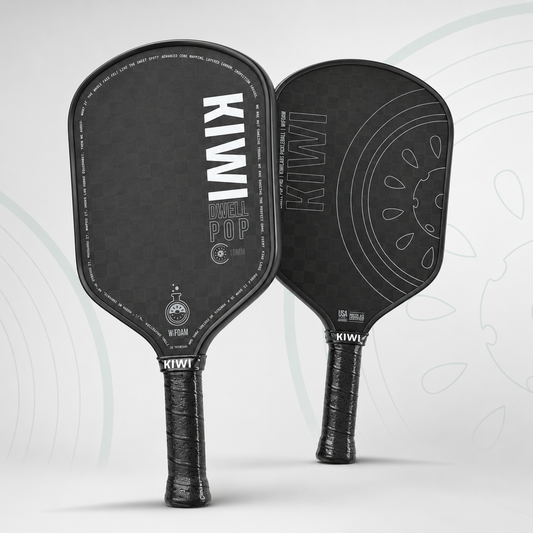
Then look for balance inside that category. A good control paddle should not feel dead. A good power paddle should not feel reckless. Modern paddle design has narrowed the gap, which is why all-court builds are so popular. Brands like Kiwi Labs have pushed that idea hard by focusing on raw carbon, sweet spot performance, spin, and modern construction without charging legacy-brand prices for the badge alone.
The best answer is often all-court, with a bias
For most players, the smartest move is not extreme control or extreme power. It is an all-court paddle that leans one way. That gives you room to grow.
A control-leaning all-court paddle is great for players who value resets, drops, and kitchen consistency but still want enough pop to counter and attack when the moment is there. A power-leaning all-court paddle fits players who like offense and pace but do not want to sacrifice every soft-ball skill to get it.
That middle ground matters because pickleball is not won with one shot type. You need touch in transition, confidence in hand battles, enough spin to shape the ball, and enough pace to make opponents uncomfortable. The best paddle is the one that supports your full game, not just your favorite highlight.
If you are stuck between the two, choose the paddle that makes your misses smaller. More of the game is decided by neutral balls, resets, and playable thirds than by clean winners. A little less flash with a lot more repeatability usually pays off faster. Then, as your mechanics improve, you can decide whether you want more help with power or more precision with touch.
The right paddle should make your strengths easier to access and your weak spots less costly. That is the standard worth shopping by.