
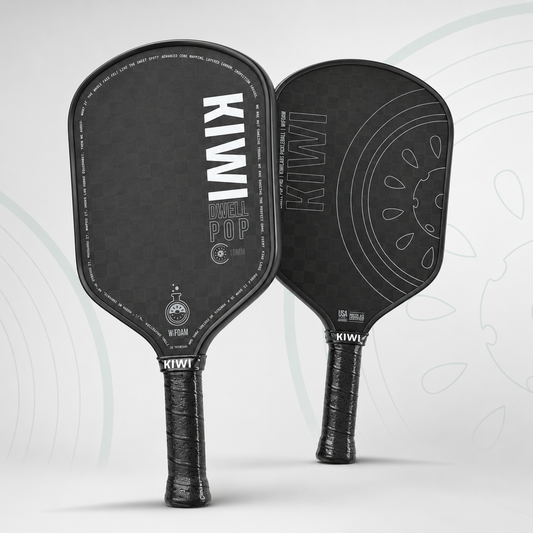
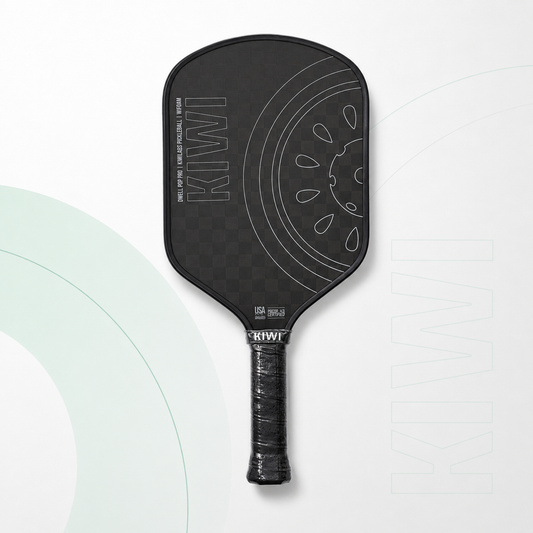


Is a Full Foam Pickleball Paddle Worth It?

A mishit near the edge usually tells you everything about a paddle. Some frames twist, the ball dies, and your reset floats high. Others stay surprisingly steady and give you a second chance. That difference is a big reason more players are asking about the full foam pickleball paddle.
This isn’t just another buzzword glued onto a familiar shape. Foam-injected or foam-enhanced construction changes how a paddle feels through contact, especially on off-center shots. If you care about sweet spot size, stability in hands battles, and a more connected feel on drops and resets, this category is worth understanding before you buy.
What a full foam pickleball paddle actually means
The phrase can get used loosely, which is part of the confusion. In most cases, a full foam pickleball paddle refers to a paddle design that uses foam throughout the perimeter and sometimes in broader sections of the paddle structure to improve stability, vibration damping, and consistency. It is not just a thin strip added for marketing copy. The goal is to make the paddle feel more solid, more forgiving, and more predictable across the face.
Traditional paddles usually rely on a polymer honeycomb core sandwiched between face materials like carbon fiber. Foam changes the supporting structure around that core. Depending on the build, it can reinforce the edges, reduce hollow-feeling feedback, and help maintain performance when contact happens outside the center.
That matters because most points are not won on perfect center strikes. They’re won on rushed counters, stretched digs, awkward half-volleys, and resets you barely got your paddle under.
Why players are paying attention to full foam paddle construction
The big appeal is simple: better use of the entire face. A good foam-filled design can make the paddle feel more planted at contact, which often translates to fewer wild deflections and less flutter when the ball catches the upper corners or edge area.
For intermediate and advanced players, that can show up in very specific ways. Your backhand block sits lower. Your kitchen reset doesn’t trampoline off the face as much. Your roll volley feels like it stays on the paddle a fraction longer, which helps with direction and spin.
For newer players, the benefit is often even more obvious. A larger effective sweet spot makes the paddle easier to trust. You don’t need tour-level timing to get a playable ball back. That can speed up improvement because you spend less time fighting the paddle and more time learning shot selection, positioning, and touch.
The real performance benefits
Stability is the first thing most players notice
A paddle that resists twisting gives you more control when you’re under pressure. This is where foam construction can earn its keep. On quick exchanges, especially at the kitchen line, stability helps the face stay where you intended. That means cleaner counters, firmer blocks, and fewer surprise pop-ups.
If you’ve ever hit a volley slightly toward the tip and felt the paddle torque in your hand, you already know why this matters.
Dwell time can feel more usable
Players talk a lot about dwell time because it influences touch. A paddle with a more connected, cushioned response can make it easier to shape dinks, soften resets, and brush up for topspin. Foam doesn’t automatically make every paddle soft, but in the right build it can create a less harsh, more controlled sensation at impact.
That’s especially appealing to all-court players who want enough pop to finish points but don’t want the paddle to feel jumpy in transition.
The sweet spot tends to play bigger
A full foam pickleball paddle often feels more forgiving across a wider section of the face. That does not mean every part of the paddle performs identically, because physics still applies. But the drop-off from center hit to slight mishit can be less dramatic.
That’s a real advantage in doubles, where reaction speed matters more than perfect mechanics on every ball.
Feel gets more refined
Many players describe foam-supported paddles as more solid and less hollow. That feedback matters. Good feel is not just about softness or firmness. It’s about predictability. When a paddle gives a more consistent response, players can swing with more confidence.
The trade-offs nobody should ignore
Not every player should blindly chase a foam-filled build. There are trade-offs, and they matter.
First, feel preference is personal. Some players love a muted, stable response. Others want a crisper, more direct feedback that tells them exactly where they contacted the ball. If a paddle feels too dampened for you, it can reduce your sense of touch rather than improve it.
Second, power is not automatic. A full foam pickleball paddle can deliver excellent pop in the right design, but foam itself is not a cheat code for free offense. The face material, core, thickness, thermoforming process, swing weight, and balance all influence how much put-away power you actually get.
Third, added material can affect maneuverability. If the paddle becomes too head-heavy or sluggish through the air, fast hand speed can suffer. That’s a dealbreaker for players who rely on quick exchanges and wrist-driven counters.
This is why smart paddle shopping should never stop at one feature. Construction matters, but construction in context matters more.
Who should consider a full foam pickleball paddle?
Players who want more forgiveness
If your current paddle punishes mishits and feels unstable on blocks or resets, foam-supported construction is worth a serious look. The added stability can help smooth out your game without forcing a huge adjustment period.
All-court players chasing balance
A lot of modern players do not want a one-note paddle. They want spin on serves, control in the soft game, enough pop on counters, and a stable face when pace comes at them. That’s exactly where this style of paddle often makes sense.
Intermediate players trying to level up
This group may benefit the most. If you’re beyond beginner basics and starting to care about consistency, transition-zone resets, and winning more hands battles, the right foam build can give you noticeably more confidence.
Players with arm sensitivity
A more dampened, less jarring response can feel better over long sessions. That won’t be true for every model, but if harsh vibration is an issue, foam-enhanced construction may help.
Who might not love it?
If you prefer an ultra-crisp paddle with instant feedback and a lively response, some foam-filled designs may feel too muted. The same goes for players who want the lightest possible swing feel. Stability is great, but not if it costs you the hand speed you rely on.
There’s also the price conversation. Advanced construction should improve performance, not just raise the sticker. That’s where a lot of brands lose the plot. They attach premium language to common materials and hope buyers won’t ask harder questions.
Serious players should ask what the construction is actually doing on court. Does it improve twist resistance? Does it expand the usable sweet spot? Does it help dwell time and control? If the answer is vague, the price probably deserves skepticism.
How to evaluate a full foam pickleball paddle before buying
Start with your misses, not your wishlist. If you lose points because your paddle feels unstable on counters, look for stability and sweet spot improvement. If your issue is dead touch on dinks, focus on feel and dwell time. If you already have control but need easier offense, make sure the build still offers enough pop.
Then look at the full spec package. Foam matters, but so do thickness, shape, face material, handle length, and swing weight. An elongated paddle with foam support may still play very differently from a wider-body paddle with the same buzzword attached.
Finally, think about your actual style of play. A player who wins with resets, consistency, and placement may value a more planted feel. A player who speeds up constantly and attacks off the bounce may care more about quick handling and explosive response.
That’s why the best paddle is rarely the one with the loudest feature list. It’s the one that solves the right problem.
Full foam pickleball paddle tech is real, but context matters
There’s a reason this category is getting traction. When done right, foam-supported construction can make a paddle feel more stable, more forgiving, and more connected through contact. Those are not small gains. They show up in the exact parts of the game where most points get messy.
But the smart move is to separate real performance benefits from inflated marketing. A full foam pickleball paddle is not automatically better than every standard build. It is better for certain players, certain preferences, and certain shot patterns.
Brands like Kiwi Labs have pushed this conversation forward by focusing on what players actually feel on court - dwell time, pop, spin, control, and a usable sweet spot - instead of hiding behind vague premium claims. That’s the standard worth expecting.
If your current paddle feels unstable, punishing, or disconnected on the shots that matter most, a foam-filled build might be the upgrade that finally makes your game feel easier in the right ways.