


How to Stop Paddle Slipping During Pickleball

A paddle that shifts in your hand does more than feel annoying. It changes your face angle at contact, weakens your grip pressure at the wrong moment, and turns routine resets or kitchen-line dinks into shaky guesses. If you are learning how to stop paddle slipping, start by treating it as a setup issue, not a reason to squeeze the handle harder.
Most slipping comes down to one of three things: moisture, a grip that does not match your hand, or a worn handle surface. The good news is that all three are fixable without changing your swing or spending premium-brand money on a new paddle.
Why Your Pickleball Paddle Slips
Paddle slipping is not always the paddle flying out of your hand. Often, it is subtler. The handle rotates a few degrees during a hard serve, slides upward when you reach for a backhand, or feels loose after three points in humid weather. Those small movements matter because pickleball rewards a stable face, especially on soft shots where millimeters change the result.
Sweat is the obvious culprit. Heat, humidity, nervous hands, and long rallies all leave moisture on the grip. A smooth factory grip can become slick quickly once that moisture has nowhere to go.
But grip size deserves equal attention. A handle that is too small makes you over-grip and fatigue your forearm. A handle that is too large can prevent your fingers from wrapping securely around it. Either issue makes the paddle harder to stabilize through quick exchanges.
Your technique can contribute, too. If your hand is clamped tight before the ball arrives, it often becomes more fatigued and sweaty. A relaxed, connected hold gives you more control than a white-knuckle squeeze ever will.
How to Stop Paddle Slipping With a Better Grip Setup
The fastest upgrade is usually an overgrip. An overgrip wraps over the existing factory grip and gives you a fresher, tackier, more absorbent surface. It is inexpensive, easy to replace, and lets you fine-tune the handle circumference without committing to a permanent modification.
For players whose hands sweat heavily, prioritize absorbency over extreme tack. Tacky grips can feel fantastic at the start of a game, but some become slippery when fully saturated. Dry-style overgrips and moisture-wicking grips are generally the smarter choice for hot outdoor courts, while tackier options can work well in dry conditions or for players who prefer a stickier connection.
Apply the overgrip with light, even tension. Start at the butt cap, overlap each wrap consistently, and avoid pulling so hard that the material becomes thin or slick. A poorly installed overgrip can create ridges that distract your hand or loosen at the top edge during play.
If the handle feels too thin after adding one layer, add a second overgrip. This is a practical way to build up a small grip size. The trade-off is feel: a thicker handle can reduce wrist mobility and make quick grip changes slightly less natural. Players who rely on heavy wrist action for rolls, flicks, and topspin serves may prefer a modest build-up rather than several layers.
Know When the Grip Is the Wrong Size
There is no universal perfect grip size, but your hand will tell you when the fit is off. With a continental-style hold, your fingertips should wrap around the handle comfortably without digging hard into your palm. You should feel in control without needing to crush the handle.
If the paddle twists on off-center hits, do not assume grip size is the only cause. A larger sweet spot and stable paddle construction also reduce twisting. Still, a handle that fits your hand gives you a much better foundation for keeping the face steady.
Control Sweat Before It Controls Your Paddle
A fresh overgrip helps, but it cannot solve every moisture problem by itself. Players who sweat a lot should create a between-point routine: wipe your hand, wipe the handle if needed, and return to the ready position with a dry connection to the paddle.
Keep a small towel courtside and use it more often than you think you need to. In competitive play, a fast towel break between rallies is far better than waiting until the grip is soaked. Wristbands can also keep sweat from running down your forearm and directly onto the handle.
Grip powder, rosin bags, and liquid grip products can help, but use them carefully. A light application is usually enough. Too much product can leave residue on your grip, your paddle face, or the court, and some players find the changing texture distracting during delicate touch shots. Test any product in a casual session before relying on it in league play or a tournament.
For humid conditions, bring backup overgrips. This is one of the simplest habits serious players adopt. When a grip feels saturated, replace it. Trying to nurse a slick overgrip through another match usually costs more points than the replacement costs.
Stop Squeezing Harder
When a paddle slips, the instinct is to grip it tighter. That creates a cycle: more tension leads to more fatigue, fatigue leads to more sweat and slower hands, and the paddle feels even less secure.
Instead, use variable grip pressure. Keep the handle relatively relaxed while waiting for the ball, then firm up at contact. Think of your hand as holding a small bird: secure enough that it cannot escape, not so tight that you crush it. You need more pressure on a hard drive, overhead, or counterpunch than on a soft dink or reset.
This approach improves more than comfort. A relaxed hand helps you absorb pace at the kitchen line, while a firm contact grip gives you stability when you accelerate through a serve or speed-up. It also makes it easier to change from forehand to backhand without the handle shifting in your palm.
Check where the butt cap sits in your hand. For most players, the end of the handle should sit near the heel of the palm, providing a consistent reference point. If you routinely choke up too far or allow the handle to float in your fingers, the paddle is more likely to rotate under pressure.
Inspect the Grip You Already Have
Factory grips wear out gradually, which makes it easy to miss the problem. Look for shiny, flattened areas, peeling edges, compressed cushioning, or a surface that feels slick even when dry. Any of those signs mean it is time to regrip.
Cleanliness matters as well. Dirt, sunscreen, body oils, and old grip residue can reduce traction. Follow the grip maker's care guidance, and avoid soaking the handle. If the grip is old enough to need aggressive cleaning, replacement is usually the better call.
Do not ignore the butt cap or grip installation. A loose butt cap, shifting underlayer, or poorly secured overgrip can make the entire handle feel unstable. If something moves when you twist the paddle by hand, fix it before your next session.
Choose a Paddle Handle That Supports Your Game
The paddle itself cannot eliminate sweat, but handle shape, balance, and stability influence how secure it feels. A well-balanced paddle with a predictable response is easier to control when rallies speed up. A larger, more forgiving sweet spot also helps limit the twisting that can feel like slipping after an off-center contact.
Players who want more reach and two-handed backhand room may prefer an elongated handle. Those who favor fast hands and a compact, maneuverable feel may like a standard handle shape. Neither is automatically better. The right choice depends on your hand size, grip style, and whether you use a two-handed backhand.
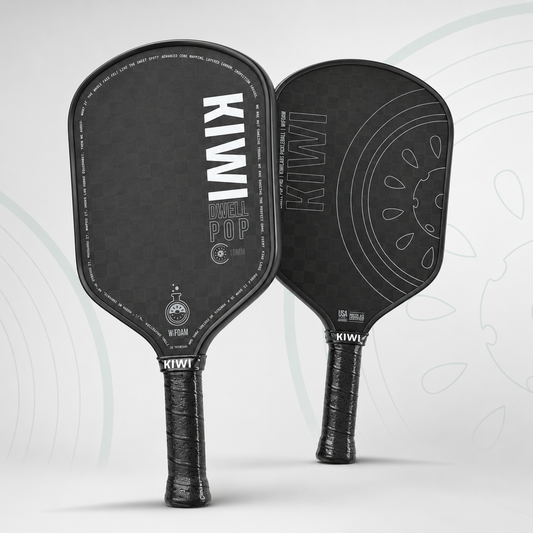
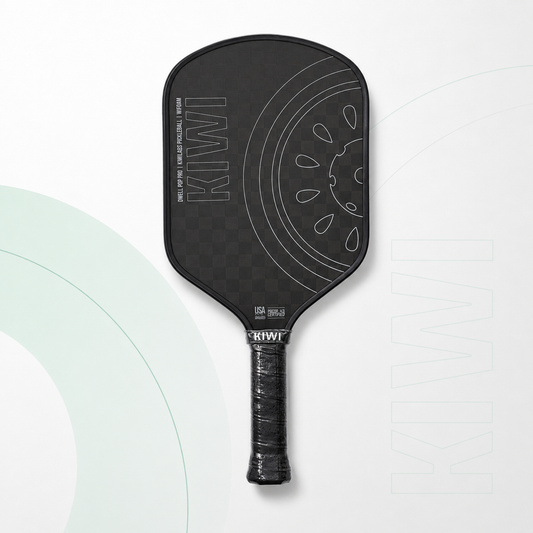
This is where transparent paddle design matters. At Kiwi Labs Pickleball, performance is not just about raw carbon surfaces, pop, or spin. It is also about the usable details that help a paddle feel connected in your hand through serves, resets, counters, and long summer sessions.
A Simple Pre-Match Routine
Before you step on court, take 30 seconds to check your setup. Make sure the grip is dry, the overgrip edges are secure, and the handle feels right in your normal ready position. Keep a towel nearby and have a spare overgrip in your bag.
If your paddle starts slipping during play, do not wait for the problem to become a missed overhead or a floated dink. Dry your hand, reassess your grip pressure, and change the overgrip when it has reached the end of its useful life. A secure handle is a small equipment detail, but it gives every shot a more reliable starting point.