


Best Paddle for Kitchen Control for Better Dinks

At the kitchen line, the paddle that feels great on a hard drive can suddenly feel like a liability. A dink sits up. A reset floats long. A fast hand battle turns into a framed ball. Finding the best paddle for kitchen control is less about chasing the softest possible paddle and more about choosing a build that gives you predictable touch when the point gets tight.
Control is what lets you keep opponents pinned in the dink exchange, absorb their speed-ups, and place drops that earn you a neutral ball instead of a scramble. The right paddle will not replace clean mechanics, but it can make good mechanics far more repeatable.
What Kitchen Control Actually Means
Kitchen control is often reduced to “soft feel,” but that is only part of the story. A paddle needs to help you regulate ball speed on dinks, drops, resets, counters, and blocks. It also needs enough stability that an off-center contact does not send the ball somewhere you never intended.
The goal is predictable response. When you contact a dink near the center, you want a plush, connected feel that lets you guide the ball over the net. When a hard drive catches you late, you want the face to stay stable enough to deaden pace rather than twisting open or launching the ball.
That is why a control paddle should be judged on more than its softness. Sweet spot size, twist weight, core construction, face material, swing weight, and shape all affect how much command you have in the non-volley zone.
Best Paddle for Kitchen Control: The Features That Matter
A large, forgiving sweet spot
The kitchen is not a lab. You will contact balls toward the toe, near the edge, and sometimes on a hurried backhand while moving laterally. A larger, more forgiving sweet spot keeps those imperfect contacts from becoming pop-ups.
Widebody and hybrid shapes generally offer more forgiveness across the face than elongated paddles. That does not mean elongated paddles cannot control the kitchen. They can, especially for players who value reach and two-handed backhands. But a wider hitting area makes the most common kitchen contacts easier to manage, particularly for developing and intermediate players.
Look for paddle designs that prioritize perimeter stability and a consistent response beyond the dead center. A paddle can feel buttery on a perfect contact and still be a poor control choice if its edge hits flutter or lose direction.
A core that absorbs without feeling dead
Core thickness is a useful starting point, not a complete answer. Thicker cores, commonly around 16 mm, often provide more dwell time and a more muted impact feel. That can make it easier to take pace off a drive, roll a dink with shape, and keep a third-shot drop from sailing deep.
But thickness alone does not guarantee touch. Core density, foam treatment, face stiffness, and thermoforming all influence response. Some 16 mm paddles feel plush and controlled. Others still produce plenty of pop because the construction is lively around the perimeter or highly responsive through the face.
For players who regularly struggle with pop-ups, a thicker, control-oriented core is usually the smarter starting point. For advanced players who create their own touch but still want quick counters, a responsive foam-enhanced paddle can offer a better balance. The trade-off is simple: more rebound can help you win hands battles, but it demands cleaner hands on resets and dinks.
Stable weight, not necessarily a heavy paddle
A paddle that twists on contact is hard to trust at the kitchen. Stability helps you block hard balls with a compact swing and keeps your paddle face from changing angle when you are defending an attack.
Many players assume they need the heaviest paddle available for stability. That can work, but it comes with a cost. Excessive static weight or swing weight can slow your hands, tire your forearm, and make quick exchanges more difficult. The better target is enough mass and perimeter stability to resist twisting while remaining maneuverable for counters.
Most all-court players land in a midweight range, then fine-tune feel with an overgrip or small amounts of lead tape. If your paddle feels unstable on blocks, modest weight near the sides can improve twist resistance. If you are late on speed-ups, adding more weight may make the problem worse. Test one change at a time.
A face with usable spin
Spin is a control tool. A gritty raw carbon fiber face can help you shape cross-court dinks, keep a cut drop low, and dip a roll volley at an opponent’s feet. It is not just for highlight-reel passing shots.
That said, surface texture should support your touch, not distract from it. A high-spin face will not automatically make a paddle controlled if the core is too bouncy for your game. The best combination is a face that grabs the ball long enough to create shape paired with a predictable launch off the paddle.
Players who use topspin dinks and aggressive roll volleys tend to benefit most from raw carbon surfaces. Players with a flatter, placement-first kitchen game may care more about stable feel and a generous sweet spot than maximum spin numbers.
A shape that matches your kitchen job
Your preferred shape should reflect where you win points. Hybrid and standard shapes are often excellent control choices because they bring a wider, more forgiving face and manageable swing weight. They suit players who spend most of their time trading dinks, countering from a compact position, and resetting balls from the transition zone.
Elongated paddles offer extra reach and can add leverage on serves and drives. They are appealing for players who like to attack from the baseline or need more coverage on wide balls. The compromise is often a narrower sweet spot and a higher swing weight. If you choose elongated, prioritize a model with strong perimeter stability so it does not become demanding in hand battles.
Do Not Confuse Low Power With Control
A paddle with very little pop can make soft shots feel safe at first. But if it leaves your drives shallow, your counters weak, and your defensive blocks too passive, opponents will start crowding the kitchen and applying more pressure.
Real control is the ability to choose the shot. You should be able to absorb pace when necessary, then accelerate through a roll volley or counter when the opening appears. That is why many serious players prefer an all-court paddle with controlled pop over a paddle that feels completely muted.
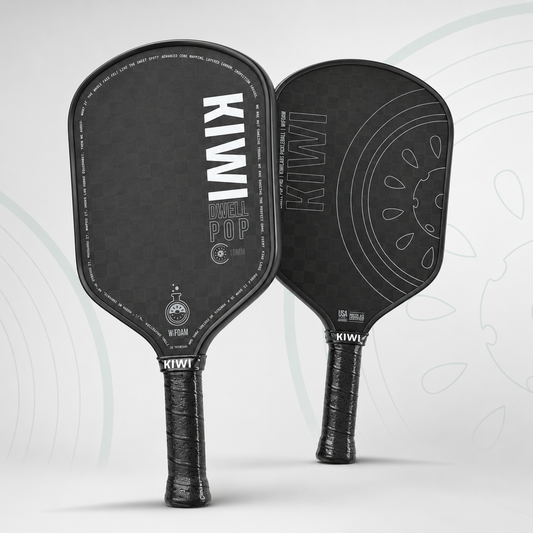
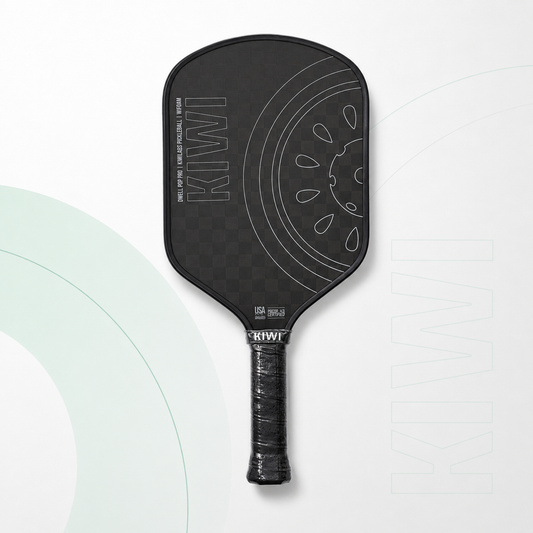
Kiwi Labs Pickleball approaches this balance with modern carbon fiber and foam-forward paddle designs built to deliver spin, forgiveness, and usable power without the legacy-brand markup. The useful question is not whether a paddle is labeled “control.” It is whether its construction matches the pace and precision your game demands.
Match the Paddle to Your Current Problem
If your dinks frequently drift long, start with a thicker, softer-feeling core and a standard or hybrid shape. You likely need more dwell time and a less explosive response.
If your resets pop up under pressure, prioritize stability and a forgiving sweet spot. The issue may be paddle twist or an overly lively face, not a lack of touch. A stable paddle gives you more margin when you cannot set your feet perfectly.
If you win dink exchanges but lose fast hands battles, do not immediately abandon control for a power paddle. A moderately responsive paddle with manageable swing weight may give you the quicker counter you need while preserving your soft game.
If your drops lack shape or your cross-court dinks sit too high, focus on face texture and confidence in your grip pressure. Better spin potential can help, but only if the paddle still lets you feel the ball rather than rebound it immediately.
How to Test Kitchen Control Before You Commit
During a demo or practice session, skip the temptation to judge a paddle by its first few drives. Start at the kitchen line. Hit cross-court dinks, then straight-ahead dinks, and notice whether you can control depth without overthinking your swing.
Next, ask a partner to speed up balls at your torso and backhand hip. Pay attention to what happens on blocks that miss the center. A good control paddle should stay composed and give you a realistic chance to keep the ball low.
Then move into the transition zone and hit resets from different heights. This is where overly poppy paddles reveal themselves. Finally, test a few counters and roll volleys. You want enough response to attack a ball above the net, not a paddle that turns every aggressive swing into a soft, harmless reply.
The best paddle is the one that makes your misses smaller. When your dinks land closer to your target, your resets stay lower, and your hands feel calm under pressure, you have found a paddle that earns its place at the kitchen line.