


Best Paddle for Serve Speed: What Matters

A hard serve that stays deep and skids through the court can buy you the whole point before the return even leaves your opponent’s paddle. That’s why so many players start searching for the best paddle for serve speed - but the real answer is not as simple as buying the most powerful paddle on the market.
Serve speed comes from a mix of paddle design, swing mechanics, timing, and contact quality. The paddle absolutely matters, but if you chase raw power alone, you can end up with something that launches serves long, feels harsh on touch shots, or tires your arm out over a long session. The better question is this: what paddle characteristics actually help you serve faster while still playing winning pickleball the rest of the rally?
What makes the best paddle for serve speed?
If you want more pace on your serve, four paddle traits matter most: swing weight, overall stiffness, face responsiveness, and handle leverage. Those are the real performance levers. Brand hype is not.
Swing weight is a big one. A paddle with more mass distributed toward the head can carry more momentum through contact, which often translates to heavier, faster serves. That does not automatically mean a heavier static weight is best. A paddle can feel quick in the hand but still deliver strong plow-through if the balance is tuned well. For many players, that sweet spot is where easy acceleration meets enough mass behind the ball to drive it deep.
Stiffness matters too. Generally, a stiffer build returns more energy to the ball, which helps produce pace. Thermoformed paddles, foam-enhanced edge designs, and more rigid carbon constructions often feel livelier on serves than softer, more muted paddles. The trade-off is feel. A very stiff paddle can be great when you are attacking or driving, but less forgiving on drops, resets, and soft kitchen exchanges.
Then there is the face material and surface structure. Raw carbon fiber surfaces are usually discussed in terms of spin, and spin absolutely helps on serves. A fast serve is useful. A fast serve with topspin that dips in and kicks through the court is harder to return. That means the best serve paddle is not just about linear power. It is about controllable aggression.
Handle length also plays a role. A slightly longer handle can give players more leverage and a whip-like feel through the motion, especially for two-handed backhands and modern serving mechanics. Not every player notices this immediately, but players who use a more athletic, rotational serve often do.
Speed versus control is the real decision
A lot of players think they need the hottest paddle they can find. Sometimes they do. More often, they need the most playable power they can control.
If your current serve lacks depth because the paddle feels dead, underpowered, or unstable, moving into a more responsive build can help right away. But if your serve already has decent pace and your bigger issue is missing long or losing consistency under pressure, a pure power paddle can make the problem worse.
This is where many buying decisions go sideways. Players test a powerful paddle for ten minutes, hit a few huge serves, and assume it is the answer. Then match play starts and the same paddle that added speed also makes third-shot drops float, resets pop up, and blocks feel jumpy. Serve speed is valuable, but it cannot come at the cost of confidence across the rest of your game.
The best paddle for serve speed is usually the one that gives you enough pop to pressure returns without making your short game feel like guesswork.
Paddle specs that actually help your serve
When you compare paddles, skip the vague marketing language and look at the build details.
An elongated shape often helps players generate more serve speed. It typically creates extra reach and can increase swing leverage, which many players translate into better baseline drives and stronger serves. The downside is that elongated paddles can have a narrower face and a slightly less forgiving sweet spot than wider all-court shapes.
Core thickness matters in a less obvious way. Thinner cores often feel quicker and more explosive. Thicker cores usually offer more dwell time, control, and forgiveness. If serve speed is your top goal, a thinner or more lively-feeling build may stand out. If you want pace but do not want to sacrifice touch, a well-designed thicker core with strong face response can be the smarter long-term choice.
Perimeter stability is another underrated factor. On serves, clean center contact is ideal, but real match play is not always perfect. A paddle with good torsional stability holds up better on off-center strikes, so your serve speed and placement stay more consistent even when contact is slightly late or high on the face.
Grip and handle shape matter more than some players realize. If you cannot hold the paddle confidently and accelerate through the ball without tension, your serve speed will suffer. A secure grip size and handle that fits your hand can improve swing freedom just as much as a small spec change on paper.
Who should choose a power-oriented serve paddle?
If you are a baseline-heavy player who likes to start points aggressively, a more powerful paddle makes sense. The same goes for tennis converts, players with naturally fast swings, and intermediate players who are starting to weaponize their serve and return.
If you have a compact motion and want more free pace, a livelier paddle can help. It can also benefit players who feel like they are working too hard just to get depth.
But not every player should prioritize serve speed first. Beginners often get more value from a forgiving all-court paddle that helps them develop consistency. Soft-game specialists may prefer a little less pop if it gives them better control in transition and at the kitchen. And players dealing with arm sensitivity should be careful with very stiff builds, because extra power can come with a firmer, less forgiving feel.
That is the part many brands leave out. More speed is great. Better overall results are better.
Best paddle for serve speed by player type
For the improving rec player, the best choice is usually an all-court paddle with above-average pop rather than a pure power model. You want easier serve depth, but you still need a generous sweet spot and predictable feel. A balanced raw carbon paddle with solid stability is often the sweet spot here.
For the intermediate player chasing more offense, an elongated thermoformed paddle can be a strong fit. This type of build often delivers better drive speed, more aggressive serves, and enough spin potential to shape the ball with intent. You give up a bit of softness, but you gain more put-away power and more pressure from the baseline.
For the advanced player, it depends on how the rest of the game is built. If your style revolves around attacking early, a crisp, fast, higher-swing-weight paddle can absolutely raise your serve ceiling. If you win with resets, countering, and controlled variation, you may still want power - just not so much that it disrupts touch.
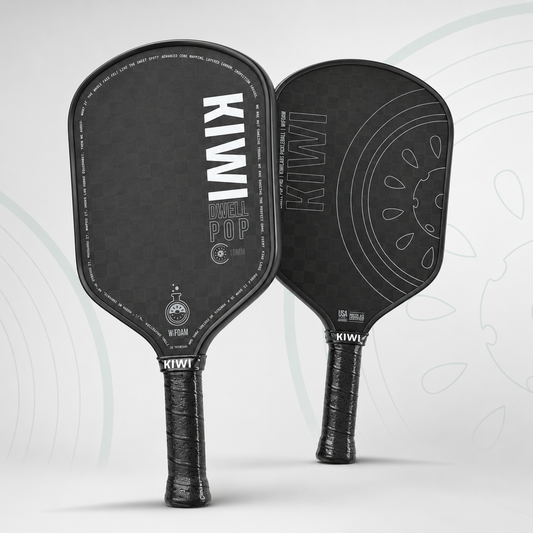
This is where Kiwi Labs has pushed the conversation in a better direction. The goal is not flashy power at any price. It is modern paddle construction that gives players real performance gains in spin, pop, and stability without forcing them into overpriced legacy-brand trade-offs.
How to tell if your paddle is holding back your serve
If you are swinging hard and the ball still lands short, the paddle may not be giving you enough energy return. If your serve only gets deep when you overswing, that is another clue. And if your best serves feel accidental rather than repeatable, the issue may be poor paddle fit rather than poor technique.
On the other hand, if your serve has plenty of speed but you cannot keep it in, your paddle may be too lively for your current mechanics. That is not a failure. It just means the setup is ahead of your ability to control it.
A good test is simple. Think about ten first serves in a normal game. Are you hitting them with confidence, getting reliable depth, and still feeling in control of your targets? If not, the answer might be technique, but it might also be that your paddle’s blend of pop, dwell time, and stability is off for your game.
Don’t ignore spin when chasing serve speed
Flat speed looks great in warmups. In matches, spin wins more points.
A serve with pace and topspin gives you a better margin over the net and a more difficult bounce for the returner. That is why textured carbon faces matter so much. They let you swing aggressively without relying on a perfectly flat contact window. You get shape on the ball, more confidence in aiming deep, and a serve that feels heavier than radar speed alone would suggest.
So if you are choosing between two paddles and one has slightly more raw pop while the other gives you stronger spin and more dependable placement, the second paddle may actually help your serve more in real play.
The smartest gear choices usually work that way. They do not just make one shot faster. They make your aggressive shots more repeatable.
If you are looking for more serve speed, do not chase the loudest power spec on the page. Look for a paddle that gives you efficient acceleration, stable contact, and enough spin to bring that pace into the court. When your paddle helps your serve stay fast and playable, the rest of your game starts on stronger footing.