


Carbon Face Versus Graphite Paddles: What Wins?

A fast hands battle at the kitchen rarely comes down to a label on the paddle face. But when shoppers compare carbon face versus graphite paddles, they are usually trying to solve a real on-court problem: finding more spin, a more reliable soft game, cleaner resets, or enough pop to put a ball away without spraying drives long.
Here is the straight answer: carbon-faced paddles are usually the better choice for players who want modern spin potential, a more connected feel, and performance that scales as their game improves. Graphite paddles can still be a smart pick for players who favor a crisp, lighter, straightforward response. The catch is that face material alone does not tell the whole story. Core thickness, construction, shape, swing weight, and surface texture can change a paddle more than the word printed on its spec sheet.
Carbon Face Versus Graphite Paddles: The Real Difference
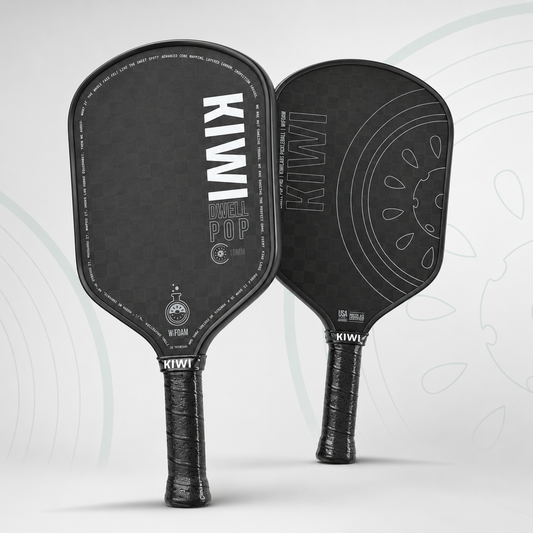
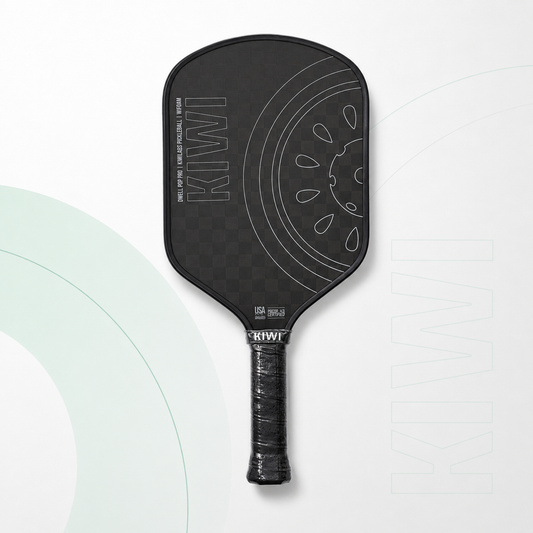
First, the terminology can get messy. Carbon fiber is made from graphite fibers, so technically there is overlap in the language. In pickleball shopping, however, “graphite” generally refers to a traditional graphite or graphite-composite paddle face, often smoother and more rigid-feeling. “Carbon face” usually describes a woven carbon fiber face, particularly raw carbon fiber, designed to create texture and grab the ball.
That distinction matters because the face is where the ball makes first contact. It influences friction, feedback, and how long the ball seems to stay on the paddle before it leaves. It does not work alone, but it sets the personality of the paddle.
Traditional graphite paddles earned their reputation for a reason. They can feel quick in the hands, direct at contact, and comfortably crisp on blocks and punch volleys. Many are also lighter, which can help a newer player get the paddle in position on time. For recreational play, that clear, uncomplicated response can be plenty of paddle.
Modern carbon faces aim for a different kind of performance. A textured raw carbon surface can help players create more topspin on drives, sharper cut serves, and better-shaped drops. Carbon also tends to deliver more detailed feedback, so players can feel when contact is centered versus when they catch the ball closer to the edge. That feedback helps developing players build consistency rather than simply hit harder.
Why Carbon Has Become the Performance Standard
Spin is the headline feature, but it is not the only reason carbon faces have taken over competitive pickleball. The bigger advantage is control under pressure.
A quality carbon-faced paddle can give you enough bite to bring a hard third-shot drive down inside the baseline. At the kitchen, that same surface can help you roll a dink at an opponent’s outside foot or add shape to a speed-up. When your paddle lets you use spin intentionally, you gain more options without needing to swing bigger.
Carbon-faced paddles also commonly appear in designs built around larger sweet spots, thicker cores, foam-injected perimeters, and thermoformed construction. Those design choices can improve stability and forgiveness on off-center contact. If you have ever reset a hard body shot and felt the paddle twist in your hand, you understand why stability matters more than flashy power claims.
Still, do not assume every carbon paddle plays the same. A thin, thermoformed carbon paddle may feel explosive and lively, with serious put-away power but less margin on soft shots. A thicker carbon paddle often brings more dwell time and a softer, more controlled response. Full-foam and perimeter-foam designs can further change the feel, often expanding the sweet spot while adding stability or pop depending on the build.
That is why the best carbon paddle is not automatically the most expensive one. It is the one whose construction matches how you actually play.
Where Graphite Paddles Still Make Sense
Graphite is not obsolete. It is simply less likely to offer the textured spin and advanced construction found in many current high-performance paddles.
A graphite paddle can be a strong fit if you are brand-new to pickleball and want a lighter, easy-to-maneuver option without paying for features you cannot yet use. It can also suit players who prefer a firmer, more immediate feel off the face. Some players like that crisp feedback for quick counters, compact volleys, and straightforward placement.
Budget is another legitimate factor. Entry-level graphite paddles are often priced lower than premium carbon models. If you are buying a first paddle to learn the basics, play occasionally with friends, or confirm that pickleball is your sport, graphite can be a sensible starting point.
The trade-off is ceiling. As players develop better mechanics, they usually start wanting more from their gear: dependable topspin on serves, controlled pace on drives, better touch on drops, and more confidence when resetting pace at the kitchen. A smoother graphite face may feel limiting once those shots become part of your regular game.
Face Material Is Only One Piece of the Paddle
Do not buy based on “carbon” or “graphite” alone. A few specs make a major difference in how either face plays.
Core thickness affects control and power. A 16 mm paddle generally feels more plush and controlled, making it a popular choice for dinks, drops, blocks, and resets. A 13 mm or 14 mm paddle often feels faster and more powerful, but it may require cleaner touch. Neither is objectively better. A player who wins points through patient kitchen exchanges may benefit from thickness, while an aggressive driver may prefer a livelier build.
Paddle shape changes reach and forgiveness. Elongated paddles offer extra reach and can generate more leverage on serves and drives. Standard or widebody shapes usually offer a broader sweet spot and faster hand speed, which many doubles players appreciate at the net.
Swing weight influences maneuverability. A paddle can have a reasonable static weight yet still feel head-heavy because more mass sits toward the top. That may add stability and pace, but it can slow your hands in fast exchanges. If quick counters are a strength or a goal, look beyond the listed ounces.
Surface texture and durability matter for spin over time. A face that feels gritty in the store is not automatically better. What matters is whether the surface produces usable spin and maintains its performance through regular play. Raw carbon surfaces have become popular because they can create strong, legal friction without relying on a coating that may wear away quickly.
Choose for Your Game, Not the Marketing Label
If you are an improving player who wants one paddle to handle drives, drops, counters, and kitchen play, a carbon face is usually the smarter investment. Look for a paddle with a generous sweet spot and a construction profile that supports control, not just raw power. That combination gives you room to improve without immediately outgrowing your gear.
If your priority is quick hands and a crisp, uncomplicated response, a graphite paddle may feel more natural. Just be honest about whether you are choosing it because it matches your game or because it is familiar. Many players stick with a traditional graphite feel long after their shot selection has outgrown it.
Aggressive players should be especially careful with the word “power.” A powerful paddle is useful only when you can keep the ball in play. Carbon paddles with thermoformed or foam-enhanced construction can offer serious pop, but a control-oriented carbon build may win more points for a player whose drives already have enough pace. The goal is not to hit every ball harder. It is to make more balls difficult to return.
For value-focused shoppers, this is where transparent construction matters. You should know whether you are paying for raw carbon, core thickness, edge reinforcement, thermoforming, foam technology, or simply a major brand name. Kiwi Labs Pickleball builds around the idea that advanced materials and all-court performance should not require inflated pricing.
The Better Question to Ask Before You Buy
Instead of asking only whether carbon or graphite is better, ask what you need more of after your last few games. Were your drives floating long? You may need more spin and control. Did hard shots twist your paddle at the kitchen? Prioritize stability and a larger sweet spot. Are you late on fast exchanges? Consider a more maneuverable shape and swing weight. Do your drops land short? A paddle with more dwell time may help you feel the ball better.
Carbon is the stronger all-around answer for most serious and improving players because it supports the modern game: spin-heavy serves, controlled drives, sharp rolls, stable blocks, and confident resets. But the winning paddle is never just a face material. Pick the construction that makes your best shots more repeatable, then let your technique do the rest.