


Pickleball Paddle Spin Mechanics Guide

You can feel spin when a ball seems to hang on the paddle face for a split second longer, then drops hard at your opponent’s feet or kicks sideways after the bounce. That is exactly why a pickleball paddle spin mechanics guide matters - not because spin sounds cool in a spec sheet, but because it changes real shots: serves that push returners back, rolls that dip at the kitchen, and counters that stay in instead of sailing long.
A lot of paddle marketing treats spin like magic. It is not magic. It is friction, dwell time, paddle path, and contact quality working together. If you understand those parts, you stop guessing and start choosing gear based on performance instead of hype.
What actually creates spin in pickleball
Spin starts with brush and grip on the ball. When your paddle moves up, across, or around the ball at contact, it creates rotational force. But your swing alone does not do all the work. The paddle face has to grab the ball enough to convert that motion into RPM.
That is where surface texture enters the picture. A paddle with a grippy raw carbon face or well-engineered textured surface typically creates more friction than a slicker face. More friction means the ball is less likely to slide across the surface during contact. Instead, it bites, rolls, and leaves with more rotation.
Dwell time matters too. That is the tiny window the ball stays on the paddle. It is short, but in paddle mechanics, short windows still matter. A paddle that lets the ball stay connected just a touch longer often gives players a better chance to shape spin, especially on drops, rolls, and resets where touch matters as much as speed.
Then there is swing speed. If your paddle face is elite but your contact is flat and passive, you will not suddenly produce huge topspin. Spin comes from the combination of paddle design and player input. That is the trade-off many players miss. The paddle can amplify your technique, but it cannot replace it.
Pickleball paddle spin mechanics guide: the four factors that matter most
If you want to judge spin potential correctly, focus on four things: face material, surface texture, core response, and paddle stability.
Face material and surface bite
Raw carbon fiber gets so much attention for one reason - it tends to create excellent grab on the ball. Not all carbon faces are equal, though. Layup quality, peel ply texture, and how the face is bonded to the core all influence how that grab feels in play.
Some paddles feel gritty at first touch but do not translate that into reliable RPM under pressure. Others feel less flashy by hand yet produce better on-court spin because the whole face works more consistently. That is why surface marketing alone is not enough. A paddle has to create friction and keep that response usable across the sweet spot.
Core response and dwell time
A paddle with a very stiff, springy response can generate easy pace, but it may not always give you the pocketing feel that helps with heavy spin on softer shots. On the other hand, a more controlled setup often improves dwell time and lets players shape the ball better.
This is where player type matters. If you attack speed-ups and drive often, a firmer response can still produce strong spin because your swing speed is already high. If your game leans on resets, drops, and kitchen pressure, a paddle with better dwell and touch may give you more usable spin where points are actually won.
Stability through contact
Twist weight and overall stability do not show up in flashy marketing as often as spin texture, but they matter. If the paddle face wobbles on off-center contact, your friction window gets less reliable. That means less consistent spin and less confidence when you are stretched wide or rushed at the line.
A stable paddle helps the ball leave the face on the line you intended, with the rotation you intended. Big difference.
Paddle shape and swing path compatibility
Elongated paddles can help some players generate more whip and racket-head speed, which can improve spin. But that only helps if you can still control contact. Wider shapes often offer a larger sweet spot and more forgiveness, which can make spin more repeatable for a lot of players.
There is no universal winner here. If you mishit an elongated paddle regularly, the theoretical spin upside may not help you at all. A slightly wider, more forgiving paddle can produce better real-world spin simply because you find the face more often.
Why some players get less spin than their paddle should produce
This is usually not a paddle problem. It is a contact problem.
Players often try to create topspin by swinging harder instead of brushing more efficiently. They open the face too much, hit too far behind the ball, or contact late. The result is pace without shape. You feel like you swung aggressively, but the ball leaves relatively flat.
Another common issue is gripping too tightly. A death grip can make the paddle feel boardy and reduce touch on finesse shots. Slight grip relaxation improves feel and helps you stay connected through the ball, especially on rolls and dipping thirds.
Contact point matters as well. Spin gets easier when you take the ball in a position that lets your paddle accelerate through the right path. For topspin, that usually means meeting the ball out in front with a low-to-high motion. For slice, it means carving under and through the back of the ball without floating it.
The difference between raw RPM and usable spin
This is where smart buyers separate real performance from headline claims. Raw spin numbers are useful, but usable spin is what shows up during points.
Usable spin means your serve kicks deep without sacrificing accuracy. It means your topspin dink drops under the opponent’s paddle. It means your reset has enough shape to stay out of the attack zone. A paddle can test well for RPM and still feel too wild, too stiff, or too inconsistent for your game.
That is why advanced players often talk about spin together with control. More bite is great. More bite with a predictable launch and a solid sweet spot is better.
A well-designed paddle should not force you to choose between spin and trust. That balance is exactly what many improving players need, especially if they want one paddle that can handle drives, drops, counters, and hand battles instead of excelling in one lane and giving up too much elsewhere.
How to evaluate spin without falling for paddle hype
Start with your own shot priorities. If you win points with heavy topspin drives from the baseline, you may want a paddle that feels faster through the air and more explosive through contact. If your game is built around resets, soft hands, and controlled rolls at the kitchen, dwell time and stability may matter more than pure pop.
Next, pay attention to whether the paddle keeps spin accessible when you are off-balance. That is the real test. Plenty of paddles feel great in clean warm-up rallies. Fewer still give you reliable bite when you are reaching, blocking, or trying to shape a ball under pressure.
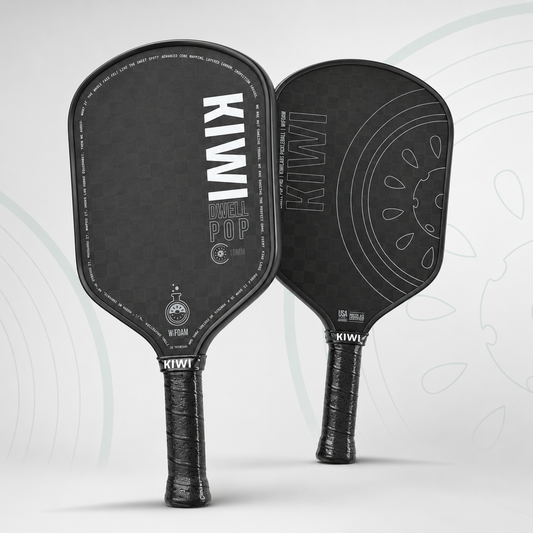
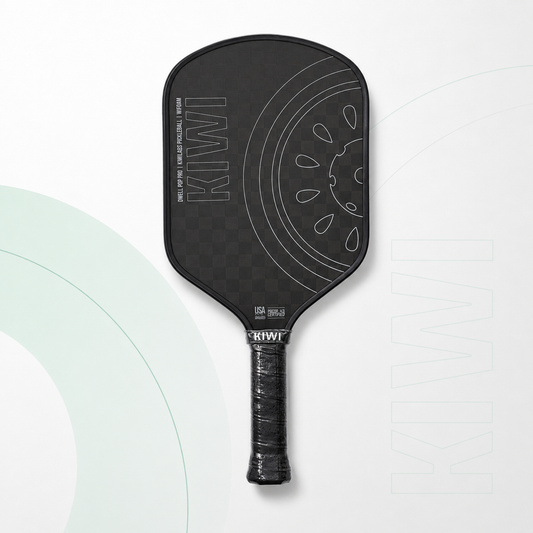
Also consider value. Premium construction should actually show up in materials, consistency, and on-court outcomes. Players are right to be skeptical of legacy-brand pricing when newer paddle companies are producing raw carbon faces, thermoformed builds, strong sweet spots, and serious spin at more rational prices. Kiwi Labs Pickleball has built momentum in exactly that lane - performance-first paddles with modern construction and less nonsense baked into the price.
Pickleball paddle spin mechanics guide for different player types
Beginners usually benefit most from forgiveness first, spin second. If your contact is still developing, a giant sweet spot and stable feel often help more than chasing the highest possible RPM. Once you can find the middle consistently, spin-friendly surfaces become a bigger advantage.
Intermediate players often see the biggest jump from a paddle that blends texture, control, and enough pop to punish weak balls. This is the range where topspin thirds, roll volleys, and shaped serves start turning into real weapons instead of occasional highlights.
Advanced players tend to know what kind of spin they want. Some want heavy drive pressure. Others want surgical control at the kitchen. The right paddle depends on whether you value maximum whip, more dwell, or a steadier all-court response. It depends is not a cop-out here. It is the truth.
Technique still decides the ceiling
The best paddle for spin will not rescue lazy footwork or late contact. What it can do is reward good mechanics more clearly. That means better bite on serves, more shape on drops, and more confidence on roll attacks because the face gives you a cleaner, more predictable interaction with the ball.
If you are serious about improving spin, think in layers. First get the mechanics right. Then choose a paddle face and construction that support those mechanics. Then look at whether the paddle delivers that performance consistently across the sweet spot, not just on perfect contact.
That is the real advantage of understanding paddle spin mechanics. You stop shopping for slogans and start shopping for results. And once that clicks, every shot gets a little more intentional.