
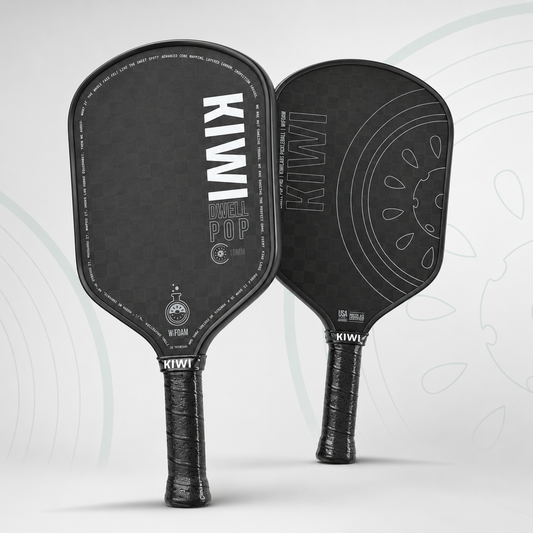
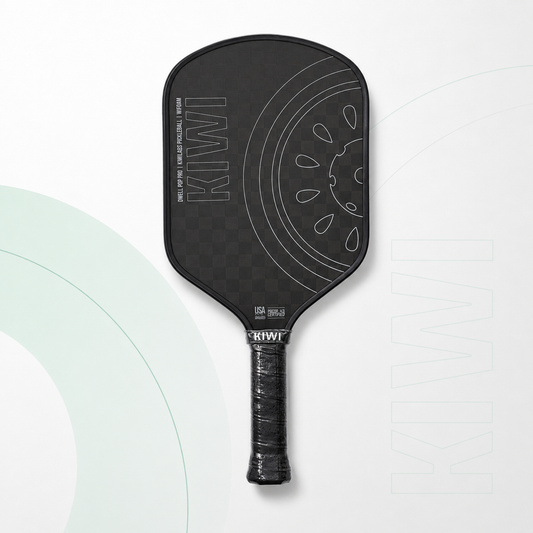


What Paddle Shape Suits My Game?

You can feel it within a few rallies. One paddle lets you reset cleanly and keep hands battles under control. Another gives you extra reach on speedups but feels less forgiving when contact drifts off-center. If you have been asking what paddle shape suits my game, you are really asking which trade-offs help you win more points.
Shape matters because it changes how the paddle moves, where the sweet spot sits, and how forgiving the face feels when the pace picks up. It does not work alone - core, surface, weight, balance, and handle length still matter - but shape is one of the fastest ways to narrow the field. Get it right, and the paddle starts matching your habits instead of fighting them.
What paddle shape suits my game and why it matters
Most players end up choosing between three families of shapes: widebody, hybrid, and elongated. Brands use slightly different names, but the performance pattern is consistent.
A wider face usually gives you a broader sweet spot and a more stable feel. An elongated shape gives you more reach and often a little more leverage on drives and serves. Hybrid shapes sit in the middle, trying to keep enough forgiveness while adding reach and speed through the air.
That means the right shape is not about what looks best in a product photo. It is about how you build points. A player who wins with patient resets and kitchen consistency needs something different from a player who hunts roll volleys, aggressive counters, and extra extension at full stretch.
Widebody paddles - best for forgiveness and control
If your game is built around consistency, a widebody shape deserves a hard look. The face is typically broader, which tends to produce a larger sweet spot and more stability across the paddle. On off-center contact, that can be the difference between a ball that still lands softly in the kitchen and one that pops up for your opponent.
This shape is especially useful for beginners, improving intermediates, and any player who values control over maximum reach. It helps on resets, blocks, dinks, and fast exchanges where your contact point is not always perfect. In real play, that forgiveness shows up as fewer mishits and more confidence under pressure.
There is a trade-off. Widebody paddles usually give up some reach compared with elongated options. If you are stretching for backhand counters or trying to poach more aggressively at the kitchen, you may notice the missing length. Some players also feel that wider paddles are a little less whip-fast through the air, though that depends on overall build and balance.
A widebody shape suits players who think, I want a paddle that helps me stay in the point. If you are still developing touch or you simply want a bigger margin for error, this is often the smart choice.
Elongated paddles - best for reach, power, and aggressive play
Elongated shapes are popular for a reason. They give you more length, which can translate into extra reach, more leverage, and a slightly more attacking feel. For players who drive often, attack from the transition zone, or want more extension on serves and overheads, that can be a real advantage.
This is the shape many competitive players gravitate toward when they want to pressure opponents. The paddle can feel quicker to accelerate on certain shots, and the added length helps on flicks, two-handed backhands, and full-stretch saves. If you like speeding up from the kitchen or countering out in front, an elongated shape can feel dangerous in a good way.
But there is no free lunch. Elongated paddles often have a narrower face, which means less forgiveness on mis-hits. The sweet spot may feel tighter, especially if the paddle is also head-heavy or built for pop. If your soft game already runs hot, or if you struggle with consistent contact, an elongated shape can magnify those issues.
So who should choose one? Players with solid mechanics, players who value offense, and players who want every inch of reach they can get. If your game is built around dictating points instead of just neutralizing them, elongated makes sense.
Hybrid paddles - the best middle ground for all-court players
Hybrid shapes exist because most players are not one-dimensional. They want enough sweet spot for resets, enough reach for counters, and enough hand speed to survive kitchen firefights. That is where hybrid designs earn their keep.
A good hybrid shape usually feels more balanced than a pure elongated paddle and more versatile than a pure widebody. You still get a reasonably forgiving face, but the profile is streamlined enough to help with speed and extension. For a lot of club players and strong intermediates, this is the sweet spot.
If you do a little of everything - drop, dink, drive, reset, speed up, counter - hybrid is often the safest bet. It does not overcommit you to one playing identity. That matters if your game is evolving or if you play with different partners and need your paddle to handle different match tempos.
This is also the shape that often makes the most sense for players shopping on performance rather than hype. You get a broad set of strengths without paying for a niche feature you may not fully use.
How to choose what paddle shape suits my game
Start with your misses, not your highlight shots. Players love to shop for the one big winner they want to hit more often. A better question is this: where do you lose control of rallies now?
If you miss resets, feel unstable on blocks, or struggle with consistency in hands battles, a wider or more forgiving hybrid shape is usually the better answer. If you constantly feel late to balls outside your body line, want extra leverage on drives, or rely on aggressive putaways, elongated becomes more attractive.
It also helps to think about where you win points. If you are winning through touch, patience, and forcing errors, shape should support control first. If you are winning by attacking first and finishing fast, shape should support reach and offensive pressure.
Your level matters too, but not in the way marketing often frames it. Advanced players do not automatically need elongated paddles. Plenty of strong players prefer more forgiving shapes because they value consistency over a tiny bump in reach. Likewise, a newer player is not required to stay widebody forever. If your instincts are aggressive and your contact is already clean, you may grow into a hybrid or elongated profile quickly.
Shape is only part of paddle performance
This is where a lot of brands oversimplify. Shape influences performance, but it does not act alone. Two paddles with similar outlines can play very differently depending on swing weight, twist weight, core thickness, face material, and construction.
For example, an elongated paddle with a highly stable build can feel more forgiving than you expect. A widebody paddle with a lively face can still play fast and aggressive. Raw carbon surfaces can help generate spin regardless of shape, while foam-enhanced or thermoformed builds can change how much pop and feedback you feel at contact.
That is why smart paddle shopping is about combinations, not labels. Shape gets you into the right lane. Construction decides how the ride feels.
At Kiwi Labs Pickleball, that player-first approach matters. The goal is not to bury you in buzzwords. It is to help you understand which features actually improve control, spin, pop, and consistency for the way you play.
A quick reality check before you buy
If you play mostly doubles and care about kitchen control, do not assume longer is better. Reach helps, but forgiveness often wins more points over a full match. If you are a singles player or a doubles player with a heavy attacking style, extra length becomes more valuable.
If you use a two-handed backhand, handle length and overall shape need to work together. If you are prone to tennis elbow or arm fatigue, balance and feel may matter as much as the outline itself. And if you are between two shapes, the better move is usually the one that supports your weaker area without taking away your strengths.
The best paddle shape is the one that makes your common shots easier and your bad swings less costly. That is not a flashy answer, but it is the one that holds up after the honeymoon period.
So if you are still wondering what paddle shape suits my game, think less about category names and more about the points you want to control. Choose the shape that fits your real patterns, not your idealized version of yourself, and your paddle will start earning its keep every time the ball gets uncomfortable.