
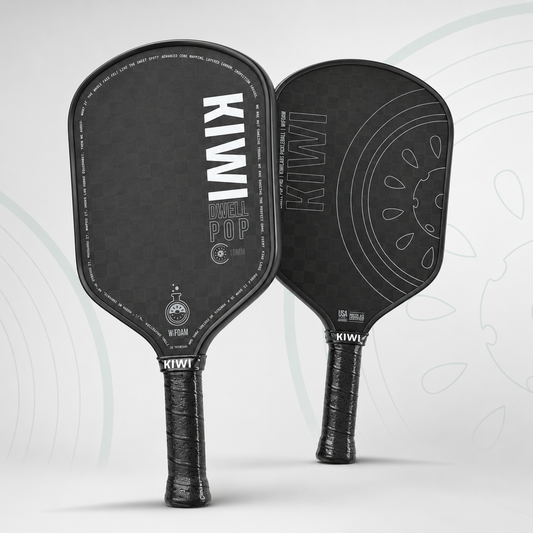
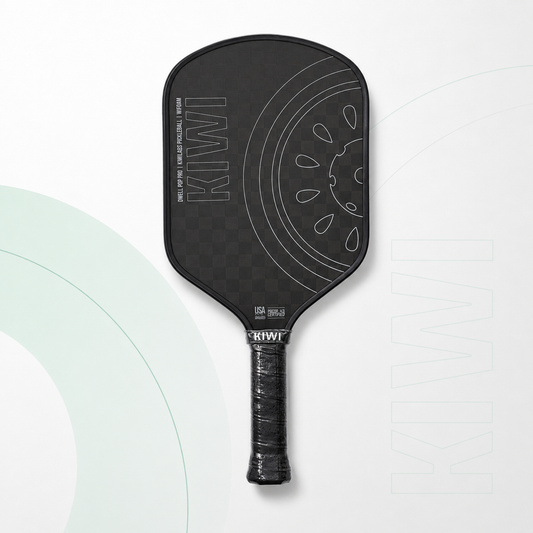


Raw Carbon Fiber Pickleball Paddle Benefits

A paddle can look great in a product photo and still feel dead, slippery, or unpredictable once the points get tight. That is why so many players keep circling back to one question: what are the real raw carbon fiber pickleball paddle benefits, and do they actually show up on court?
The short answer is yes, but not in a magic-wand way. Raw carbon fiber has earned its reputation because it tends to improve the parts of paddle performance that players actually notice - spin, touch, consistency, and confidence on full swings. It is not just a buzzword for gear nerds. If you care about better drops, heavier serves, cleaner resets, and more trust in your contact point, this material deserves a serious look.
Why raw carbon fiber matters
When players talk about raw carbon fiber, they are usually referring to a paddle face with a textured carbon fiber surface that has not been covered by a slick finish layer. That matters because the face is where the ball meets the paddle, and face material plays a huge role in how the ball grips, releases, and responds.
A raw carbon fiber surface tends to create more friction than smoother fiberglass or coated faces. That extra grip can help the ball stay on the paddle just a fraction longer, which is a big deal in pickleball. A tiny increase in dwell time can translate into easier spin generation, better touch on softer shots, and a more connected feel when you are trying to shape the ball instead of just block it back.
This is one reason improving players often notice the difference quickly. You do not need to be a 5.0 to feel when a paddle gives you more bite on a serve or more confidence rolling a third shot.
The biggest raw carbon fiber pickleball paddle benefits
The most obvious benefit is spin. If you brush up the back of the ball on serves, topspin drives, or roll volleys, a raw carbon fiber face usually gives you more purchase on contact. That can mean serves that kick deeper, passing shots that dip faster, and topspin drops that clear the net without floating long.
But spin is only part of the story. Raw carbon fiber also tends to appeal to players who want control. A lot of paddles can feel lively on hard swings, but not all of them stay composed when you need soft hands at the kitchen. Raw carbon fiber often delivers a more predictable response, especially when paired with a quality core and a well-tuned construction. That predictability is what helps with resets, dinks, and transition-zone defense.
Then there is feel. This one is harder to measure on paper, but players know it when they feel it. Many raw carbon fiber paddles have a more connected, less plasticky response than cheaper composite options. Instead of the ball springing off in a way that feels vague or overly bouncy, the contact can feel more intentional. For players trying to improve shot selection and placement, that matters a lot.
Better spin without needing a huge swing
One underrated advantage of raw carbon fiber is that it can help you create quality spin without overhitting. That is useful for a wide range of players. Beginners and intermediates do not always have textbook mechanics or elite racket-head speed, so a spin-friendly face can make advanced shot shapes more accessible.
That does not mean the material does the work for you. Technique still wins. But it can raise the ceiling on what your mechanics produce and make your good swings more effective.
More confidence on touch shots
If your game falls apart in the soft zone, raw carbon fiber can help by making the paddle feel less jumpy. On blocks, drops, and resets, many players prefer a face that gives them a little more feedback and a little less trampoline. That is where this material often shines.
A stable raw carbon fiber paddle can make it easier to take pace off the ball, absorb speed, and guide the shot where you want it to go. For players who are stuck between driving everything and popping up soft shots, that can be a real upgrade.
How it affects different playing styles
Not every player wants the same thing from a paddle, so the value of raw carbon fiber depends on how you play.
If you are an aggressive all-court player, the biggest win is usually shot versatility. You can hit heavy topspin drives from the baseline, then transition into controlled counters and compact hand battles at the kitchen. Raw carbon fiber tends to support that mix better than face materials that lean too far toward pure pop or pure softness.
If you are more of a control-first player, the appeal is usually consistency. The face can help your dinks stay lower, your drops feel more repeatable, and your resets come off the paddle with less drama. It is especially useful for players who win points through placement and patience rather than sheer pace.
If you are newer to pickleball, the benefits are still real, but the fit depends on the full paddle design. A forgiving sweet spot, balanced weighting, and approachable power level matter just as much as the face material. Raw carbon fiber is a strong feature, but it should not distract you from the rest of the build.
Raw carbon fiber versus fiberglass and graphite
Fiberglass faces are often associated with more pop and easy power. That can feel great at first, especially if you like fast putaways or want help generating pace. The trade-off is that some fiberglass paddles can feel hotter and less controlled on touch shots.
Graphite has historically been praised for a crisp feel and lightweight response, but not all graphite-faced paddles deliver the same spin or grip on the ball that players now expect from modern raw carbon surfaces.
Raw carbon fiber tends to sit in a very attractive middle ground. It often gives players strong spin potential and a more controlled feel without completely giving up offensive capability. That balance is a big reason it has become such a popular choice among serious rec players and competitive amateurs who want all-court performance instead of a one-note paddle.
The trade-offs players should know
Let’s cut through the hype. Raw carbon fiber is not automatically better in every build.
If a paddle has poor construction, a rough face alone will not save it. Core quality, edge stability, thermoforming, foam enhancements, balance point, and overall tuning still matter. A bad paddle with a trendy face material is still a bad paddle.
There is also the question of feel preference. Some players simply like a livelier paddle. If you want maximum pop with very little effort, a raw carbon fiber control-oriented paddle may feel too muted. Others love that muted feel because it helps them play with more precision. It depends on your game.
Durability and surface longevity are worth mentioning too. Texture matters for spin, and no paddle face keeps its fresh-from-the-wrapper feel forever. That is not unique to raw carbon fiber, but it is a reminder that performance should be judged by the full paddle design and brand quality, not just a material claim on the box.
What to look for beyond the face material
If you are shopping smart, do not stop at raw carbon fiber as a headline feature. Look at the paddle as a complete system.
A larger sweet spot helps make the face material more usable across real match play, not just perfect center strikes. A stable construction reduces twisting on off-center contact. Core thickness affects power versus control. Handle shape and paddle balance influence comfort, speed, and maneuverability. When those elements are dialed in, raw carbon fiber has a much better chance to deliver the benefits players read about.
That is where a lot of overpriced paddles get exposed. They lead with a premium material story, then charge a huge markup for a build that is not meaningfully better. Serious players are getting smarter about this. They want proof in the form of spin, control, sweet spot size, and feel, not just marketing language.
Who should seriously consider a raw carbon fiber paddle
If you are working on topspin, resets, and all-court consistency, this material makes a lot of sense. It is especially appealing for players who are outgrowing entry-level paddles and want something that supports skill development instead of masking bad contact with random pop.
It also makes sense for comparison shoppers who want premium performance without paying for legacy-brand hype. Kiwi Labs has built a strong following around that exact idea: advanced paddle materials and modern construction without the inflated price tag that too often comes with big-name logos.
The best way to think about raw carbon fiber is simple. It gives you more potential where modern pickleball is actually won - spin, control under pressure, and confidence from every part of the court. If your paddle feels too slick, too jumpy, or too one-dimensional, switching to a well-built raw carbon fiber model could be the change you feel on the first session.
A good paddle should make your game clearer, not noisier. Raw carbon fiber does that for a lot of players, and that is why it keeps showing up in the hands of people who care less about hype and more about hitting better shots.