
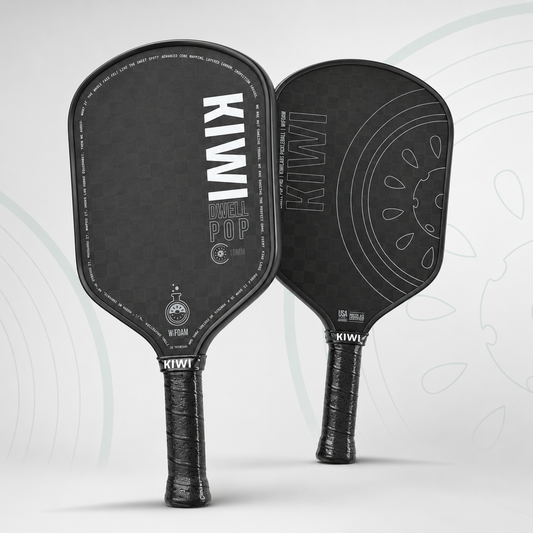


Best Pickleball Paddle for Resets

If your resets keep popping up instead of dying into the kitchen, the problem is not always your hands. A lot of players searching for the best pickleball paddle for resets are really looking for one thing - a paddle that helps absorb pace without feeling dead everywhere else.
That matters because resets are one of the clearest separators between decent and dangerous. Anyone can speed up. Not everyone can take a hard ball at their feet, soften it, and drop it back into the non-volley zone. The right paddle will not do that for you, but it can make that shot more repeatable.
What makes the best pickleball paddle for resets?
A good reset paddle usually has three traits working together: dwell time, stability, and a predictable sweet spot. Dwell time is how long the ball seems to stay on the face. More dwell generally gives you a little more control on touch shots because the contact feels less jumpy. Stability matters because resets often happen off-center, especially when you are stretched or defending a speed-up. And a forgiving sweet spot helps you survive those less-than-perfect contact points without sending the ball sailing.
This is where marketing gets noisy. Plenty of paddles claim control, but some of them still feel too lively in the transition zone. If a paddle has a lot of pop and not enough forgiveness, your blocks may come off hotter than you want. That can be great for counters and putaways, but tougher for softening pace.
So when players ask for the best reset paddle, they are usually not asking for the softest paddle on earth. They want controlled response under pressure. That is different.
The paddle specs that actually help resets
Core thickness and feel
Thicker cores tend to help with resets because they mute impact and create a more cushioned response. A 16mm paddle is a common sweet spot for players who want better touch in the kitchen and more confidence on defensive blocks. Thinner paddles can feel quicker and punchier, but they usually give you less margin when trying to absorb pace.
That said, thickness alone is not enough. Two 16mm paddles can play very differently depending on foam, layup, face material, and overall construction. Some feel plush and controlled. Others still have noticeable pop.
Face material and dwell time
Raw carbon fiber has become popular for a reason. It tends to offer strong grip on the ball and a connected feel that works well for spin and touch. For resets, that connected feel matters more than the spin headline. When the paddle face feels predictable, you stop guiding the ball and start trusting your hands.
More advanced constructions can push this even further. Thermoforming, perimeter foam, and full-foam builds can improve stability and enlarge the usable sweet spot. That is a big win on resets because you are often defending fast balls from awkward positions.
Weight and balance
A paddle that is too light can get pushed around. A paddle that is too heavy can slow your hands down in firefights. For most players, a moderate weight with a slightly head-light or evenly balanced feel is the best place to start. You want enough mass to absorb pace, but not so much that your reaction time suffers.
Balance is often more important than static weight. Two paddles with the same listed weight can feel completely different in hand. If you are shopping based on reset performance, look for a paddle that feels stable through contact rather than tip-heavy and whippy.
Shape and sweet spot
Elongated paddles can deliver extra reach and power, but some have narrower sweet spots. Standard or hybrid shapes often give you a more forgiving face, which can help a lot in transition. If you miss the center by an inch on a reset, the ball still needs to come off controlled.
That does not mean elongated paddles are bad for resets. It means you should be honest about your game. If your defense is still developing, a wider, more forgiving shape may help more than a little extra reach.
Control versus pop - the reset trade-off
Here is the part a lot of brands avoid: the best paddle for resets is not automatically the best paddle for everything.
If you choose a very soft, control-first paddle, your resets and dinks may improve, but you might give up some putaway power and counterattack pace. If you choose a paddle with more pop, your hands battles may feel better, but your transition game may need cleaner technique to keep the ball down.
Most players should not chase extremes. The better answer is usually an all-court paddle with enough dwell time and stability to support resets, without becoming underpowered from the baseline. That is especially true for intermediate players who want one paddle that helps in every phase of the game.
Who needs a reset-friendly paddle most?
If you are a newer player, a forgiving control paddle can speed up your learning curve. Resets are hard enough without a paddle that launches mishits. A larger sweet spot and softer response can make your drops, blocks, and kitchen exchanges less chaotic.
If you are an improving intermediate, this category matters even more. That is the level where transition-zone consistency starts deciding points. A better reset paddle can help you get from defense to neutral more often, which is where matches start swinging.
Advanced players usually know exactly what kind of feel they want. Some prefer a plush paddle that deadens pace. Others want a more explosive face and trust their hands to manage it. At that level, the best pickleball paddle for resets depends heavily on whether your game leans control-first or aggressive all-court.
How to tell if your current paddle is hurting your resets
A few patterns show up fast. If your blocks regularly float too deep, your paddle may be too lively for your current touch. If off-center resets twist the paddle in your hand, you may need more stability or a bigger sweet spot. If you feel like you have to be perfect every time just to keep the ball in the kitchen, your setup may be demanding more precision than it should.
The opposite can happen too. If your paddle feels so muted that every reset dies short or sits up, it may not be giving you enough feedback or energy return. Control is good. Boardy is not.
What to look for when shopping
Start with feel, not hype. The best reset paddle should let you absorb pace without feeling disconnected. Look for a 16mm class paddle, a carbon fiber face, and a construction that prioritizes stability across the face. Hybrid and standard shapes are often safer bets if forgiveness is high on your list.
This is also where value matters. The industry loves to charge premium prices for features that are no longer rare. Better materials, foam-enhanced stability, and spin-friendly carbon faces should not automatically mean inflated pricing. Brands like Kiwi Labs have pushed that conversation in the right direction by building performance-first paddles without the legacy markup.
The best pickleball paddle for resets is the one you trust under pressure
That trust comes from predictable response. On a hard drive at your feet, you should feel like the paddle helps you cushion contact instead of fighting back. On a fast kitchen exchange, it should stay stable enough that your soft hands actually matter. And on off-center contact, it should give you enough margin to stay in the point.
If you are choosing between two paddles, the better reset option is usually the one that feels calmer, more stable, and less jumpy in transition. Power is easy to notice in a demo. Control under pressure is what wins long-term.
A good reset does not look dramatic. It just takes a bad situation and gives you another ball. That is exactly why the right paddle matters so much.