


All Court Paddle Buying Guide for Smart Players

You feel it right away when a paddle is wrong for your game. Your drops sit up, your resets launch long, or your drives have plenty of pace but no margin. A good all court paddle buying guide should help you avoid that mistake, because the best all-court paddle is not the one with the loudest marketing. It is the one that gives you enough control to stay steady in soft exchanges and enough pop to finish points when the opening shows up.
That balance is what makes all-court paddles so appealing. Most players are not pure bangers or pure soft-game specialists. They need one paddle that can handle third-shot drops, counters, roll volleys, serves, and baseline drives without feeling one-dimensional. The catch is that "all-court" gets used loosely. Some paddles are really control paddles with a little extra pop. Others are power paddles softened just enough to be marketed as versatile. Knowing the difference matters.
What an all-court paddle should actually do
An all-court paddle should give you usable range across the full point. That means enough dwell time and face predictability to shape drops and resets, enough spin potential to keep serves and passing shots aggressive, and enough stability to hold up when hands speed up at the kitchen line.
The key word is balance, but balance does not mean average. A strong all-court paddle can still lean slightly toward control or slightly toward power. It just cannot force you into one style. If a paddle feels amazing on drives but punishes touch shots, that is not true all-court performance. If it is plush and forgiving but never gives you put-away confidence, same problem.
All court paddle buying guide: start with your real game
Before you compare materials or edge foam, be honest about how you win points. Most buyers say they want an all-court paddle when what they really want is a fix for one weakness.
If you lose points because your touch breaks down under pressure, prioritize control, forgiveness, and a bigger sweet spot. If your soft game is solid but you struggle to pressure opponents, you probably need more pop and spin rather than a softer face. If you play a little of everything and just want more consistency, focus on stability and feel first.
This is where smart shoppers separate themselves from hype shoppers. Do not buy a paddle for your aspirational game if it hurts your current one. A paddle should help you play better now while still giving you room to grow.
Shape changes more than most players think
Shape is one of the fastest ways to narrow the field. Standard and hybrid shapes usually make the most sense for all-court players because they preserve a wider sweet spot and more forgiving contact zone.
Elongated paddles can be great if you want extra reach, more whip through the zone, and often a little more power and spin potential. But there is usually a trade-off. The sweet spot can feel tighter, especially high on the face or toward the edges, and mishits may be less forgiving in fast exchanges.
Hybrid shapes often hit the sweet spot for true versatility. You get enough length for speed and shape on the ball, but more stability and a friendlier feel than a full elongated design. For a lot of intermediates and advancing rec players, that is the sweet middle ground.
Weight is not just about power
Players often think heavier means stronger and lighter means easier. That is too simplistic. Static weight affects power, hand speed, stability, and fatigue all at once.
A lighter paddle can speed up your hands in firefights and feel easier to maneuver on resets and counters. But if it is too light for your game, it may get pushed around on hard exchanges and feel less solid through contact. A heavier paddle can add plow-through and stability, but if you are late at the kitchen, that extra mass can work against you.
For all-court play, the best weight is usually the one that feels fast enough in hands battles while still giving you a planted, confident response on blocks and drives. Balance point matters too. A head-heavy paddle can feel more powerful but slower. A more evenly balanced paddle usually feels more adaptable.
The core and face are where feel comes from
When players talk about a paddle feeling plush, crisp, muted, lively, or connected, they are reacting to the combination of face material and internal construction.
Raw carbon fiber faces remain popular for a reason. They tend to offer strong spin potential and a more connected, controllable feel than slicker, less textured surfaces. For all-court players, that mix is valuable because spin is not just for highlight-reel serves. It helps on dipping drives, shaped drops, roll volleys, and counters that stay in.
Core construction also matters. A softer-feeling setup can improve touch and dwell time, giving you more confidence on drops and resets. A firmer, more energetic build may give you easier put-away power and more punch in counters. Neither is automatically better. It depends on whether your game needs help creating offense or controlling pace.
Thermoformed paddles, foam-enhanced builds, and other modern constructions have changed the category. Many now deliver a bigger sweet spot and more stability than older power paddles, which is great for all-court players. But there is still a range. Some feel explosive and crisp. Others are engineered to keep that modern pop while softening the response enough for better touch.
All court paddle buying guide: the four traits that matter most
If you strip away all the marketing language, most all-court paddle decisions come down to four traits: control, pop, spin, and forgiveness.
Control is what helps you land the ball where you intended, especially on slower shots. Pop is the easy energy the paddle gives back on compact swings, counters, and put-aways. Spin affects your margin and shot shape. Forgiveness is what saves you when contact is not perfect.
The mistake is chasing the highest number in one category. More pop sounds great until your resets keep floating. Maximum softness sounds appealing until your attacks stop bothering anyone. The better move is choosing the trait you can least afford to lose, then finding the strongest blend around it.
For many players, forgiveness is the hidden hero. A generous sweet spot and stable face can improve your game more than a little extra top-end power because they help on every rally, not just the finishing shots.
How to match the paddle to your level
Beginners and newer intermediates usually benefit from a paddle that leans slightly toward control and forgiveness. That does not mean dead feeling. It means the paddle gives clear feedback, a stable response, and enough spin to build good habits. If you are still developing touch, an overly hot paddle can slow your progress.
Established intermediates often want the broadest all-court range. This player is driving more aggressively, countering better, and using spin with intent, but still needs confidence on resets and kitchen play. Hybrid shapes, spin-friendly faces, and stable modern constructions often make the most sense here.
Advanced players can go in either direction depending on style. Some want a more explosive all-court paddle that keeps touch intact. Others want a control-first paddle with enough finish to stay dangerous. Skill level alone does not decide it. Your patterns do.
Price, hype, and what is actually worth paying for
This category attracts a lot of inflated claims. Premium pricing does not automatically mean premium play. Sometimes you are paying for tour presence, big-brand markup, or buzzwords that sound technical without changing your on-court results.
What is worth paying for is tangible performance: a face material that holds spin well, construction that improves stability, a sweet spot that actually feels usable, and quality control that gives you confidence paddle to paddle. If a brand can explain why the paddle plays the way it does, that is a good sign. If the messaging is all swagger and no substance, be skeptical.
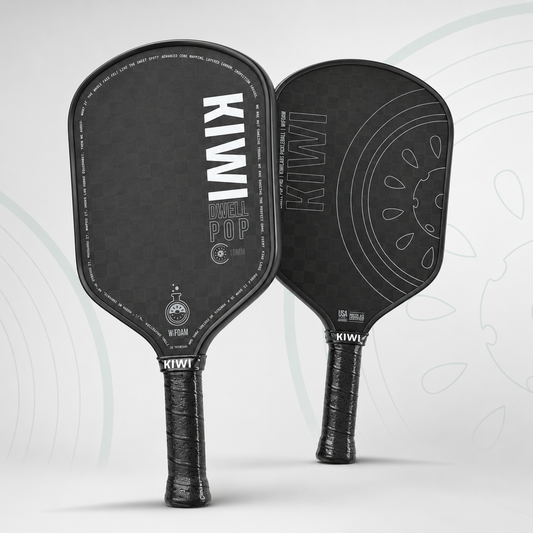
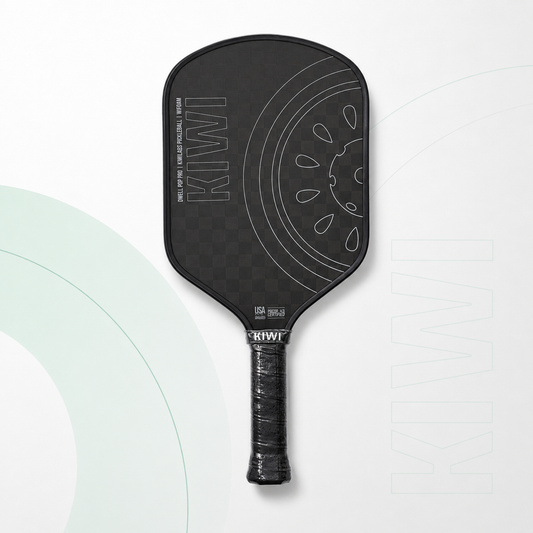
That is one reason value-focused performance brands like Kiwi Labs have earned attention. Players want premium materials and modern paddle tech, but they do not want to overpay just to get it.
A quick gut check before you buy
If you are down to two or three paddles, ask yourself a few plain questions. Do you need help controlling pace or creating it? Do you miss more from rushed hands exchanges or from soft-game inconsistency? Do you want a paddle that feels plush and connected, or crisp and lively?
Then think about what you are willing to trade. More reach may cost some forgiveness. More pop may reduce touch. More softness may ask for bigger swings to finish points. There is no perfect paddle without compromise, but there is a right compromise for your game.
The best all-court paddle does not force you to play someone else’s style. It supports the way you want to build points, gives you options when the rally changes speed, and makes your good decisions easier to execute. Buy with that standard, and you will usually end up with a paddle that stays in your bag a lot longer.