


How Raw Carbon Creates Spin on the Court

You can feel it on the first heavy topspin roll or a sliced return that stays lower than your opponent expects. That is usually the moment players start asking how raw carbon creates spin, and whether the material itself is doing the work or the marketing is getting ahead of the physics. The real answer is better than the hype, but it is also more specific.
Raw carbon can absolutely help you generate more spin. But it is not magic, and it is not just about slapping a trendy material label on a paddle face. Spin comes from the relationship between the ball, the face texture, the amount of friction at contact, and how long the ball stays on the paddle. Raw carbon matters because it can improve that interaction in a way that feels more connected, more consistent, and more playable for a wide range of players.
How raw carbon creates spin
At a basic level, spin happens when your paddle brushes the ball with enough friction to grab it and rotate it. Topspin comes from brushing up the back of the ball. Slice comes from cutting under or across it. The more effectively the paddle face grips the ball during that tiny contact window, the more potential you have to create rotation.
This is where raw carbon stands out. Unlike smoother face materials or painted-over surfaces, raw carbon tends to offer a naturally textured, grippy hitting surface. That extra surface bite can help the ball stay engaged with the face for a split second longer. In pickleball, that split second matters.
Players often describe this as the paddle "holding" the ball better. Technically, what they are feeling is a mix of friction and dwell time. Friction helps the face grab the ball. Dwell time is how long the ball stays in contact with the paddle before launching off. When those two things work together, spin becomes easier to access.
That does not mean every raw carbon paddle spins the same. Face texture, peel ply pattern, layup quality, core construction, and overall paddle stiffness all affect the final result. Raw carbon gives designers a strong foundation for spin, but the full build determines whether that spin shows up in real play.
Surface texture matters more than hype
A lot of brands throw around the word spin as if one material automatically guarantees elite performance. That is not how this works. If you want the honest version of how raw carbon creates spin, start with the face texture.
A raw carbon face usually has a more noticeable microscopic texture than slick fiberglass or heavily coated finishes. That texture increases the friction between paddle and ball. More friction means a better chance of imparting rotation, especially on serves, thirds, dipping drives, and aggressive rolls at the kitchen.
But there is a trade-off. Not all textured surfaces stay equally effective over time. Some paddles rely more on applied grit or coatings that can wear down. Raw carbon appeals to serious players because the material itself contributes to the feel and texture, not just a temporary top layer. That does not make it indestructible, but it does make the spin story more credible.
This is also why two paddles can both claim carbon faces and still feel totally different. One may have better bite on cut shots. Another may feel more muted and controlled but produce less obvious RPMs. Surface texture is part of the equation, but not the whole one.
Raw carbon vs smooth or coated faces
Smooth faces can still produce spin if your mechanics are solid, but they usually require more precision and racquet-head speed to do it consistently. Coated faces can feel grippy early on, but some lose that fresh-bite effect as they wear.
Raw carbon tends to give players a more dependable spin window. You do not have to swing out of your shoes to get the ball to dip. That matters for intermediate players trying to level up and for advanced players who want shape on the ball without sacrificing control.
Dwell time is the underrated piece
If friction is the grip, dwell time is the opportunity. The longer the ball stays on the face, the more time your stroke has to influence it. We are talking milliseconds, but that is enough to change how much spin and control you can produce.
Raw carbon paddles often pair well with constructions that create a more connected feel at contact. When the face and core work together properly, the ball does not just rebound instantly. It compresses, sits briefly, and leaves with more intentional shape.
That is one reason players who switch into quality raw carbon often say their drops feel more precise and their topspin drives start dipping more reliably. It is not just the roughness of the face. It is the way the paddle lets them shape the ball before release.
Of course, more dwell time is not always better for every player. If a paddle gets too soft or muted, some players feel like they lose quick pop on counters and putaways. Others love that extra pocketing because it gives them better touch and spin control. This is where paddle design gets personal.
Why your stroke still matters
A raw carbon face can help, but it cannot fix bad mechanics. If your contact point is late, your paddle path is flat, or your grip pressure is too tight, you are leaving spin on the table.
Players sometimes expect a new paddle to create dramatic RPM gains without changing anything else. Usually, the better result is that raw carbon rewards good technique more consistently. If you already brush well on topspin drives, you will probably notice more dip. If you know how to carve a slice return, you may get a lower skid. If your mechanics are still developing, the paddle can help you feel the difference faster, but it is still a partnership.
This is good news, not bad news. It means you do not need pro-level speed to benefit from the material. You just need repeatable contact and a paddle that gives honest feedback.
How raw carbon creates spin in real match situations
The value of spin is not just that it looks sharp on video. It changes shot behavior.
On serves, topspin helps the ball dive into the court and kick up after the bounce. That can jam opponents or push them into weaker returns. On drives, spin adds margin. You can swing aggressively while still bringing the ball down into the court. At the kitchen, topspin rolls let you attack balls from below net height with more control. On defense, slice can keep resets lower and make counters harder to attack cleanly.
This is where a spin-friendly raw carbon paddle earns its keep. You are not just chasing bigger numbers. You are buying more options. More shape on the ball means more ways to create pressure without always swinging harder.
For many players, that is the smartest path to improvement. Power is useful, but usable spin often does more for consistency and point construction.
Who benefits most from raw carbon
Intermediate and advanced players usually notice the biggest difference because they already have the swing patterns to take advantage of the surface. But beginners are not excluded. If anything, a well-designed raw carbon paddle can help newer players build better habits because they can actually feel when they brush correctly and control the ball with intention.
The only catch is that not every raw carbon paddle is beginner-friendly. Some are paired with very stiff, powerful builds that can feel demanding. Others strike a better balance between spin, forgiveness, and control.
That is why material transparency matters. A premium face should be part of a complete paddle design, not a shortcut for overpriced marketing.
What to look for beyond the face material
If you are shopping for spin, do not stop at the words raw carbon. Ask how the paddle is built. Core thickness affects feel and control. Thermoforming can change power and stability. Foam perimeter designs can increase forgiveness. Swing weight influences how easily you can accelerate through contact. Face texture matters, but so does the platform underneath it.
The best spin paddles usually feel like they are doing two jobs at once. They give the ball enough bite to shape shots, and they give the player enough confidence to swing freely. That is the sweet spot.
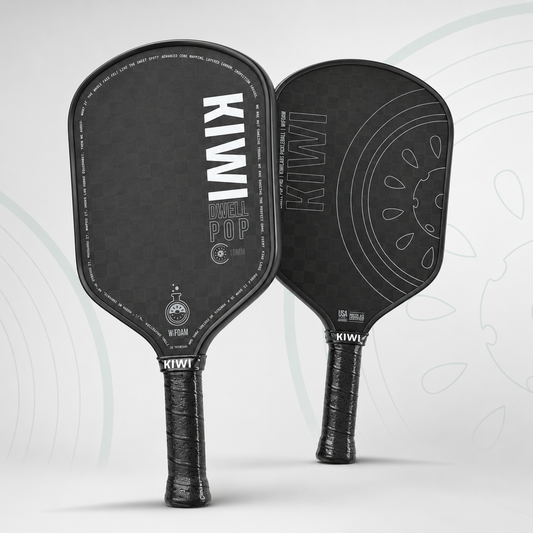
At Kiwi Labs Pickleball, that idea drives the whole approach. Premium materials should translate into real shot benefits, not inflated pricing and vague claims. If a paddle says it helps with spin, players should feel it on serves, speed-ups, rolls, and resets - not just in the product description.
Raw carbon deserves its reputation, but only when it is backed by smart construction and honest expectations. It can help you grab the ball better, hold it a touch longer, and shape shots with more confidence. That is the real edge. Not magic RPMs from a buzzword, but a better connection between your swing and the ball.