


Control Focused Paddle Test Results Explained

A paddle can feel great for five minutes and still let you down in the shots that actually decide games. That is why control focused paddle test results matter. If your goal is better resets, steadier dinks, cleaner drops, and more confidence under pressure, raw power numbers do not tell the whole story.
Most players shopping for a control paddle are not looking for a dead face with no offense. They want predictability. They want the ball to stay on the face just long enough to shape it, soften it, or direct it without guessing. And they want that control to hold up when pace speeds up at the kitchen line.
What control focused paddle test results actually measure
A good control test is not just one player saying a paddle feels soft. Real control shows up in repeatable outcomes. Can the tester reset hard drives without the ball popping up? Can they drop from transition with less effort? Can they keep dinks low and consistent when hands get busy? Those are the questions that matter.
In most control focused paddle test results, the key variables are touch, dwell time, face predictability, launch consistency, and forgiveness across the hitting surface. A paddle that scores well for control usually gives the player a little more hold on the ball and a little less surprise on contact. That does not always mean plush or muted. Some paddles feel crisp and still control the ball well because the face response is stable and the sweet spot stays usable outside dead center.
This is where a lot of marketing gets sloppy. Brands love to say a paddle has both maximum power and elite control. Sometimes that is partly true, especially with newer constructions, but there is still a trade-off. The more explosive the face, the more precise your hands need to be on soft shots. The more muted and controlled the response, the more you may need to generate offense yourself.
How testers judge control on court
The best control testing happens in context, not in a vacuum. A paddle can seem easy in cooperative drilling and then get jumpy in live points. Strong testers usually evaluate control in four areas: dinks, drops, resets, and directional accuracy on serves and returns.
Dinks and kitchen exchanges
On dinks, control paddles tend to stand out through height management. Testers notice whether they can keep the ball low without overthinking grip pressure or swing length. If the ball springs off the face too quickly, even a nice-feeling paddle can become annoying over a long match. Control results look better when a paddle lets the player work angles and depth without feeling like every touch shot is on a knife edge.
In fast kitchen exchanges, control becomes more complicated. A soft paddle can help absorb pace, but if it lacks stability, mishits will still float. That is why the best test results often come from paddles that combine a forgiving core with enough structural support to stay solid on off-center blocks.
Drops and transition resets
This is where control paddles usually earn their reputation. Third-shot drops and transition resets punish overly lively faces. Testers often report better results when the paddle has a slightly lower launch profile and a more connected feel. The ball does not trampoline off the face, so there is more room to be late, stretched, or defensive and still land the shot in the kitchen.
That said, too much softness can create a different problem. If a paddle feels underpowered, players may start forcing drops with bigger swings. Once that happens, consistency can disappear. The strongest control paddles are not just soft. They are efficient. They help the ball clear the net with compact mechanics.
Placement on serves and returns
A lot of players forget that control starts before the kitchen. Testers who look beyond hand feel often pay attention to baseline placement. Can they drive a serve deep to the backhand corner without sailing long? Can they return with shape and margin instead of just pushing the ball back safely?
When control focused paddle test results are positive in this area, it usually means the paddle offers a stable face and a predictable launch window. That does not guarantee huge pace, but it often leads to more useful depth and better targeting.
What paddle traits usually lead to better control results
Construction matters more than buzzwords. If you see a paddle consistently earning strong control reviews, there are usually a few physical reasons behind it.
Surface feel plays a big role. Raw carbon faces and other textured carbon setups often help because they create a connected feel on contact and support spin-based placement. Spin itself is not control, but spin can improve control by helping the ball dip into the court and stay off your opponent's attack zone.
Core behavior matters just as much. Thicker cores often test well for control because they reduce harsh rebound and improve touch. They can also broaden the effective sweet spot, which is huge for players who are still building consistency. But thickness alone is not a magic fix. Core quality, edge construction, and face layup all influence whether a paddle feels controlled or just dull.
Weight distribution is another big one. Head-heavy paddles can feel powerful, but some testers find them harder to maneuver in quick exchanges. More balanced setups often score better in control testing because they stay easier to position for blocks, dinks, and hand battles. Again, it depends on the player. Someone with fast hands and solid technique may love a more aggressive setup, while an improving player may immediately benefit from a paddle that feels easier to guide.
Why some control paddles test better for one player than another
This is the part buyers should pay attention to. Control focused paddle test results are useful, but they are not universal truth. A tester with advanced mechanics may call a paddle easy to control because they create their own shape and pace. A newer player may use the same paddle and feel like it has no free depth.
Swing style changes everything. If you hit with compact strokes and like to redirect pace, you may prefer a paddle with a softer, more stable response. If you use more wrist, brush heavily for spin, or rely on counters, you may want control with a little more pop. Even grip pressure affects results. Players who squeeze too tightly often struggle to feel the benefits of a touch-oriented paddle.
This is also why comparing test results across reviewers can get messy. One reviewer may prioritize plush feel and reset success. Another may define control as the ability to hit targets at full speed. Both are talking about control, but they are not measuring the same thing.
Reading control focused paddle test results without getting fooled
The smartest way to use paddle testing is to look for patterns. If multiple testers say a paddle shines on resets, has a large sweet spot, and keeps dinks low, that usually means something. If one reviewer says it is a control beast while several others call it poppy and demanding, that tells you the paddle may be player-dependent.
Pay close attention to the language reviewers use. Words like plush, muted, dwell, connected, stable, and forgiving often signal control strengths. Words like explosive, hot, lively, or springy usually hint that power is more prominent. Neither category is better by default. The right choice depends on whether you are trying to clean up unforced errors or add putaway speed.
It also helps to separate control from comfort. A comfortable paddle can reduce shock and still be too lively on touch shots. A firm paddle can feel crisp and still offer elite directional control. Feel and performance overlap, but they are not identical.
What the best control results usually mean for real players
For most club and tournament players, strong control test results translate to fewer balls sprayed long, more makeable drops under stress, and better defense when opponents speed up the point. That is real value. It is not flashy, but it wins games.
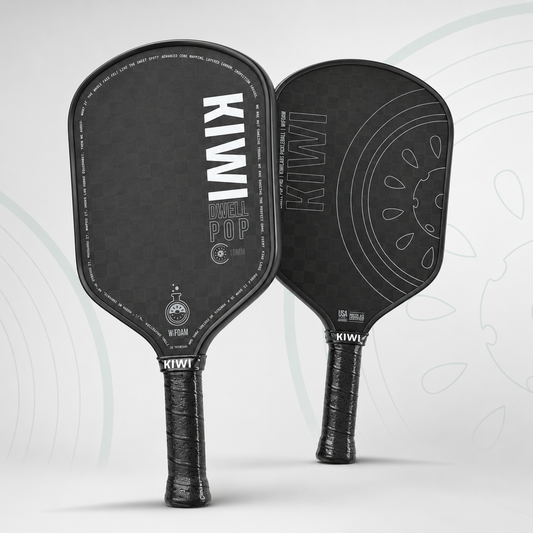
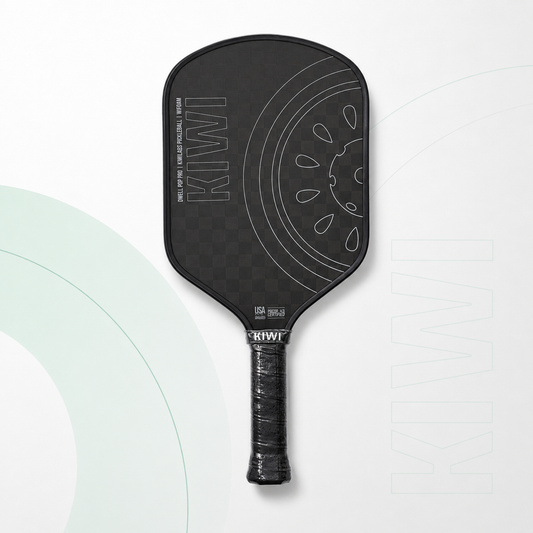
The best part is that modern paddle design has narrowed the old gap between control and offense. You no longer have to choose between a pillow-soft touch paddle and a rocket launcher. Some of the strongest all-court options now blend dwell time, spin, and enough putaway power to keep opponents honest. That is exactly where smart brands have pushed the category forward, including Kiwi Labs with designs that focus on usable performance instead of inflated hype.
If you are reading test data because your current paddle feels unpredictable, trust that instinct. Control is not a luxury feature for advanced players. It is the foundation that lets every other part of your game show up more often. The right paddle will not fix your footwork or your decision-making, but it can make your best mechanics easier to repeat when the point gets tight.