


How to Add Topspin Serves in Pickleball

A flat serve can feel fine right up until better opponents start punishing it. If you want more margin over the net, more depth in the court, and a ball that drops harder after the bounce, learning how to add topspin serves is one of the smartest upgrades you can make.
Topspin on a serve is not about swinging harder and hoping the ball dives in. It comes from brushing up the back of the ball with the right paddle path, timing, and contact point. Do it well, and your serve gets heavier without turning into a low-percentage gamble. That matters whether you are trying to back opponents off the baseline or simply stop giving them easy returns.
Why topspin serves matter
A good topspin serve buys you two things at once - safety and pressure. Because topspin makes the ball arc up and then dip down, you can aim higher over the net while still keeping the serve in. That extra net clearance is a big deal under pressure, especially in matches where your timing is not perfect.
The second benefit is what happens after the bounce. A topspin serve tends to kick forward and stay more aggressive than a floaty serve. It does not turn pickleball into pro tennis, but it can rush a returner, push contact farther back, and make their first shot less comfortable. Against stronger players, that extra bit of discomfort matters.
There is a trade-off, though. If you chase spin without solid mechanics, you often lose depth and pace. The goal is not maximum RPMs for the highlight reel. The goal is a serve you can repeat.
How to add topspin serves with the right motion
The simplest way to think about topspin is low to high. Your paddle should travel upward through contact while moving forward into the court. If your swing is only forward, you get flat pace. If it is only upward, you get spin without enough penetration. The best topspin serve blends both.
Start with a relaxed stance and let the ball drop naturally. As you begin your swing, keep the paddle below the ball. From there, brush up the back of the ball and finish higher than your contact point. That upward finish is what helps create topspin.
A lot of players make the mistake of chopping at the ball with their wrist. That usually creates inconsistency, not quality spin. The better move is to let your arm and shoulder guide the swing, with the wrist staying loose but not wildly active. Think smooth acceleration, not a slap.
Contact point changes everything
If you contact the ball too far out in front with a flat paddle face, you will drive it more than roll it. If you let it get too close to your body, you lose extension and control. The sweet spot is usually slightly in front of your lead hip, where you can swing up and through cleanly.
Your paddle face should be close to neutral or slightly closed at contact. Too open, and the ball floats. Too closed, and you drive it into the net. Small angles matter here, which is why repetition matters more than theory.
Toss and drop are part of the serve
Even though the serve rules limit how you strike the ball, you still control the setup. Give yourself a consistent drop. If the ball starts from a different height or distance every time, your contact point keeps changing, and your topspin will come and go.
Many players improve their serve just by simplifying the pre-serve routine. Same stance, same drop, same swing rhythm. Consistency before contact makes spin easier after contact.
Grip, paddle face, and feel
You do not need a complicated grip change to add topspin serves. Most players can do it with a standard continental or slightly eastern-style grip, depending on what already feels natural. What matters more is that you can swing up the back of the ball without forcing your wrist into an awkward position.
Grip pressure matters too. If you squeeze the handle too hard, the swing gets tight and jerky. A relaxed grip helps the paddle move faster and more freely through contact. That gives you better feel for brushing the ball instead of just hitting through it.
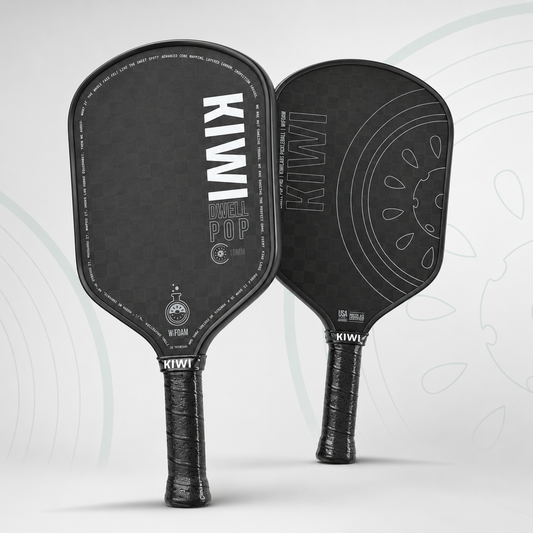
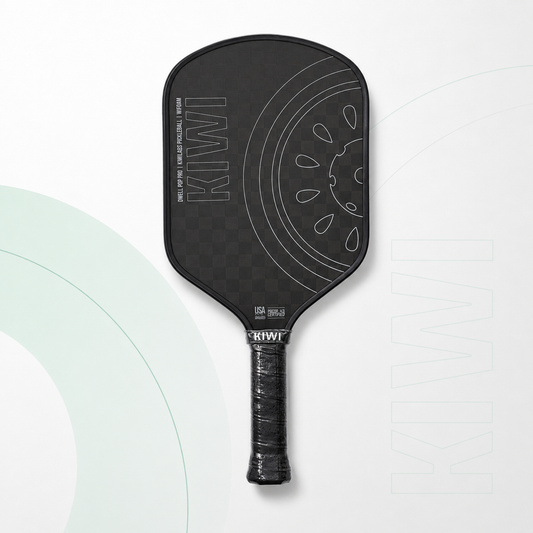
This is also where paddle design can help. Spin is mostly a technique skill, but paddle face texture, dwell time, and overall feel can make it easier to grab the ball and create a more confident brushing contact. A quality carbon fiber face with real spin-friendly texture is not marketing fluff when your goal is repeatable shape on the ball. It will not fix bad mechanics, but it can make good mechanics more effective.
Drills that actually build a topspin serve
If you want to know how to add topspin serves faster, stop measuring success by pure speed. Measure shape, depth, and bounce. A serve that clears the net by a safe margin, lands deep, and jumps forward is doing its job.
Start by serving at about 60 to 70 percent effort. Aim three to five feet above the net and try to land the ball in the back third of the service box. This teaches you to trust the dip instead of forcing a line-drive serve.
Next, exaggerate the low-to-high motion for a short drill set. Hit 20 serves where your only goal is to brush up the ball and finish high. Some will land short. That is fine. You are training the feeling first.
Then blend that feeling back into a normal serve. Add more forward drive while keeping the same upward path. This is where players usually find the balance between spin and depth.
A simple progression works well:
- Hit 10 serves focused only on clean brush
- Hit 10 serves focused on deep targets
- Hit 10 serves combining both
- Hit 10 serves under a match-style routine
Common mistakes when learning topspin
The biggest mistake is trying to create spin by snapping the wrist. It feels powerful, but it usually wrecks contact quality. You want a connected swing, not a last-second flick.
The second mistake is over-rotating the body and pulling off the ball. When your chest flies open too early, the paddle path gets inconsistent and the serve sprays wide. Stay balanced through contact and let the follow-through finish naturally toward your target.
Another common issue is chasing spin at the expense of depth. If your topspin serve lands short, many opponents will step in and attack. Topspin should help you serve bigger, not smaller. If the ball keeps dropping too early, add a little more forward extension and aim deeper.
Finally, do not ignore your contact height. Because pickleball serves must be struck under specific rules, some players get tentative and decelerate. That kills both pace and spin. Stay legal, but swing with intent.
How paddle setup can support your serve
Not all paddles deliver the same blend of spin, control, and pop. If your paddle feels slick, overly springy, or unpredictable on touch, serving with heavy topspin can get inconsistent fast. Players who want more spin confidence usually benefit from a paddle with a textured face, stable response, and enough dwell time to feel the ball before it leaves.
That is one reason so many players are moving toward modern raw carbon and thermoformed builds instead of paying inflated prices for legacy-name hype. Better materials and smarter construction can make performance more accessible, especially when you are working on shots that rely on precise contact.
Still, equipment is the helper, not the hero. A spin-friendly paddle gives you more upside, but only if your mechanics are there.
When to use more or less topspin
Not every serve needs maximum action. Against a player with a weak backhand return, a deeper flatter serve might be enough. Against someone who likes to step in and redirect pace, a heavier topspin serve that jumps at them can be the better play.
Conditions matter too. Outdoors, wind can change how much net clearance you want. On slower courts, topspin may help you keep depth while maintaining control. On faster surfaces, too much aggression can send the ball long if your contact drifts.
The best servers can vary the shape without changing the routine. That is the real advantage. You are not just spinning the ball for style points. You are giving returners different looks while keeping your own mechanics reliable.
If your serve has felt too attackable, start with one adjustment: brush up the back of the ball and finish high. Do that often enough, and topspin stops being a trick shot. It becomes part of how you control the first hit of every rally.