


How to Choose Grip Size for Pickleball

A paddle can have elite carbon fiber, great pop, and a huge sweet spot, but if the handle feels off in your hand, the whole thing plays worse. That is why learning how to choose grip size matters more than a lot of players think. Grip size affects control, comfort, wrist action, and even how confident you feel on resets, drives, and quick exchanges at the kitchen.
A lot of players assume grip size is a minor detail. It is not. A grip that is too small can make the paddle feel twitchy and unstable. A grip that is too large can limit wrist mobility, reduce feel, and leave your hand working harder than it should. The right fit gives you cleaner feedback from the paddle and helps your mechanics work the way they are supposed to.
Why grip size changes how a paddle plays
Grip size is not just about comfort in your palm. It changes how connected you feel to the paddle face. When the grip fits correctly, you can hold the paddle securely without squeezing too hard. That matters because over-gripping creates tension in the hand, wrist, and forearm, and tension usually shows up as less touch and slower reactions.
If you like to shape the ball with topspin, flick counters, and quick hand battles, grip size becomes even more important. Smaller grips usually make it easier to use your wrist and adjust the paddle face quickly. Larger grips can offer a more filled-in, stable feel, which some players prefer on blocks and drives. Neither is automatically better. It depends on your hand, your style, and what kind of feel you want.
How to choose grip size with two simple methods
The easiest place to start is measurement, not guesswork. You do not need a lab setup for this.
Use your height as a rough starting point
Some players use height or general body size as a shortcut, but that is a weak predictor. Two players of the same height can have very different hand sizes. If you have nothing else to go on, it may help you avoid a wild guess, but it should never be the final answer.
Measure from your ring finger crease to your palm
A better method is to measure from the middle crease of your ring finger down to the second major crease in your palm. That number, in inches, gives you a solid estimate of ideal grip circumference.
For most adult pickleball players, common grip sizes land around 4 inches to 4.5 inches. Many paddles come in that range because it suits a wide section of players. If your hand measures on the smaller side, you will usually want a thinner handle. If your hand measures larger, you may prefer more circumference.
Try the finger test
Once you have a paddle in hand, hold it with your normal playing grip. Then use the index finger of your opposite hand and see if it fits in the space between your fingertips and palm.
If there is no room, the grip is likely too small. If there is too much extra room, it may be too large. If your finger fits snugly, you are probably in the right range. It is not perfect, but it is a practical on-court check that works well for most players.
What happens if your grip is too small
A smaller grip is not always a problem. In fact, many players intentionally prefer it. But there is a difference between slightly small and definitely too small.
When a grip is too small, you often squeeze harder to stabilize the paddle. That extra tension can contribute to hand fatigue and may bother players who are prone to wrist, forearm, or elbow discomfort. The paddle can also twist more on off-center hits, which makes mishits feel harsher and less predictable.
That said, a slightly smaller grip can help players who rely on wrist speed. If you like to roll dinks, generate spin on serves, or snap through quick counters, a thinner handle may feel faster and more maneuverable. This is one of those areas where play style matters just as much as measurement.
What happens if your grip is too large
A grip that is too large usually feels bulky right away. Your hand cannot wrap around it naturally, and subtle paddle-face adjustments get harder.
For some players, that means less spin and less touch. For others, it shows up in hand battles, where the paddle feels just a beat slow. You may also notice discomfort because your forearm has to work harder to maintain control.
Still, some players like a slightly larger grip because it can feel more stable on blocks and drives. If you tend to play a firm, compact game and do not use a lot of wrist, a fuller grip may feel solid. The problem starts when larger turns into restrictive.
How play style should influence grip size
This is where the buying decision gets smarter. The best grip size is not only about hand measurements. It is also about what you want the paddle to do in real points.
Players who want more wrist action
If your game leans on spin, flicks, deceptive speed-ups, and quick hand changes, you will probably prefer a grip on the smaller side of your comfort range. That extra maneuverability can make the paddle feel more alive.
Players who want a steadier feel
If you prioritize resets, blocks, and controlled drives, a standard or slightly fuller grip may feel more planted. It can reduce the sense that the paddle is moving around in your hand on contact.
Players dealing with hand or elbow fatigue
If your hand cramps or your forearm gets overworked, grip size deserves a close look. The wrong fit can force compensation. Sometimes going slightly larger helps reduce over-squeezing. Other times a smaller handle with the right overgrip works better. The key is to notice what your hand is doing during longer sessions, not just the first five minutes.
Overgrips let you fine-tune the fit
Here is the part many players miss: you do not need to get the final feel perfect straight out of the box. Overgrips give you room to adjust.
That is why many experienced players prefer starting a little smaller rather than a little larger. You can always build up circumference by adding an overgrip or two. You cannot make an overly thick handle meaningfully thinner without replacing the base grip, which is more hassle and not always worth it.
Overgrips also change texture and cushioning. A tackier overgrip may help if you want a more secure hold without squeezing harder. A cushioned overgrip can soften feel, though it may mute some direct feedback from the handle. Again, there is a trade-off. More cushion can mean more comfort, but sometimes a little less connection.
Common mistakes when choosing grip size
The biggest mistake is choosing based only on what felt okay for thirty seconds in your living room. Grip size needs to hold up during serves, dinks, resets, and fast exchanges. A handle that feels fine at rest can feel completely different once sweat, pressure, and fatigue show up.
Another mistake is copying someone else’s setup without considering your own hand size and style. Your doubles partner may love a built-up handle because it suits their mechanics. That does not mean it is right for you.
The third mistake is assuming smaller always means more advanced. Yes, plenty of better players use thinner grips for added wrist action. But if the handle is so small that you are constantly over-gripping, you are giving away control and comfort to chase a theory.
A practical way to test your ideal grip size
If you are between sizes, start with the smaller option and test it in real play. Pay attention to three things.
First, notice whether the paddle feels stable on off-center contact. Second, notice whether your wrist can move freely on spin shots and hand battles. Third, notice whether your hand or forearm feels tense after an hour.
If the paddle feels fast but too loose, add an overgrip. If it feels controlled but sluggish, the handle may be too built up. This trial-and-adjust approach is usually more reliable than trying to solve everything with a chart.
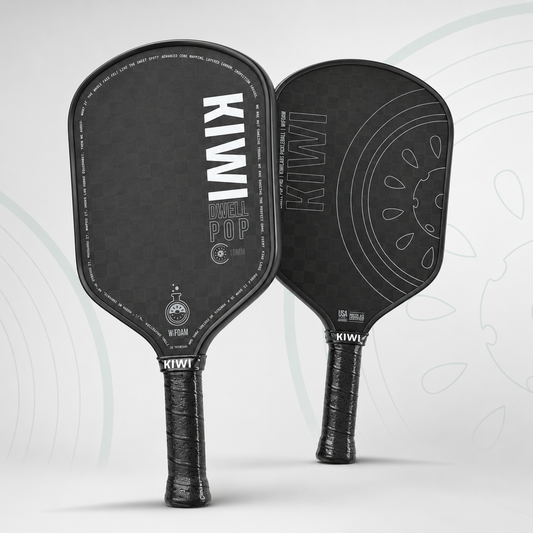
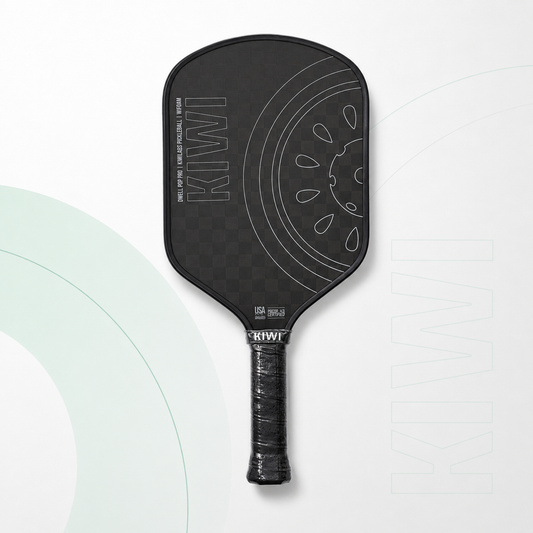
For players shopping performance paddles, this matters because premium face materials and core construction only deliver their full benefit if the handle works with your hand. Big sweet spot, raw carbon texture, dwell time, pop - none of that feels as good as it should when the grip size is fighting you. Brands that take player fit seriously, including Kiwi Labs Pickleball, understand that performance is not just face tech. It is the full connection point between player and paddle.
How to choose grip size without overthinking it
Start with your hand measurement. Use the finger test as a quick check. Then let your play style break the tie.
If you want more maneuverability, spin, and wrist freedom, lean slightly smaller. If you want a fuller, steadier feel, stay standard or go a touch larger. And if you are uncertain, smaller with an overgrip is usually the safer path because it gives you room to customize.
The right grip size should disappear in your hand. You should not be thinking about holding on, adjusting constantly, or fighting tension. You should be thinking about your next shot, which is exactly the point.