


Kevlar vs Carbon Paddles: Which Wins?

A paddle can look amazing on a spec sheet and still feel wrong the second you start resetting hard drives. That is why kevlar vs carbon paddles is not really a materials debate in isolation. It is a feel debate, a performance debate, and for a lot of players, a value debate.
If you have been comparing paddle tech lately, you have probably seen Kevlar positioned as the new answer to everything - more control, more stability, more durability, more spin. Some of that is grounded in real construction differences. Some of it is marketing doing what marketing does. The smarter move is to understand how each material tends to play and what that means for your game.
Kevlar vs carbon paddles: what actually changes?
When players say "Kevlar paddle" or "carbon paddle," they are usually talking about a paddle that uses those fibers in the face layup or structural build. That matters because paddle performance is not created by one ingredient alone. Core thickness, thermoforming, foam perimeter, face texture, weight distribution, and handle construction all influence how the paddle behaves.
Still, face material changes feel in a noticeable way. Carbon fiber has become the benchmark because it offers a strong blend of stiffness, responsiveness, spin potential, and consistency. It works for a huge range of players because it can be tuned in different directions - softer for control, firmer for pop, more stable for all-court balance.
Kevlar, by contrast, is often associated with a more muted, dampened response. In many builds, it absorbs impact a little differently and can soften the sensation on contact. Some players love that because it gives them more confidence on drops, resets, and hand battles where overhitting is the real problem. Others pick it up and immediately feel like they have to work harder to generate put-away power.
That is the first truth here: neither material is automatically better. The better paddle is the one that gives you the right mix of feedback, control, and offensive help for your swing.
How carbon paddles usually play
Carbon paddles dominate for a reason. They give brands and builders a lot of room to create a high-performance paddle without weird trade-offs. Good carbon constructions can produce excellent spin, clean ball feedback, and a strong balance between dwell time and pop.
For many players, carbon feels more connected. You can sense the ball on contact without the paddle feeling dead. That is a big deal on serves, third-shot drives, and counters, where timing and confidence matter just as much as raw power. A well-built raw carbon paddle can also create the kind of predictable response that helps intermediates level up faster. You know what the ball is going to do when you swing correctly.
Another advantage is range. Carbon paddles can be tuned toward plush control or toward faster, more explosive offense. That means there is not just one “carbon feel.” If you have tried one carbon paddle and hated it, you have not ruled out the category. You have ruled out one build.
For players who want all-court versatility, carbon is still the safest bet. It tends to offer the broadest performance window with the fewest extremes.
How Kevlar paddles usually play
Kevlar paddles are getting attention because many of them feel softer and more muted at impact. That can translate into better comfort and a little extra help on touch shots, especially for players who fight a springy face or too much rebound.
In the right construction, Kevlar can make a paddle feel more controlled during resets and kitchen exchanges. It may also reduce some of the harshness players notice in stiffer builds. If you come from tennis and prefer a less crisp, more dampened response, that can be appealing fast.
But the upside depends heavily on the rest of the paddle. A Kevlar face alone does not guarantee elite control. If the paddle is built to be poppy, it can still play poppy. If the sweet spot is small, the material will not rescue mishits. And if the face feels too muted for your taste, touch can actually get worse because you lose the feedback that helps you calibrate contact.
That is where some of the hype gets ahead of reality. Kevlar can be useful. It is not magic.
Spin, power, and control: where each one tends to land
Most players shopping this category want a simple answer: which one gives more spin? In practice, spin comes from more than the face fiber. Surface texture, dwell time, and your mechanics all matter. Carbon has a long track record of producing serious spin when paired with a quality raw surface. Kevlar can also spin well, but it is not automatically a spin upgrade just because it is newer or different.
On power, carbon often has the edge in liveliness and easier ball speed, especially in firmer or thermoformed builds. That makes it attractive for players who want help on drives, speed-ups, and overhead finishes. If your game depends on pressuring opponents with pace, carbon generally gives you more options.
On control, Kevlar often gets the headline because of its softer reputation, but the truth is more conditional. Some players absolutely feel more in control with Kevlar because the paddle seems calmer through contact. Others get more control from carbon because the feedback is clearer and the response is more predictable. Control is not just softness. It is repeatability.
If you want a clean rule of thumb, here it is: carbon usually wins on versatility and offensive range, while Kevlar may appeal more to players who want a cushioned feel and a little less edge at impact.
Durability and long-term value
This is another area where marketing can get loud. Kevlar has a strong reputation as a tough material, and that is true in a broad materials sense. But pickleball paddle durability is about the entire construction, not just one fiber label. Bonding methods, edge integrity, foam quality, face wear, and core stability all matter.
A cheap Kevlar paddle can still break down early. A well-made carbon paddle can stay consistent for a long time. So if you are trying to judge value, do not stop at the material callout. Look at how the paddle is built and whether the brand is transparent about what you are actually paying for.
That matters even more now because some brands are charging novelty premiums for hybrid or Kevlar-based builds without delivering a real jump in performance. Fancy material stories are easy. Consistent engineering is harder.
Who should choose carbon?
Carbon is the smarter fit for most players, especially if you want one paddle that can grow with your game. Beginners benefit from its consistency. Intermediates benefit from its spin and all-court balance. Advanced players benefit from the variety of control and power profiles available in modern carbon builds.
If you like to shape serves, roll dinks, counter aggressively, and still trust your paddle on resets, carbon remains the standard for a reason. It is not old news. It is proven.
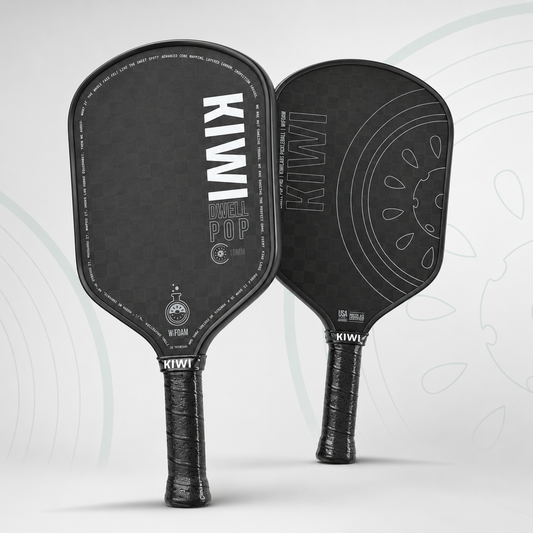
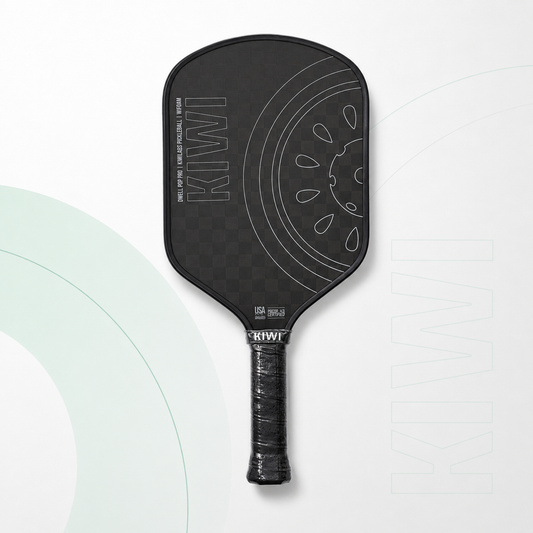
A lot of premium brands, including Kiwi Labs Pickleball, continue to invest heavily in advanced carbon constructions because they deliver high-level performance without forcing players into a narrow feel profile.
Who should choose Kevlar?
Kevlar makes sense if you know you prefer a more muted impact feel and want to take a little sting out of contact. It may also appeal to players who prioritize touch and comfort over easy pop.
That said, it is best for buyers who know what they like. If you are still figuring out your game, Kevlar can be a riskier blind buy because the feel is more polarizing. Some players click with it immediately. Some never do.
If possible, think less about chasing the newest material and more about identifying your real need. Are you hitting too many resets long? Struggling to control hand speed at the kitchen? Wanting less vibration? Those are good reasons to test a softer-feeling build. Wanting the latest buzzword is not.
The better question than kevlar vs carbon paddles
Instead of asking which material is better, ask which build helps your style. A control-focused player who lives on resets and patient hands may prefer a more muted response. An aggressive all-court player may want carbon’s cleaner feedback and easier pop. A former tennis player may care more about stability through drives. A newer player may just need a bigger sweet spot and predictable launch.
That is why material alone is never the whole story. The best paddle is the one that makes your good mechanics feel repeatable and your misses less costly.
If you are comparing kevlar vs carbon paddles, keep your eye on actual outcomes: how the paddle spins, how it resets, how it handles pace, how forgiving it is off-center, and whether the price matches the performance. The label matters. The build matters more.
Pick the paddle that helps you play bolder without losing trust in your touch. That is the kind of technology that actually earns its keep.