


Paddle Innovation Trends That Actually Improve Play

A paddle that feels great in warmups but falls apart during fast hands battles is not innovative. It is just well marketed. The paddle innovation trends worth watching are the ones that give players a larger usable sweet spot, more predictable resets, heavier spin, and power they can control when the point speeds up.
That distinction matters because pickleball paddle claims are getting louder. New cores, carbon surfaces, edge treatments, foam injections, and thermoformed builds can all affect performance. But no single technology makes every player better. The right setup depends on whether you need help with touch at the kitchen, put-away pace from the baseline, defensive stability, or a more balanced all-court response.
Paddle Innovation Trends Shaping Real Performance
The biggest shift is that paddle design is moving away from one-dimensional power. Players no longer have to choose between a soft control paddle and a trampoline-like power paddle with a tiny sweet spot. Better materials and construction methods are helping brands tune feel, forgiveness, spin, and pop with more precision.
Thermoforming is becoming more refined
Thermoformed paddles changed the market by bonding the paddle's face, edge, and core under heat and pressure. The result is typically a stiffer, more unified structure that can produce strong energy return and a solid, connected feel.
Early thermoformed paddles often leaned hard toward power. For aggressive players, that was exciting. For many intermediates, the trade-off was a paddle that felt too hot on counters, rolls, and soft drops. The next phase of thermoforming is more intentional: designers are pairing it with core tuning, foam support, and better weight distribution so players can access pop without giving up every bit of touch.
If you drive serves, attack from the transition zone, and want more force behind your counters, a thermoformed build can be a strong fit. If your game is built around feather-light dinks and delicate resets, look for one with a controlled response rather than assuming every thermoformed paddle will feel the same.
Full-foam and foam-enhanced designs are expanding the sweet spot
Foam is no longer just filler around a paddle's perimeter. It is becoming a major tuning tool. Perimeter foam can help stabilize the outer edges of the paddle, while full-foam construction can create a more consistent response across a wider hitting area.
The practical benefit is simple: off-center contact becomes less punishing. That matters when you are reaching for a fast body shot, blocking a hard drive, or catching the ball late in a hands exchange. A larger effective sweet spot does not mean mishits disappear, but it can turn a ball that would have died in the net into a playable reset.
There is a trade-off. Foam-heavy paddles can feel different from traditional honeycomb-core models, sometimes with a denser or more muted impact. Players who want a crisp, direct connection may prefer a hybrid approach. Players who value stability, comfort, and forgiveness may find foam technology worth the adjustment.
Raw carbon faces are being tuned for usable spin
Raw carbon fiber remains a major force because it gives players a textured surface that can grab the ball well. But the trend is moving beyond simply putting carbon on a paddle and calling it a spin machine. Face layup, texture consistency, resin treatment, and core interaction all influence whether a paddle produces repeatable spin over time.
Spin is not just for highlight-reel serves. It makes third-shot drops dip more aggressively, helps topspin drives clear the net with margin, and gives your rolls more bite at the kitchen line. A spin-friendly face can also make slices lower and harder to attack.
Still, maximum spin is not automatically maximum control. A highly textured face paired with a very lively core can make your ball jump more than expected. The best paddle for an improving player is often one that creates enough spin to shape shots while keeping launch angle and touch predictable.
Core construction is getting more specific
Core thickness is still one of the fastest ways to understand a paddle's general personality. Thinner cores tend to feel quicker and more explosive, while thicker cores usually offer more dwell time and a softer, more controlled response. But thickness alone does not tell the whole story anymore.
Cell size, core density, wall structure, and foam integration all shape how a paddle compresses and rebounds. Two 16 mm paddles can play very differently. One may feel plush and controlled, while another may have enough pop to finish a point with a compact swing.
This is good news for players who have outgrown broad labels like “power paddle” or “control paddle.” The better question is where you need help. Need depth on drives without taking bigger cuts? Look for a responsive core. Need cleaner drops and less vibration on blocks? Prioritize dwell time, stability, and a forgiving face-core combination.
What Innovation Means for Different Playing Styles
The best paddle technology should support your patterns, not force you into someone else's game.
A newer player may benefit most from a generous sweet spot, a stable frame, and enough control to build confidence on dinks, returns, and third shots. Chasing the hottest paddle on the market can make learning harder if every compact swing sends the ball long.
An intermediate player often needs balance. This is the stage where better spin, controlled pop, and a more stable perimeter can create visible gains. You want a paddle that rewards cleaner mechanics but does not punish a slightly late contact point.
Competitive players may be more willing to make trade-offs. A fast, powerful paddle can be a weapon in hand battles and speed-ups, especially for players with reliable touch. Others will choose a thicker, more controlled setup because it lets them reset attacks and win longer points. Neither choice is more advanced by default.
Don’t Confuse Innovation With Price Inflation
Premium materials cost money. Quality carbon fiber, precise molding, durable edge construction, and consistent manufacturing are worth paying attention to. But a bigger price tag is not proof that a paddle has better technology or will fit your game better.
That is where transparent specs matter. Look past dramatic claims and ask practical questions: What is the face material? Is the paddle thermoformed? How is foam being used? What is the core thickness? Is the shape designed for reach, maneuverability, or a wider hitting zone? Most importantly, what does that combination mean when you are dropping, resetting, countering, and serving?
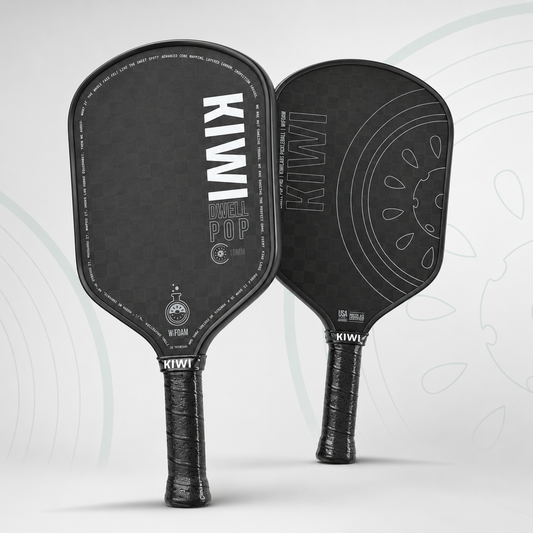
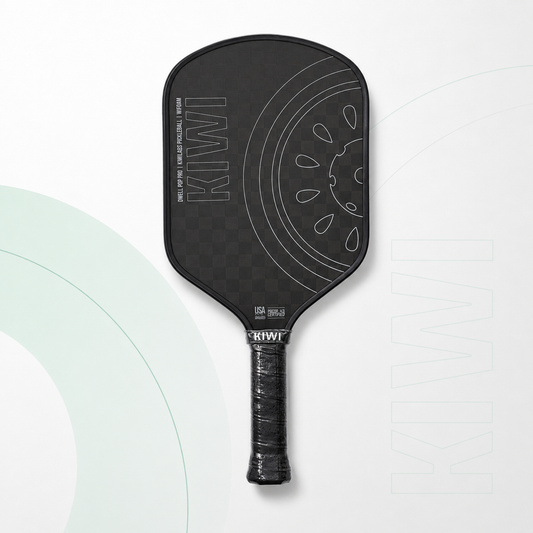
Brands that explain construction clearly give players a better chance to buy smart. Kiwi Labs Pickleball takes that player-first approach by building modern carbon, thermoformed, and full-foam options around real performance needs rather than legacy-brand pricing.
How to Choose From New Paddle Technology
Start with the shot that breaks down most often. If your resets sit up, stability and a softer, more forgiving response may matter more than raw power. If your drives lack depth or your counters do not penetrate, a more responsive thermoformed or foam-enhanced design could help. If opponents attack your dinks because they float, prioritize touch and dwell time before chasing extra pop.
Then consider swing weight and shape. An elongated paddle can add reach and leverage, but it may feel less maneuverable in rapid exchanges. A standard or hybrid shape can move faster in your hands and often provides a more familiar sweet spot. The right answer depends on your hand speed, strength, and court position.
Finally, give yourself enough time to adjust. A new paddle can change your launch angle, contact feel, and timing. Play several sessions before judging it, especially if you are moving from a traditional composite paddle to raw carbon, thermoformed, or full-foam construction.
The smartest innovation is not the feature with the flashiest name. It is the one that helps you trust your paddle when the ball is low, fast, and landing on the edge of the face. Choose technology that makes your best shots more repeatable, then let your game do the talking.