
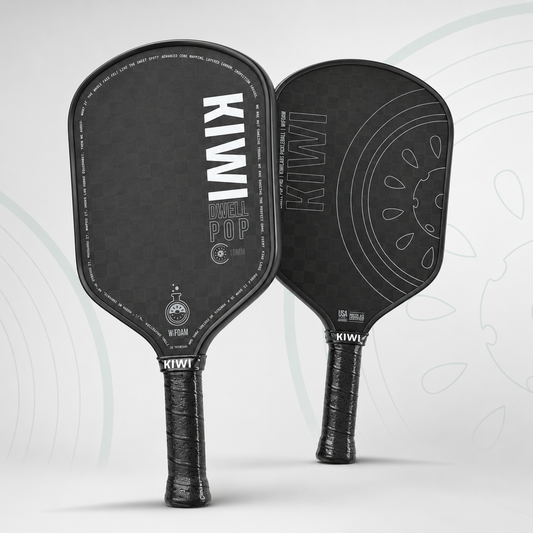


Thermoformed vs Traditional Paddles

You feel it on the first few rallies. One paddle comes off the face hotter, stays more stable on off-center hits, and gives your drives a little extra finish. Another feels softer, easier to reset, and a touch more predictable in the short game. That’s the real thermoformed vs traditional paddles conversation - not hype, not buzzwords, just how construction changes performance.
If you’ve been shopping paddles lately, you’ve probably seen thermoforming positioned like a must-have feature. Sometimes that’s fair. Sometimes it’s lazy marketing. The truth is simpler: thermoformed paddles can absolutely offer real advantages, but they are not automatically better for every player, every style, or every budget.
What thermoformed means in paddle construction
A traditional paddle is typically built by layering the face material over a core and bonding the components together in a more standard assembly process. A thermoformed paddle adds heat and pressure during manufacturing to fuse elements more tightly, often around the perimeter as well. In many cases, thermoformed paddles also include edge foam, which helps with stability, sweet spot size, and feel.
That construction change matters because paddles are not just sheets of carbon over a honeycomb core. The way the face, core, and edge structure work together affects flex, rebound, torsional stability, and how the paddle responds when contact is less than perfect.
In plain English, thermoforming usually aims to create a paddle that feels more solid, more connected, and more explosive without turning every shot into a trampoline.
Thermoformed vs traditional paddles in real play
The easiest way to compare these paddle types is by what players actually notice on court.
Power and put-away ability
Thermoformed paddles often deliver more pop. If you like to speed up the ball, attack high dinks, or get more depth on serves and drives, that added energy return can be a real advantage. The paddle feels livelier, especially when you swing with intent.
Traditional paddles usually feel more muted. That can mean less free power, but it can also create a more controlled response. If you already generate your own pace, you may not need extra help from the paddle face.
This is where a lot of improving players get tripped up. More power sounds better until it starts showing up on resets that float too deep or touch shots that launch. A thermoformed build can raise your ceiling on offense, but it may also ask for cleaner hands and better touch.
Control and short-game feel
Traditional paddles often earn points here because they tend to feel a little more dampened and straightforward. For players focused on dinks, drops, and resets, that softer response can be easier to manage.
Thermoformed paddles are not automatically wild or uncontrollable. A well-built thermoformed paddle with the right face material, core thickness, and foam setup can still offer excellent control. But compared to a more classic build, the response is often firmer and more energetic.
That means control becomes more dependent on the total design, not just the construction label. Two thermoformed paddles can feel very different from each other.
Sweet spot and forgiveness
This is one of the strongest arguments for thermoforming when it’s done well. Because the structure is often stiffer and more reinforced around the edges, thermoformed paddles can feel more stable across the face. Off-center contact loses less energy, and mishits don’t twist the paddle as much.
For club players and intermediates, that matters a lot. You don’t need to be striking the exact center every time to keep the ball playable. Bigger effective sweet spots can make a paddle feel easier, more forgiving, and more confidence-building.
Traditional paddles can still be forgiving, especially with smart core and shape design, but many players notice more drop-off when they miss the center.
Spin potential
Spin is not just about thermoformed vs traditional paddles. It depends heavily on the face material and surface texture. Raw carbon faces, peel-ply textures, grit, and dwell time all play a role.
That said, many thermoformed paddles are built for modern performance, so they often pair thermoforming with spin-friendly face materials. That’s why shoppers sometimes associate thermoformed with better spin. The construction itself is only part of the story.
If you care about heavy topspin rolls, sharper cut serves, and more bite on drops, look at the full build, not just whether the paddle is thermoformed.
Who should choose a thermoformed paddle?
If your game is getting more aggressive, thermoforming starts to make a lot of sense. Players who attack from midcourt, drive the third, counter hard at the kitchen, or want more put-away power usually appreciate the added pop and stability.
It’s also a strong fit for players who want a more modern all-court feel. A good thermoformed paddle can blend offense and control in a way that older constructions sometimes struggle to match.
Another good candidate is the player who feels their current paddle dies on off-center hits. If mishits are costing you consistency, a thermoformed build with foam support may help the paddle stay steadier through contact.
Still, this isn’t a blanket recommendation for everyone. If your biggest strength is soft-game precision and you dislike lively faces, you may need a thermoformed paddle that leans control-oriented, not just any thermoformed model on the market.
Who should choose a traditional paddle?
Traditional paddles still make a lot of sense for beginners, touch-first players, and anyone who wants a more familiar, predictable response. If you’re learning resets, trying to improve your kitchen game, or simply prefer a softer feel, traditional construction can be easier to trust.
There’s also a value angle here. Not every player needs premium construction methods to play better. Sometimes a well-designed traditional paddle gives you the exact blend of control, comfort, and consistency you need without paying for features that don’t fit your game.
That matters because too many brands talk like newer automatically means better. It doesn’t. Better means the paddle helps you hit the shots you actually use.
The biggest myth in thermoformed vs traditional paddles
The biggest myth is that thermoformed paddles are only for advanced players. That’s not true.
What matters more is how the paddle is tuned. Some thermoformed paddles are extremely poppy and built for fast hands and aggressive offense. Others are more balanced, with enough dwell time and softness to help intermediates grow into them. The construction method sets the foundation, but the final playability comes from shape, thickness, foam, weighting, and face material.
The flip side is also true. Traditional paddles are not just “entry-level” options. Plenty of experienced players prefer them because they like a cleaner, less reactive feel in transition and at the kitchen.
What to look at beyond the construction label
When comparing paddles, don’t stop at thermoformed or traditional. Look at core thickness first. Thicker cores usually help with control and forgiveness, while thinner cores tend to feel quicker and more powerful. Then look at face material. Raw carbon fiber often improves spin and touch compared to simpler surface finishes.
Weight distribution matters too. A head-heavier paddle can hit bigger but may slow your hands in fast exchanges. Foam around the perimeter can improve twist resistance and sweet spot feel. Shape matters as well. Elongated paddles often bring more reach and power, while wider shapes can offer more forgiveness.
This is why direct comparisons need context. A control-focused thermoformed paddle may feel more manageable than a power-heavy traditional one. Labels help, but build details tell the real story.
So which one is right for your game?
If you want more pop, more stability, and a larger effective sweet spot, thermoformed is worth serious attention. It’s especially compelling for players who want modern performance without guessing whether their paddle can keep up as their game improves.
If you prioritize touch, easy resets, and a softer response, traditional paddles still deserve respect. They can be more intuitive, especially for players who win with patience, placement, and consistency rather than outright pace.
For a lot of players, the best answer sits in the middle: a paddle with modern materials and smart engineering that gives you extra performance without making the short game feel jumpy. That’s why brands like Kiwi Labs have pushed hard on paddle designs that balance spin, control, pop, and value instead of forcing players into overpriced extremes.
The smartest paddle choice is the one that makes your strengths more dangerous and your misses less costly. If a paddle helps you reset cleaner, drive deeper, and stay more confident under pressure, the label matters a lot less than the result.