
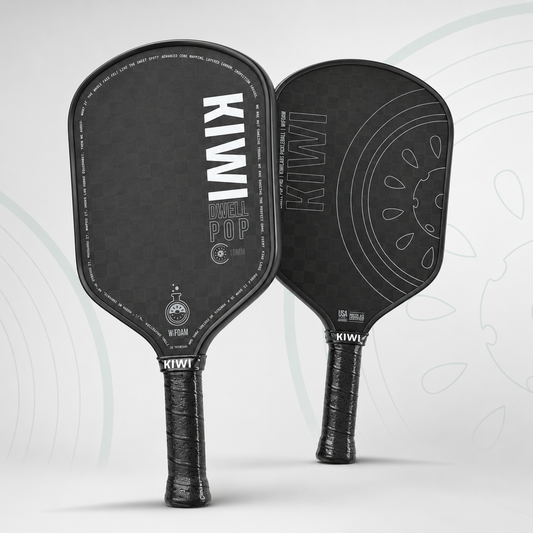


Top Paddles for All Court Play in 2026

If your game changes from soft resets to drive battles in the same rally, you do not need a one-trick paddle. You need one of the top paddles for all court play - a paddle that can absorb pace at the kitchen, create spin off the bounce, and still give you enough put-away power when the point opens up.
That sounds simple, but all-court performance is where a lot of paddles get exposed. Some feel great on serves and speedups, then get wild on drops. Others are plush and easy to control, but leave you working too hard from the baseline. The best all-court options live in the middle without feeling bland. They give you range.
What makes a paddle great for all court play?
An all-court paddle is really about balance, but not the vague marketing kind. Real balance comes from how the paddle blends several traits that often fight each other.
You want enough pop to punish high balls, but not so much that every reset launches. You want dwell time for spin and control, but not a dead face that takes pace off everything. You want a generous sweet spot, because mishits happen under pressure, and you want a shape and handle setup that still lets you move quickly in hand battles.
Construction matters here. Raw carbon faces tend to help with grip on the ball and touch. Thermoforming can add stability and extra power, though sometimes at the cost of a firmer feel. Foam-enhanced builds can expand the sweet spot and improve forgiveness. None of those features are automatically better on their own. The question is how they work together when you are hitting third-shot drops, counters, roll volleys, and deep returns in the same match.
How to evaluate the top paddles for all court play
Start with your misses, not your highlights. Most players shop based on the shot they love best, then end up with a paddle that exaggerates the rest of their mistakes.
If your drops float and your resets sit up, lean toward control-first paddles with longer dwell time and a softer, more connected feel. If you are already steady in the transition zone but struggle to finish points, a livelier all-court paddle makes more sense. If your contact point is inconsistent, prioritize a bigger sweet spot before anything else.
Weight and swing feel also deserve more attention than they usually get. A paddle can have strong all-court specs on paper and still feel wrong if it swings too slow for your hand speed or too heavy for long sessions. Players with tennis backgrounds often tolerate more swing weight. Players who rely on fast hands and compact counters usually prefer something quicker through the zone.
The main paddle types that fit all-court players
Control-oriented all-court paddles are usually the safest recommendation for improving players. They help with resets, drops, and directional accuracy, and they still provide enough offense when the face has decent rebound and surface grit. This is the category where many intermediates play their best because it supports consistency without making the paddle feel dead.
Power-leaning all-court paddles are for players who attack often but do not want to give up touch entirely. These paddles tend to feel firmer and more explosive. The upside is easier depth and stronger put-aways. The trade-off is that your soft game needs cleaner mechanics.
Hybrid all-court paddles sit right in the middle. This is where a lot of the most interesting models land today. They combine spin-friendly faces, more stable cores, and enough liveliness to stay dangerous without becoming erratic. For many players, hybrid is the real sweet spot.
What advanced players notice that beginners often miss
Experienced players pay attention to predictability. A paddle does not need the highest pop, most spin, or softest touch in a category if it responds the same way under pressure. That matters more in real play than spec-sheet bragging rights.
They also notice how a paddle behaves on off-center contact. Big points are not always won with clean center strikes. If a paddle twists too much on blocks and counters, it will feel less all-court no matter how good it is on full swings. Stability is one of those qualities players feel immediately, even if they cannot always describe it.
Handle length and shape are another hidden factor. Two-handed backhand players often want more room. Players who choke up for hand speed may prefer a more compact feel. Small fit issues can make a very good paddle feel average.
Top paddles for all court play by player type
For beginners and newer intermediates, the best all-court paddle is usually one that keeps the game simple. Look for a forgiving face, moderate power, and easy spin access. You do not need an ultra-stiff, high-output paddle if you are still building your soft game. A larger sweet spot and stable feel will help more than raw firepower.
For established intermediates, this is where all-court paddles become worth obsessing over. You are likely trying to improve multiple parts of your game at once - more shape on serves, better resets, stronger counters, and fewer unforced errors on transition balls. A hybrid carbon paddle with good dwell time and enough pop is often the smartest move. It gives you room to grow without forcing you into a specialized style.
For advanced and competitive players, all-court means shot versatility without compromise. You need to take pace off when defending, then re-accelerate quickly when attacking. Paddles in this group should offer high spin potential, strong torsional stability, and a response that stays consistent on speedups and blocks. The exact choice depends on whether you want your offense to come from paddle pop or from swing speed and placement.
The value problem in the paddle market
This part matters because plenty of paddles marketed as premium are really just expensive. Big price tags do not guarantee better all-court performance. Sometimes you are paying for tour presence, not a better face material, not a bigger sweet spot, and definitely not more honest product information.
That is why educated buyers keep looking at construction details and on-court outcomes instead of hype. If a paddle gives you raw carbon, modern core tuning, usable spin, and a genuinely versatile feel, it should not need luxury-brand pricing to justify itself. Kiwi Labs has built real momentum with players who want that kind of performance-first value rather than inflated branding.
How to choose without overthinking it
If you want the safest path, choose control with enough pop. That setup helps the most players, especially in rec play, league play, and tournaments where consistency wins more points than highlight-reel power.
If you already have a reliable soft game and want more offense, move one step toward power - not all the way. A paddle that is slightly firmer and livelier can be ideal for all-court play if you do not lose confidence on resets.
If you are stuck between two models, choose the one with the better sweet spot and more predictable feel. You will notice that benefit on every shot. Max power only shows up on a smaller set of balls.
And be honest about your game. If you say you are an all-court player but win most of your points through patience, touch, and placement, that is a control-first profile. If you constantly look to speed up and finish, you probably want a hybrid leaning offensive. Labels help, but your actual patterns matter more.
Mistakes players make when shopping all-court paddles
The first mistake is chasing what a reviewer loves without matching that paddle to your own strengths. A great tester may have faster hands, cleaner mechanics, or a more aggressive style than you do. Their favorite paddle is not automatically your best paddle.
The second is overvaluing max spin claims. Spin matters, but not if the paddle feels unstable or too lively in the short game. Good all-court spin is usable spin. You should be able to roll a dink, shape a drop, and dip a passing shot without fighting the face.
The third is ignoring adaptation time. Some paddles feel amazing for ten minutes because they are explosive. Then the touch problems show up. Others feel slightly muted at first, then become better and better as you trust them. Give any serious option enough court time to reveal its real personality.
A better way to think about all-court performance
The top paddles for all court play are not trying to dominate one category. They are trying to make your whole game more reliable and more dangerous at the same time. That is a harder job, and it is why true all-court paddles stand out once you play real points instead of just hitting serves and drives in warmups.
The right one should let you reset under pressure, attack when it is there, and keep your confidence from the baseline to the kitchen. If a paddle can do that without forcing you into someone else’s style, you are looking at the right kind of upgrade.