


Top Pickleball Paddle Technologies Explained

A paddle can feel incredible during warmups, then turn your third-shot drops into floaters once the game speeds up. That is why top pickleball paddle technologies explained is more than a gear-head conversation. The face, core, construction, shape, and weight distribution all influence what happens when the ball meets the paddle - especially on resets, counters, rolls, and drives under pressure.
The marketing can get loud fast. But the useful question is simple: what does each technology actually change on court, and what trade-off comes with it? Here is how to read the specs like a player, not a billboard.
Top Pickleball Paddle Technologies Explained for Real Play
Raw carbon fiber faces create usable spin
Raw carbon fiber has become the go-to face material for players who want high spin potential without giving up a controlled, connected feel. Unlike a glossy painted face, raw carbon has a naturally textured surface that grips the ball longer at contact. That extra friction helps put more rotation on serves, dipping drives, roll volleys, and sharp cut dinks.
The key word is potential. A carbon face does not create spin by itself. Good mechanics still matter. But a quality raw carbon surface gives players more margin when they brush up or across the ball. Your topspin serve can drop sooner. Your passing shot can bend harder. Your crosscourt dink can stay lower after the bounce.
Not every carbon surface feels identical. Some use peel-ply texture from the manufacturing process, while others use applied grit or coatings. Peel-ply-style texture is popular because it can produce strong spin without feeling like sandpaper. Applied grit may feel aggressive at first but can wear differently over time. The best face is not necessarily the roughest one. It is the one that delivers reliable spin while preserving touch and holding up through regular play.
Core thickness determines more than control
Most performance paddles use a polymer honeycomb core, often polypropylene. The core is the paddle’s engine room: it influences forgiveness, vibration, launch angle, power, and feel.
A thicker core, commonly around 16 mm, generally gives the ball more time to compress and settle into the paddle. Players often describe this as dwell time. More dwell time can make drops, dinks, blocks, and resets feel less jumpy. It also tends to expand the usable sweet spot because off-center contact is less harsh.
A thinner core, often around 13 mm or 14 mm, usually feels quicker and more direct. It can produce more pop on compact swings, which is useful for aggressive hand battles and put-away volleys. The trade-off is that the ball may come off the face faster, demanding cleaner touch at the kitchen line.
Neither thickness wins for every player. If you miss drops long or struggle to absorb pace, a thicker paddle may help. If your soft game is already dependable and you want a faster response on counters, a thinner build can be a better fit. Core thickness is a feel decision, not a skill-level ranking.
Thermoformed construction adds stability and power
Thermoforming changed the performance paddle category because it made it possible to build a more unified, rigid structure. In a thermoformed paddle, heat and pressure help bond the face, core, and perimeter into a single construction. Many models also use a unibody design, where the face material wraps into the handle.
The on-court result is often more stability. When you catch a hard drive near the edge, a well-built thermoformed paddle is less likely to twist in your hand. That higher resistance to twisting is especially valuable during fast exchanges, defensive blocks, and stretched-out returns.
Thermoformed paddles can also feel more powerful because their stiffer perimeter returns energy efficiently. Players who like to drive from the baseline, attack from the transition zone, or counter aggressively often appreciate that extra punch.
There is a trade-off. A very stiff thermoformed paddle can feel lively, even hot, at the kitchen. If you are still learning to soften your hands, it may take time to control its rebound. Construction quality matters, too. Thermoforming is not a magic label. A paddle needs the right face layup, core, perimeter design, and balance to turn the process into controlled performance rather than raw trampoline effect.
Perimeter foam expands the sweet spot
Edge foam, foam injection, and foam-enhanced perimeters are all attempts to improve a paddle’s response beyond the center of the face. By placing foam around the outer edge of the core, brands can reinforce the perimeter and reduce the dead, unstable feeling that sometimes shows up on mishits.
For players, this is about confidence. A larger sweet spot means a defensive block struck slightly toward the side can still land deep. A rushed volley can stay solid instead of fluttering short. It does not mean every part of the paddle becomes identical to the center, but it can make the whole face more forgiving.
Perimeter foam may also contribute to a more plush feel and a fuller sound at contact. Depending on the design, it can add some mass around the edge, increasing stability. That can be a win for players who regularly battle hard hitters. It may be less appealing for someone who wants the lightest, fastest paddle possible at the net.
Full-foam cores change the feel equation
Full-foam paddles replace the traditional honeycomb structure with a foam core. This construction is designed to create a more continuous response across the face and often a notably dampened feel. Rather than feeling hollow or sharply pingy, a well-designed full-foam paddle can feel dense, smooth, and controlled.
The attraction is consistency. Foam can help reduce vibration and support a generous sweet spot, which makes it appealing for players who value resets, soft-game confidence, and a connected response on off-center contact. Depending on the layup and thickness, full-foam designs can still generate plenty of pace.
The trade-off is personal preference. Some players love the muted, stable response. Others want the crisp feedback and instant pop associated with a traditional honeycomb build. There is no universal winner here. The right feel is the one that helps you trust your swing when the point gets tight.
Paddle shape controls reach, speed, and forgiveness
Shape is technology, even if it is the easiest feature to see. Standard and widebody paddles typically offer a broader hitting area and a larger, more accessible sweet spot. They are excellent for all-court players who prioritize forgiveness, hand speed, and reliable kitchen play.
Elongated paddles shift length upward for extra reach and leverage. That can help on serves, two-handed backhands, overheads, and passing shots. The narrower face may be less forgiving toward the edges, however, and the longer profile can feel slightly slower in rapid hand exchanges.
Hybrid shapes aim for a middle ground: more reach than a traditional widebody, with more width and stability than a full elongated frame. For many improving players, that blend makes sense. You do not have to choose between being a soft-game player and an attacker. You need a shape that supports the shots you hit most often.
Swing weight matters more than static weight
A paddle listed at 8.0 ounces can feel completely different from another paddle at the same listed weight. Static weight tells you how heavy it is on a scale. Swing weight tells you how heavy it feels when you move it through the air.
More mass concentrated toward the head can increase plow-through and help a paddle stay steady against pace. It can also make drives feel heavier. But a high swing weight can slow your hands in firefights and fatigue your forearm over a long session.
A lower swing weight generally feels quicker at the kitchen and easier to maneuver on fast counters. It may not feel as naturally stable against hard contact unless the paddle’s shape and perimeter construction compensate for it. Balance is why two paddles with nearly identical materials can play so differently.
How to Match Paddle Technology to Your Game
Start with the shot you want to improve, not the feature you see advertised. If your resets and drops need help, look for a thicker core, a forgiving face, and stable perimeter construction. If opponents are crowding the line because your drives lack bite, a spin-friendly carbon face and a more powerful thermoformed build may make sense.
Players who live at the kitchen often benefit from manageable swing weight and a wider sweet spot. Players who attack from the baseline may prefer the reach and leverage of an elongated or hybrid shape. If elbow or wrist discomfort is a concern, a more dampened feel and less head-heavy balance can be worth prioritizing over maximum pop.
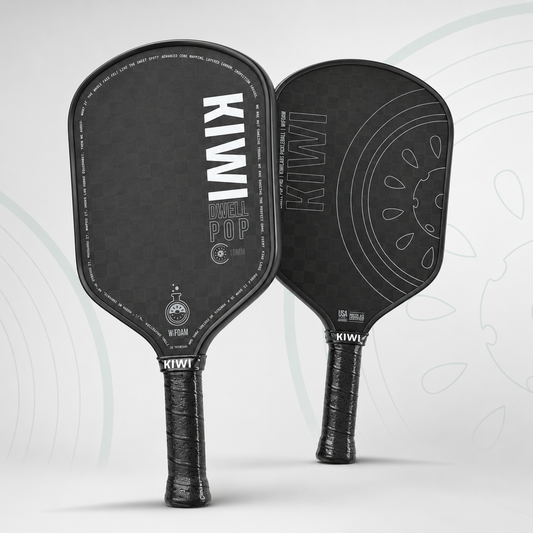
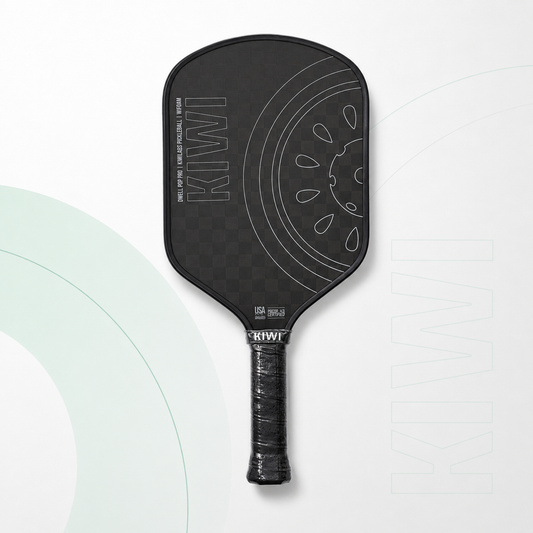
At Kiwi Labs Pickleball, the goal is not to stack buzzwords onto a paddle and charge a legacy-brand premium. It is to combine modern carbon, foam, core, and construction choices in ways that give players a real advantage for the style of game they play.
The best paddle technology is the technology you can use on your worst-contact day, not just the setup that makes one clean drive look great. Choose the feel that helps you reset one more ball, shape one more dink, and swing freely when the score is 10-10.