


Why Does Paddle Stability Matter in Pickleball?

A fast drive catches the edge of your paddle near the kitchen line. Instead of absorbing the ball and dropping a controlled reset into the non-volley zone, the paddle twists in your hand and sends it floating high. That one moment answers the question: why does paddle stability matter? Because stability determines whether your paddle stays predictable when contact is less than perfect - and in real pickleball, plenty of contact is.
A stable paddle does not make decisions for you or replace clean mechanics. It gives your technique a more reliable platform. On blocks, counters, resets, dinks, and off-center drives, that can mean fewer surprise pop-ups, better directional control, and more confidence swinging through the ball.
What paddle stability actually means
Paddle stability is its resistance to twisting, wobbling, or getting pushed out of position when the ball hits away from the center of the face. The technical term is torsional stability. You do not need an engineering degree to feel it.
Hit the sweet spot and almost any decent paddle feels solid. The difference shows up when you catch a passing shot toward the upper edge, reach for a fast body ball, or defend a drive that gives you no time to set your feet. A stable paddle stays more square through impact. An unstable one can rotate slightly, changing the face angle just enough to send the ball wide, long, or up into your opponent's attack zone.
That matters because pickleball is full of imperfect contacts. Quick exchanges at the kitchen, stretched volleys, transition-zone resets, and hands battles all challenge your ability to strike the center of the paddle every time. Your equipment should not punish you harder than the rally already does.
Why does paddle stability matter during real points?
Stability has a direct effect on control, especially under pressure. When the paddle face holds its line through contact, the ball leaves on a more predictable path. You can trust a compact block against pace, keep a dink low when you contact it slightly toward the toe, or redirect a counter without feeling the face get knocked open.
Better resets and blocks
Resets are rarely hit from a perfect, balanced stance. You are often moving backward, reaching low, or reacting to a drive at your feet. A stable paddle helps absorb that incoming pace without excessive twisting. The result is a better chance of dropping the ball softly into the kitchen rather than feeding a high ball back to your opponent.
The same principle applies to blocks. When someone speeds up at your right hip or attacks your backhand shoulder, you need the face to stay square with a short, quiet motion. A paddle that gets pushed around makes a simple defensive block feel unpredictable. A stable one lets you use the opponent's pace instead of fighting it.
More dependable dinks and drops
Soft-game consistency is not just about touch. It is also about what happens when the ball meets different areas of the paddle face. A larger, more stable hitting zone gives you more forgiveness when your contact drifts away from center.
That does not mean every stable paddle feels plush. Some are crisp and lively; others are muted and soft. But when torsional stability is strong, the paddle is less likely to twist on a slightly off-center dink or third-shot drop. You still need to manage height and acceleration, but you are working with a steadier face.
Cleaner counters in fast exchanges
At the kitchen, milliseconds matter. You may not have time for a full swing or a perfect setup, particularly when the ball comes hard at your body. Stability helps a compact counter hold its intended angle through contact.
For aggressive players, that can translate into sharper redirects and more confidence rolling a backhand counter. For players who prefer a controlled all-court game, it can simply mean fewer balls that leak high after catching the outer edge of the paddle.
What makes a paddle stable?
Stability is not one feature printed on a spec sheet. It comes from how the entire paddle is built, including its shape, weight distribution, face dimensions, core, perimeter construction, and handle connection.
A wider paddle shape often has an advantage because it places more material farther from the center line, which can resist twisting. Elongated paddles can still be very stable, but their narrower faces may feel less forgiving on side-to-side mishits. That is the first trade-off: reach and leverage versus a broad, naturally forgiving platform.
Perimeter weighting also plays a major role. When manufacturers add structure or weight around the edges, the paddle can resist rotation more effectively. Foam-injected edges, full-foam construction, and reinforced perimeter designs are common ways to improve the connected, solid feel players notice on defensive shots.
Core construction matters too. A well-engineered polymer core and a tightly bonded face can help the paddle feel consistent across more of the face. Thermoformed designs may add stiffness and power, but construction has to be balanced. Too stiff or too head-heavy for your game, and a paddle can feel demanding even if it is highly stable.
Static weight is part of the equation, not the whole story. A heavier paddle may resist twisting better, but extra weight can slow your hands and fatigue your forearm during long sessions. Swing weight is equally important. Two paddles with the same listed weight can move very differently depending on where that weight sits.
Stability is not the same as power or control
Paddle marketing often treats power, control, spin, and stability as if they are separate sliders. In reality, they overlap. A stable paddle can improve control by keeping the face from twisting. It can also make a powerful paddle easier to manage because off-center contact feels less chaotic.
Still, stability alone does not guarantee a soft, controlled paddle. A stiff thermoformed paddle with strong perimeter support may feel exceptionally solid but launch the ball quickly. A softer paddle may offer more dwell time and easier touch while providing less put-away power. The best choice depends on your mechanics and the shots you hit most.
If you struggle with pop-ups on resets, mishits on fast volleys, or inconsistent directional control, prioritize stability and a generous sweet spot. If your hands are already quick and your contact is consistently centered, you may be willing to trade a little stability for a lighter, faster setup. There is no universal winner - only the right balance for your game.
Who benefits most from a stable paddle?
Beginners benefit because their contact point is still developing. A more forgiving, stable paddle reduces the penalty for misses outside the center and helps them build confidence faster. It will not teach footwork, but it can make practice more productive.
Improving intermediate players often see the biggest payoff. They are beginning to attack, counter, reset, and shape the ball with intention, yet they still face inconsistent contact in fast rallies. A stable paddle supports the shots they are trying to add without turning every slight miss into an error.
Advanced players value stability for a different reason: predictability. At higher levels, opponents attack harder, disguise speed-ups better, and force more rushed defensive contacts. When a paddle stays stable through those exchanges, players can trust their hands and make more deliberate choices.
How to tell whether your paddle lacks stability
Look for patterns, not one bad game. If center strikes feel great but balls near the edge regularly flutter, spray, or pop up, instability may be part of the issue. If fast drives feel like they shove your paddle face open, or if your backhand block becomes unreliable under pace, pay attention.
You can also compare paddles during a focused session. Hit crosscourt dinks, blocks against a partner's drives, and compact counters from both sides. Notice whether the face feels connected on the outer half of the paddle and whether you have to grip harder to keep it from twisting. The more your hand has to rescue the paddle at impact, the less confidence you will have when points speed up.
Do not overlook grip size and technique. A grip that is too small or too large can make the paddle feel harder to control, and a death grip can reduce touch. Stability should support relaxed, efficient mechanics, not encourage you to squeeze the handle tighter.
Choose stability without paying for a logo
Premium construction should deliver an on-court benefit, not just a premium price tag. When comparing paddles, look beyond buzzwords and ask practical questions: Does the shape match your contact habits? Does the paddle offer a stable perimeter and usable sweet spot? Can you control its power in the kitchen and transition zone?
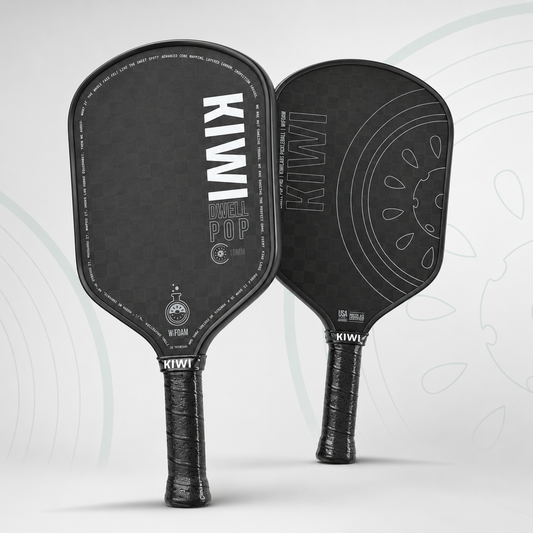
Kiwi Labs Pickleball builds its paddle lineup around that kind of player-first thinking, pairing modern carbon fiber and foam-forward construction with the spin, control, and stability players actually feel in a rally. The goal is simple: performance should come from smart design, not inflated branding.
The best paddle will never eliminate mishits. It can, however, turn a rushed, off-center contact from an automatic liability into a ball that stays in play. When the pace rises and your margins shrink, that steadiness is often the difference between surviving the rally and taking control of it.