


Are Carbon Pickleball Paddles Worth It?

A paddle can make a clean third-shot drop feel repeatable or turn it into a guessing game. That is why carbon pickleball paddles have moved from a niche upgrade to a serious consideration for players who care about spin, touch, and dependable response. But “carbon” on a product page is not a performance guarantee. The face material, layup, core, construction method, shape, and weight all affect what happens when the ball meets the paddle.
For most players, carbon is worth considering because it provides a controlled, connected feel while supporting high spin potential. The better question is not whether carbon is good. It is which type of carbon paddle matches the shots you want to improve - and whether the construction justifies the price.
What Carbon Actually Changes on Court
Carbon fiber is a stiff, lightweight composite material used on a paddle face. Compared with basic fiberglass faces, it generally gives players a more stable, predictable impact feel. That predictability matters at the kitchen line, where a slightly off-center block or reset needs to stay low instead of springing up for an easy put-away.
A textured raw carbon surface can also grip the ball longer during a brushing motion. That extra friction helps create more topspin on serves and drives, more bite on rolls, and sharper slice returns. Spin will not replace sound mechanics, but it gives good mechanics more to work with.
The most noticeable benefit for many players is control under pressure. Carbon faces tend to feel less erratic when you are defending hard drives, absorbing pace, or trying to keep a dink from drifting long. Still, not every carbon paddle is soft or control-first. A thermoformed carbon model can be exceptionally lively, especially around the edges, while full-foam designs can bring a very different kind of pop and dwell.
Why Carbon Pickleball Paddles Feel So Different
The word carbon describes the face, not the entire paddle. Two paddles can both use carbon fiber and play nothing alike because the rest of the build changes the response.
Face texture and carbon layup
Raw carbon commonly refers to a naturally textured carbon surface rather than a painted-on grit layer. That texture is prized for spin and can hold up better than surface treatments that wear smooth quickly. But texture alone is not the whole story. The carbon weave, number of face layers, resin system, and stiffness influence whether the paddle feels plush, crisp, muted, or firm.
A stiffer face often delivers a more direct response and can help generate pace. A more flexible face may hold the ball a fraction longer, creating the sense of dwell time that helps with touch and shape. Neither is automatically better. Aggressive players may want a crisp, fast response; players working on resets may prefer a more forgiving, connected feel.
Core thickness and material
Most modern carbon paddles use a polymer honeycomb core. A thicker core, often around 16 mm, typically offers more control, vibration absorption, and a larger forgiving zone. It is a strong choice for players who spend a lot of time in soft exchanges or who want help keeping blocks and drops under control.
Thinner cores, often around 13 or 14 mm, tend to feel quicker and more explosive. They can reward fast hands and generate easy pace, but they usually give you less margin when a dink is struck too firmly. Foam-enhanced and full-foam cores add another layer to the equation. They can expand the sweet spot and provide impressive power, though the feel may be livelier than traditional honeycomb construction.
Thermoforming and perimeter construction
Thermoformed paddles are built by applying heat and pressure during manufacturing, often with carbon wrapping around the edge and foam injected or placed around the perimeter. This construction can improve torsional stability, meaning the paddle is less likely to twist when contact lands toward the edge.
That stability is valuable in real play. You do not always get a perfect center strike during a fast hands battle. A stable paddle can keep an off-center counter from dying in the net or sailing wide. Thermoforming may also add power and a more unified feel across the face. The trade-off is that some thermoformed paddles feel firmer and hotter than players expect, particularly if they are moving up from an entry-level paddle.
Match the Paddle to Your Game, Not the Hype
The right choice starts with an honest look at your current strengths and misses.
If you are a newer player, prioritize a broad sweet spot, manageable power, and a comfortable weight. You do not need the hottest paddle on the court to improve. You need one that lets you practice drops, dinks, and serves without punishing every small timing error. A control-oriented carbon paddle can be a smart first premium upgrade, especially if your current paddle feels dead, overly bouncy, or unstable.
If you are an improving intermediate, consider what is holding you back. Players whose drives lack shape or whose serves sit up often benefit from a spin-friendly raw carbon face. Players who struggle with resets and soft-game consistency may get more from a thicker core and a less explosive response. If your touch is solid but opponents are beating you in speed-ups, a thermoformed or foam-enhanced design may add the pop and stability you are missing.
Competitive players should be even more specific. Do you win points by applying pressure from the baseline? By countering at the kitchen? By manipulating dinks and attacking from a balanced all-court position? Your paddle should reinforce that identity, not force you into someone else’s style. A powerful elongated paddle can make drives dangerous, but its smaller sweet spot may be less forgiving in quick exchanges. A wider, standard-shaped paddle may offer faster hand speed and better forgiveness, even if it gives up a little reach.
Do Not Overlook Shape, Weight, and Handle Length
Carbon gets the headline, but fit determines whether the paddle feels right after three games instead of three swings.
Standard and hybrid shapes usually offer a wider hitting area and quick handling. They suit all-court players who value a stable kitchen game. Elongated paddles provide added reach and leverage for serves and drives, but the sweet spot may sit higher on the face and maneuverability can feel slower.
Weight deserves equal attention. A midweight paddle around the upper 7-ounce to low 8-ounce range is the common all-court zone: substantial enough for stability, light enough for hand battles. Lighter paddles are easier to accelerate but can get pushed around by heavy pace. Heavier paddles bring plow-through but may fatigue the wrist, elbow, or shoulder. Players with arm sensitivity should choose carefully and resist the idea that more weight always means more power.
Handle length matters most for two-handed backhands and leverage on drives. A longer handle can be a major advantage for former tennis players, while a shorter handle may make the paddle feel more compact and maneuverable. Grip size is not a minor detail either. A grip that is too large limits wrist movement; one that is too small can encourage over-gripping. Many players start slightly smaller and add an overgrip if needed.
The Price Question: Premium Material, Not Premium Markup
Carbon fiber costs more than entry-level face materials, and advanced construction adds manufacturing complexity. Paying more for a genuine raw carbon face, a durable core, thoughtful perimeter design, and quality control can make sense. Paying a huge logo tax does not.
When comparing carbon paddles, look beyond phrases such as “pro-level” or “elite.” Ask what kind of carbon face is used, whether the paddle is thermoformed, what core thickness it has, how it is shaped, and where its weight falls. Then connect those specs to your actual needs. A $250 paddle is not automatically better for your game than a well-built paddle at a more rational price.
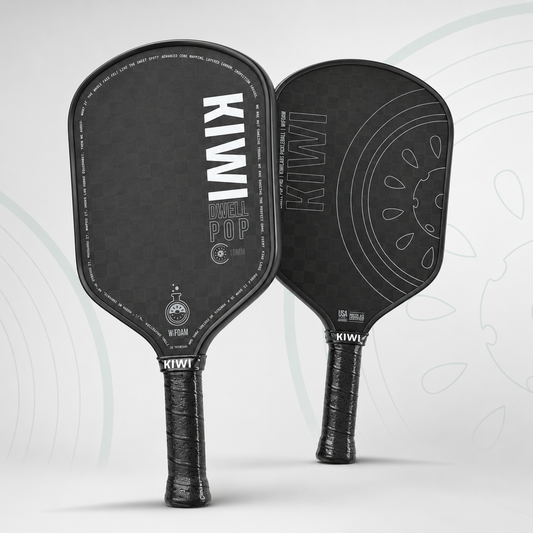
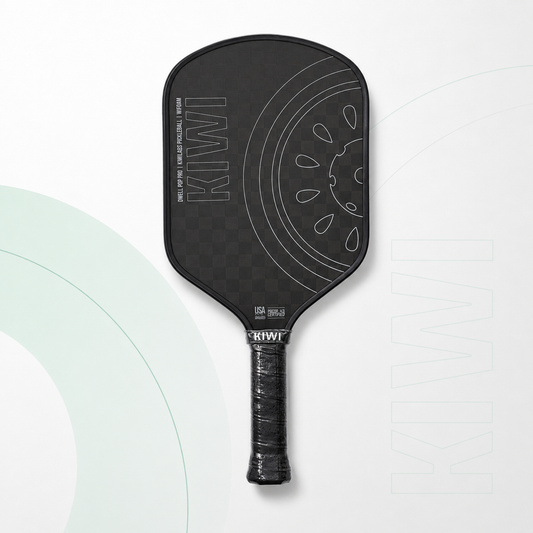
That consumer-first approach is central to Kiwi Labs Pickleball: modern carbon construction, serious sweet spot and spin performance, and pricing that does not assume players should fund inflated legacy-brand margins. The goal is not to buy the most expensive paddle. It is to buy one that gives your game a measurable benefit.
When Carbon May Not Be the Best Immediate Upgrade
A carbon paddle will not fix poor footwork, a rushed swing, or a lack of soft-game reps. If you are brand new and still learning scoring, positioning, and basic contact, a reliable beginner-friendly paddle may be all you need for now. Your money could be better spent on court time, lessons, or a few sessions focused on dinks and returns.
There is also a feel preference involved. Some players genuinely like the liveliness of fiberglass. Others find firmer carbon faces too muted or too demanding. The smartest purchase is one you can test or return if it does not match your expectations.
Choose a carbon paddle with a clear reason behind it. Maybe you want heavier spin on your serve, calmer resets against bangers, more stability in hand battles, or a wider sweet spot when contact is not perfect. Bring that reason onto the court for a few games, pay attention to your misses, and let your actual ball flight tell you whether the paddle is earning a spot in your bag.