


Are Paddles Legal? Pickleball Rules Explained

That hot new paddle may be completely fine for your Tuesday-night rec game and still be unusable at a sanctioned tournament. That is the real answer behind the question, “are paddles legal?” In pickleball, legality is not just about whether a paddle has carbon fiber, foam, a gritty face, or extra pop. It comes down to the governing body, the specific event, and whether that exact paddle model meets the current equipment standards.
For most US players, the benchmark is USA Pickleball approval. If you plan to play sanctioned events, an approved paddle is the simplest way to protect your entry fee, your match, and your confidence on court. But approval is only part of the picture. A paddle can start legal and become questionable if it is modified, damaged, or altered in a way that changes its performance.
Are Paddles Legal in Pickleball Tournaments?
A pickleball paddle is generally legal for USA Pickleball-sanctioned play when the exact model appears on the organization’s current approved equipment list and still complies with the rules at the time of play. Tournament directors and referees have the final say during an event, especially if a paddle is suspected of being altered or outside the standards.
That distinction matters. A paddle marketed as tournament-ready should not be confused with every paddle carrying a similar shape, surface, or construction method. Approval applies to a specific submitted model, not to a category of paddles. Two paddles can look nearly identical but have different cores, face materials, edge construction, or manufacturing details that affect whether they are approved.
For casual play, your local group may not care about approval at all. Plenty of players use training paddles, old models, or experimental gear at open play. Still, using a compliant paddle is usually the smart move. It prevents awkward disputes and ensures the power, spin, and control you build your game around will translate when the matches count.
What Makes a Pickleball Paddle Legal?
The rules are designed to prevent equipment from turning pickleball into an arms race where the ball leaves the paddle like a rocket or gains unnatural spin. Great paddle technology is welcome. Uncontrolled performance is not.
Size and shape limits
A legal paddle must fit within maximum size limits. Under standard USA Pickleball rules, the combined length and width cannot exceed 24 inches, and the paddle cannot be longer than 17 inches. There is no universal maximum thickness requirement, which is why 14 mm, 16 mm, and thicker full-foam designs can all exist within the legal market.
Shape is not just cosmetic. Elongated paddles can offer added reach and leverage, while standard or widebody shapes often create a larger, more forgiving sweet spot. Both can be legal, provided the overall dimensions meet the requirements.
Approved materials and surface rules
Modern paddles use raw carbon fiber, fiberglass, composite layers, thermoformed structures, injected foam, perimeter foam, and polymer honeycomb cores. None of those materials is automatically illegal. What matters is how the finished paddle performs and whether it meets the applicable standards.
The surface cannot include features intended to create an unfair mechanical advantage. That means no sandpaper-like additions, no homemade texture treatments, and no sticky substances that alter ball contact. A textured carbon face can generate serious spin through legal friction and dwell time. Adding aftermarket grit or spray to chase even more RPM is where players can cross the line.
This is also why material transparency matters. A paddle should earn its spin through the face construction, texture, and overall engineering - not through a mystery coating that will wear off, change over time, or put its legality in doubt.
Deflection and propulsion standards
Pickleball’s equipment rules also address how much a paddle can flex and how much energy it returns to the ball. In plain English: a paddle can be powerful, but it cannot act like a trampoline.
That is the tension behind the fast-moving paddle market. Players want deeper serves, easier put-aways, and more pace on drives. At the same time, excessive trampoline effect shrinks the skill gap and makes counters harder to control. The best high-performance paddles balance pop with predictability, so you get usable power without turning every reset into a guessing game.
Noise and other testing requirements
Some events and facilities also care about noise. Communities with noise restrictions may require quieter equipment or enforce facility-specific standards. A paddle can be legal under general tournament rules but unwelcome at a particular venue if local noise policies apply.
That is another reason to check the event details instead of relying on a broad claim that a paddle is “legal.” The governing rules, venue policies, and event date all matter.
Why an Approved Paddle Can Become Illegal
A factory-approved paddle is not a permanent pass. Players can unintentionally create a noncompliant paddle through modifications or damage.
Adding lead tape is often permitted when applied to the edge guard or other allowed areas, but it must not alter the paddle face, create a dangerous edge, or cause the paddle to exceed size restrictions. Overgrips are also common, provided they do not create an illegal extension or violate other equipment requirements.
The bigger issues are face alterations and structural changes. Do not add grit, resin, paint, tape, or any substance to the hitting surface to increase spin. Do not drill into the paddle, remove the edge guard, reshape the handle, or try to repair a delaminated face with a performance-changing adhesive. Even a well-intentioned repair can change deflection, texture, weight balance, or ball response.
Damage matters, too. If a paddle rattles, develops a loose core, has a cracked face, or shows obvious delamination, it may play differently than the model that was originally approved. Beyond legality, a damaged paddle creates inconsistency. Your soft drops may launch, your resets may feel dead, and your counterpunches may suddenly have more pop than you expect.
How to Check Whether Your Paddle Is Legal
Start with the exact model name, not just the brand. Manufacturers often release multiple generations, thicknesses, and versions under one product family. A 14 mm paddle may not carry the same approval status as its 16 mm counterpart, even if the graphics look familiar.
Then check the current approved-paddle database from the governing body that runs your event. Approval lists change as models are added, retired, or re-evaluated. For a major tournament, verify close to the event date rather than relying on an old product page, an influencer video, or what a friend used last season.
Finally, inspect the paddle you will actually bring. Make sure the face is clean, the edge guard is intact, the handle is secure, and no aftermarket material has been applied to the hitting surface. If you use edge tape or weighted tape, apply it neatly and keep it away from the face. When in doubt, ask the tournament director before your first match, not after an opponent calls for an equipment check.
Does Paddle Technology Make a Paddle Illegal?
No. Advanced construction is not the problem. A thermoformed carbon paddle, a foam-enhanced perimeter, a unibody build, or a full-foam core can all be legal if the exact model has passed the required approval process.
The confusion usually comes from the word “power.” Powerful paddles are legal. Paddles that exceed established performance limits are not. There is a meaningful difference between a paddle that delivers crisp, controlled pop because of smart core and frame design and one that produces an abnormal trampoline effect.
For players, the better question is not, “What is the hottest paddle I can get away with?” It is, “What performance helps my game under real match pressure?” A huge sweet spot, consistent dwell time, reliable spin, and enough power to finish balls are far more valuable than unpredictable explosiveness. The paddle should help you hit your targets more often, from third-shot drops to kitchen counters.
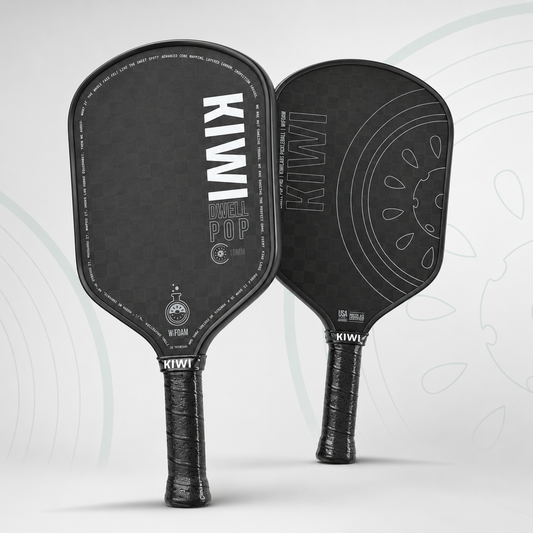
At Kiwi Labs Pickleball, that is the standard worth chasing: modern materials and serious performance, but built for repeatable shots instead of gimmicks and inflated claims.
Pick a Paddle You Can Play With Confidently
If you are buying for leagues, tournaments, or competitive open play, choose an approved model from a brand that clearly states the construction, intended feel, and approval status. Avoid modifying the face, and replace a paddle that is structurally compromised instead of trying to squeeze another season out of it.
Rules will keep evolving as paddle technology moves faster, but your decision can stay simple. Play with equipment that gives you legal spin, controlled power, and a sweet spot you can trust when the next ball finds your paddle.