
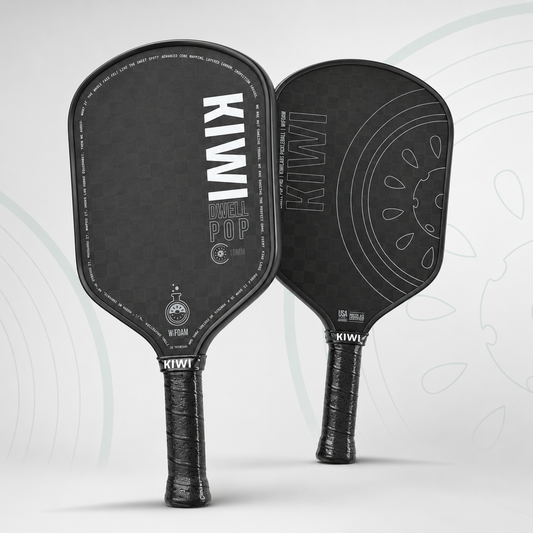
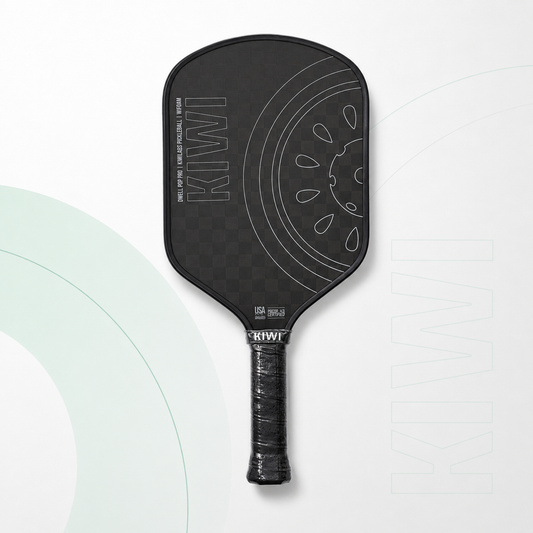


Widebody Versus Elongated Paddle

You feel paddle shape before you understand it. One frame forgives your off-center contact and settles your resets. Another gives you a little more reach on speed-ups and overheads, but asks for cleaner timing. That is the real widebody versus elongated paddle debate - not which shape is "better," but which one helps your game show up more often.
For most players, shape is one of the fastest ways to narrow the field. Core thickness, face material, thermoforming, foam, and surface grit all matter. But if the shape fights your natural swing path or your preferred contact point, the rest of the specs can look great on paper and still feel wrong in your hand.
Widebody versus elongated paddle: what changes on court?
A widebody paddle has a broader face and usually a shorter overall length. An elongated paddle stretches longer from handle to tip and typically gives up some width to get there. That simple geometry changes four things in a big way: sweet spot size, reach, twist resistance, and how the paddle moves through the air.
With a widebody, the sweet spot usually feels larger and more centered. Mishits near the edges tend to stay more playable, especially in hand battles and quick exchanges at the kitchen. Because more mass sits across the face, widebody paddles often feel more stable too. That matters when you are blocking pace or trying to keep a reset from popping up.
An elongated paddle gives you extra reach and often a slightly whippier feel through contact. That can help on serves, drives, overheads, and two-handed backhands where every bit of extension counts. Many players also like the leverage they get from the longer shape because it can make the paddle feel a little more dangerous from the baseline.
Neither shape guarantees more power or more control on its own. Construction still matters a lot. But shape changes how easily you access those traits.
Why widebody paddles feel easier for more players
If you are improving fast, playing a lot of rec games, or trying to become more consistent under pressure, widebody paddles make a strong case. The biggest reason is margin for error.
A broader face gives you more usable real estate. That helps on resets when you are stretched, dinks when your feet are not perfectly set, and counters when the ball gets on top of you. In real matches, most points are not lost because a player lacks maximum reach. They are lost because contact quality breaks down under speed. Widebody shapes help clean that up.
There is also a confidence factor. When the paddle feels stable, you swing a little freer. You stop guiding every ball. You trust your blocks more. That can translate into better touch, not because the paddle is magically softer, but because you are less tense.
Players coming from tennis sometimes assume elongated is automatically the advanced option. That is not always true. Plenty of strong intermediate and advanced players choose widebody shapes because they value consistency, forgiveness, and a bigger sweet spot in the modern soft-to-fast transition game.
Where widebody can fall short
The trade-off is reach. If you are frequently late on backhand flicks, defending hard body bags, or trying to poach more at the net, a shorter profile can leave you wanting just a bit more paddle out in front. Some players also feel widebody paddles are less whippy on serves and full cuts, especially if they like accelerating through the top of the ball for shape and spin.
That does not mean widebody lacks offense. A well-built widebody can absolutely bring pop, spin, and put-away power. But the shape usually prioritizes stability first.
Why elongated paddles keep earning loyal fans
Elongated paddles exist for a reason. Reach matters. At the kitchen, an extra inch can turn a losing exchange into a clean counter. On overheads and wide balls, it can help you stay aggressive instead of floating a defensive shot. For players with good hand speed and reliable contact, that extra extension is not a small detail. It is a weapon.
Elongated shapes also tend to appeal to players who attack. The longer profile can feel more linear and explosive on drives and serves. If you like accelerating hard through the ball, the shape may match your timing better than a wider, more compact head.
Another factor is the handle-to-face relationship. Many elongated paddles come with handle lengths that work well for two-handed backhands. If that shot is part of your game, especially from the transition zone or on backhand rolls, elongated can feel more natural.
Where elongated can punish mistakes
The downside is forgiveness. Narrower faces often mean smaller sweet spots and less stability on off-center hits, especially high pace contact near the edges. If your footwork is inconsistent or your hands get jumpy in firefights, an elongated paddle can feel less forgiving than you expected.
That is where a lot of players get tricked by marketing. They buy reach and "power" but end up fighting instability. Then their drops float, their blocks spray, and their confidence fades. Shape is not about bragging rights. It is about repeatable contact.
Which shape fits your playing style?
If your game is built around resets, dinks, patient construction, and winning ugly when needed, widebody often makes more sense. You will probably appreciate the bigger sweet spot, the more centered feel, and the extra stability on defensive shots. It is a strong fit for control-minded players, doubles specialists, and anyone who wants to reduce unforced errors.
If your game is built around pressure, speed-ups, aggressive counters, and using every inch of court coverage available, elongated deserves a hard look. The added reach and more stretched-out profile can reward active hands and confident swings.
But style is only half the story. Your contact quality matters too. A player with compact mechanics and clean preparation can handle a narrower sweet spot much better than someone still refining timing. That is why the same paddle can feel amazing for one player and harsh for another.
Widebody versus elongated paddle for beginners, intermediates, and advanced players
Beginners usually benefit from widebody shapes because they need forgiveness more than specialization. A larger sweet spot helps them rally longer, learn touch faster, and build confidence at the kitchen. The game is hard enough already. Your paddle should not make it harder.
Intermediates are where the decision gets interesting. This group often starts chasing more offense, but still leaks points on resets and rushed volleys. For many intermediates, the best answer is still a forgiving shape with enough pop and spin to grow into. Others are ready for elongated because their timing is stable and they want more reach in exchange battles.
Advanced players can go either way. Some want elongated for offense and extension. Others deliberately choose widebody because high-level doubles rewards consistency, hand speed, and stable counters just as much as raw attack. The better the competition, the more valuable clean contact becomes.
Don’t isolate shape from paddle build
Here is the part that gets missed in a lot of shape discussions: construction can shift the experience dramatically. A thermoformed elongated paddle with perimeter foam may feel far more stable than an older narrow-body design. A widebody with a lively core and raw carbon face can still generate serious spin and put-away pace.
So yes, compare widebody versus elongated paddle shape first, but do not stop there. Weight distribution, swing weight, twist weight, face material, core thickness, foam reinforcement, and handle length all influence the final feel.
That is also why value matters. Paying inflated prices for a logo does not guarantee better shape tuning, better materials, or better consistency. Smart buyers look at how the paddle is built and how those features show up on court.
Kiwi Labs has leaned into that player-first approach by focusing on modern materials, honest performance benefits, and shapes that actually match different play styles instead of pretending one profile works for everyone.
How to choose without overthinking it
Start with your misses. If you lose points because your blocks wobble, your resets sit up, or your contact drifts around the face, lean widebody. If you lose points because you cannot quite reach speed-ups, feel cramped on two-handed backhands, or want more extension on offense, lean elongated.
Next, think about where you win points. If you win with patience, touch, and consistency, forgiveness should be high on your list. If you win by applying pressure and taking space away, reach may be worth the trade-off.
Finally, be honest about your current game, not the version of you from highlight reels. The right paddle shape should improve your average point, not just your best one.
A good paddle should make pickleball feel simpler. If you are stuck on widebody versus elongated paddle, choose the shape that gives you cleaner contact more often. Reach is nice. A bigger sweet spot is nice too. But repeatable confidence is what actually changes matches.