


7 Best Pickleball Paddles for All-Court Play

Some paddles are easy to love for five minutes. Big pop, loud putaways, instant excitement. Then the soft game gets shaky, resets float, and touch disappears when the match gets tight. That is why the search for the best pickleball paddles for all court play matters so much. An all-court paddle is not trying to win one category and give away the rest. It needs enough power to finish points, enough control to survive pressure, and enough forgiveness to hold up when your timing is not perfect.
That balance sounds simple, but it is where most paddles fall apart. Some are built for pure power and feel hot off the face, but they can get jumpy in hands battles and inconsistent on drops. Others are so control-focused that they help in the kitchen but leave you working too hard from the baseline. If you play a mixed game - drives, drops, counters, resets, blocks, and the occasional speed-up - you need a paddle that does more than one thing well.
What makes the best pickleball paddles for all-court play?
The short answer is balance, but balance comes from specific design choices. Core thickness affects feel and forgiveness. Surface material changes spin and dwell time. Shape influences reach, swing speed, and sweet spot size. Weight tuning can make a paddle feel stable and powerful or quicker and easier to maneuver.
For all-court players, the sweet spot is usually a paddle that blends control with accessible power. You want enough dwell time to shape drops and resets, enough grit and face texture to generate spin on serves and passing shots, and enough stability that off-center hits do not die on contact. Maneuverability matters too. A paddle can have great power on paper and still feel late in quick exchanges.
This is also where hype muddies the water. A lot of brands talk like every new paddle is revolutionary. Usually, the real story is more practical. You are choosing trade-offs. More pop can mean less touch. More plush feel can mean less finish power. The best all-court option is usually the one that matches your swing speed, your contact consistency, and the way you actually build points.
7 best pickleball paddles for all-court players
1. Raw carbon thermoformed paddles
If you want the modern all-court template, this category is where most players should start. Raw carbon faces tend to offer strong spin potential and a more connected feel on the ball, while thermoformed construction can add stability and extra power. Done right, that combination gives you enough pace on drives and overheads without turning the paddle into a trampoline.
This style works especially well for intermediates and advanced players who want a paddle that rewards full swings but still handles transition-zone touch. The catch is feel variation. Some thermoformed paddles are crisp and explosive. Others are more muted. If your soft game runs hot, a livelier version may be too much.
2. Widebody control paddles with pop
A widebody shape gives you a larger sweet spot and usually more forgiveness across the face. For all-court play, that matters. You do not hit every ball dead center, especially in fast exchanges. A forgiving paddle helps keep blocks, counters, and emergency resets playable even when your hand position is not perfect.
The best versions of this style are not dead-feeling control paddles. They add enough pop to attack high balls and create baseline depth without requiring a huge swing. If you are a rec player moving into more competitive games, this is one of the smartest categories to shop because it gives you help without feeling limiting.
3. Elongated all-court paddles for spin and reach
Some players want a little extra reach at the kitchen and more leverage on serves and drives. That is where elongated paddles can shine. The longer shape often helps generate spin and pace, and many aggressive all-court players like the extra extension on counters and roll volleys.
The trade-off is usually a narrower sweet spot compared with a widebody design. If your timing is clean, that is manageable. If you are still developing consistency, elongated paddles can feel less forgiving. They are often best for players who already know they like to attack but do not want to give up too much touch.
4. Hybrid-shape paddles
Hybrid shapes sit in a smart middle ground. They aim to keep enough width for forgiveness while borrowing some of the reach and speed benefits of elongated designs. For many players, this is the sweet spot in the best pickleball paddles for all court use because it avoids extreme trade-offs.
Hybrid paddles tend to suit players who do a bit of everything. They can drive off the bounce, drop into the kitchen, reset under pressure, and still move quickly in hand battles. If you are unsure whether you should go elongated or widebody, hybrid is often the safest answer.
5. Full-foam or foam-enhanced builds
Foam is becoming a real differentiator in premium paddle design because it can improve stability, feel, and consistency when used well. In all-court paddles, foam-enhanced construction often creates a more solid response across the face and helps maintain performance on off-center contact.
For players who value a planted, confidence-building feel, this category is worth serious attention. It can give you a cleaner blend of touch and pop than older-generation builds. The only caution is that not all foam builds feel the same. Some lean plush and controlled. Others come off livelier than expected.
6. Midweight paddles with balanced swing feel
Weight matters, but raw static weight does not tell the whole story. A paddle can be moderately weighted and still swing heavy, or it can offer solid stability while staying quick in the hand. For all-court play, balanced swing feel is often more important than chasing the lightest or heaviest setup.
Midweight paddles are popular for a reason. They usually offer enough mass for putaways and plow-through without making speed-ups feel late. If you play doubles and spend a lot of time in transition, that balance is hard to beat. Too light and you may lose stability. Too heavy and your hands can slow down.
7. Value-focused premium paddles
This category deserves a spot because price does not always track with performance. Some legacy brands charge top-shelf prices for features that are no longer rare. Meanwhile, newer performance-driven brands are putting raw carbon faces, thermoforming, foam support, and large sweet spots into paddles that cost less.
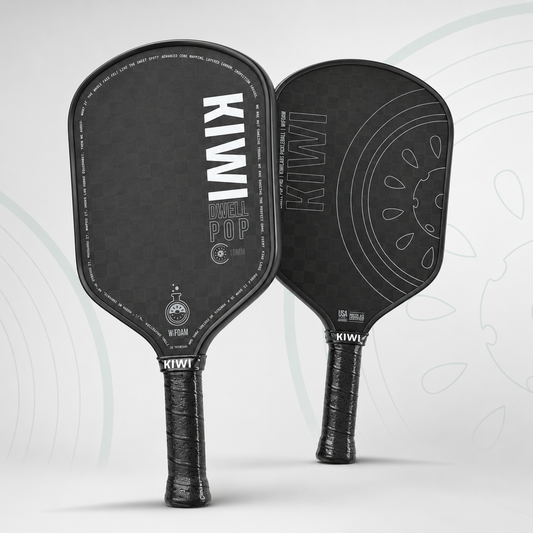
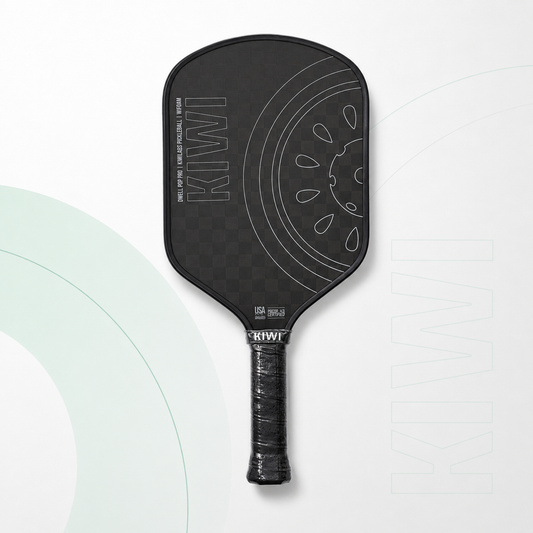
That matters for all-court players because balanced performance should not require overspending. If a paddle gives you legit spin, stable feel, useful pop, and enough control to trust your soft game, the logo premium should not be part of the scorecard. Kiwi Labs has built its lineup around exactly that idea - premium materials, modern construction, and all-court performance without the inflated price tag.
How to choose the right all-court paddle for your game
Start with your misses, not your wishlist. If you tend to pop up resets and overhit drops, do not chase the hottest paddle on the market. You probably need more dwell time, a softer feel, or a more forgiving shape. If your issue is lack of depth, weak counters, or putaways that sit up, then a more stable and lively build makes sense.
Your skill level matters, but not in the way most marketing suggests. Beginners often do better with forgiving paddles that keep the game simple and predictable. Intermediates usually benefit from balanced paddles that add spin and controlled power. Advanced players can take advantage of narrower sweet spots or more aggressive shapes because they have the timing to use them.
You should also think about where you win points. If your game is built around consistency, resets, and placement, go a little softer and more forgiving. If you create pressure with heavy serves, third-shot drives, and fast hands, lean into a paddle with more pop and speed. All-court does not mean neutral. It means versatile enough to support your style without exposing a major weakness.
A quick reality check on paddle marketing
No paddle fixes lazy feet or bad contact points. No surface turns a flat swing into elite spin. And no single build is best for every player. The goal is not to find a magic wand. It is to find a paddle that supports the shots you hit most, covers the misses you make most often, and feels trustworthy when the pace speeds up.
That is why the best pickleball paddles for all court players are rarely the most extreme options. They are the ones that stay useful in every phase of a point. They help you attack when the ball is there, defend when you are stretched, and keep your touch when things get messy at the kitchen line.
If you are choosing between a paddle that impresses in warmups and one that keeps showing up in real matches, pick the second one every time.