


Carbon Fiber Paddles: Spin, Control, and Value

A paddle can look premium, carry a premium price tag, and still leave you fighting dead spots, inconsistent resets, or a lack of confidence on your third-shot drop. That is why carbon fiber paddles have become the standard for players who expect more from their equipment. The right one gives you a grippy, responsive face and a more predictable feel when the point gets fast.
But carbon fiber alone is not a cheat code. The face material matters, yet the core, construction method, shape, weighting, and quality control determine whether a paddle actually helps your game. Here is what smart players should look for before paying a legacy-brand markup.
What Carbon Fiber Actually Changes
Carbon fiber is prized because it is lightweight, strong, and stiff enough to transfer energy consistently. On a pickleball paddle, that can create a stable hitting surface that responds reliably from the baseline, at the kitchen, and during hand battles.
The biggest performance benefit for many players is spin. A quality raw carbon face has a naturally textured surface that grips the ball longer at contact. That extra dwell can help you shape a dipping serve, roll a passing shot, or keep a topspin dink from floating high. Spin will not replace clean technique, but it gives good mechanics more room to work.
Carbon fiber also tends to offer a more connected feel than basic fiberglass or smooth composite faces. Players often notice that they can better sense the ball on dinks, resets, and soft blocks. That feedback matters. When you know where the ball is sitting on the paddle face, it becomes easier to make small adjustments before one loose shot turns into a run of points for the other team.
Still, not every carbon paddle feels the same. Some are plush and controlled. Others are crisp, lively, and built to put pressure on opponents. The material is the starting point, not the whole story.
Why Carbon Fiber Paddles Feel So Different
A paddle is a system. The face works with the core, edge construction, and handle to create its personality. Comparing two paddles simply because both say "carbon fiber" is like comparing two cars because both have tires.
The core controls touch and power
Most performance paddles use a polymer honeycomb core. Core thickness and cell structure influence how the paddle absorbs and returns energy. A thicker core, often around 16 mm, usually provides a softer feel, more vibration dampening, and better control on drops and dinks. It is a strong choice for players who want to slow down fast exchanges and earn their attacks with placement.
A thinner core, often around 13 or 14 mm, generally feels quicker and more responsive. It can provide more pop on counters, drives, and speed-ups, although it may demand cleaner hands when absorbing pace. Neither option is automatically better. A player who thrives in fast hands battles may prefer a livelier build, while a player rebuilding confidence in the soft game may benefit from a thicker, more forgiving core.
Thermoforming adds stability and punch
Thermoformed paddles are built by heat- and pressure-bonding the face and core structure. Many also use foam around the perimeter. This construction can expand the usable sweet spot, improve torsional stability, and add a firmer, more powerful response.
That stability is easy to appreciate when you catch a ball slightly toward the edge. Instead of the paddle twisting open and sending the ball wide, a well-built thermoformed paddle stays more composed. For competitive players, that can make a real difference on rushed blocks and off-center counters.
The trade-off is feel. Some thermoformed models are firmer and more explosive than traditional paddles, which can be a gift on put-aways but require a little more touch on soft shots. Players who prefer maximum plushness should pay close attention to the core, foam design, and overall paddle profile rather than assuming every thermoformed paddle will play alike.
Foam can change the sweet spot
Perimeter foam and full-foam designs are not just buzzwords. Foam can support the edge of the paddle, reduce vibration, and help maintain a more consistent response across a broader area of the face. For players who do not hit every ball dead center - which is everyone during a fast point - that forgiveness is valuable.
A full-foam paddle can also create a distinct dwell sensation, giving the ball a brief moment of connection before it leaves the face. Some players love that controlled, cushioned feel. Others want a faster, more direct launch. Your preference should match the shots you hit most, not whatever construction trend happens to be loudest online.
Pick the Shape That Supports Your Game
Face shape changes reach, sweet spot placement, maneuverability, and how the paddle swings. It deserves as much attention as the face material.
Standard or widebody shapes typically offer a wider hitting area and a sweet spot that feels generous and accessible. They are a smart fit for newer players, doubles specialists, and anyone who values quick hands and consistency at the kitchen. A wider face can make defensive blocks and compact counters feel less demanding.
Elongated paddles offer extra reach and often provide more leverage on serves and drives. They can be excellent for players who like attacking from the baseline or stretching for balls down the line. The compromise is usually a narrower sweet spot and slightly less maneuverability in rapid exchanges. If you frequently feel late on body shots, an elongated shape may not be the automatic answer.
Hybrid shapes try to split the difference, pairing more reach than a traditional widebody with a more balanced, forgiving hitting zone than a full elongated model. For all-court players, that balance can be hard to beat.
Do Not Ignore Swing Weight and Handle Length
Static weight tells only part of the story. Swing weight describes how heavy a paddle feels while moving through contact. A head-heavy paddle can add plow-through and stability, helping drives feel deeper and counters hold their line. It can also fatigue the wrist and slow down hand speed if the paddle is too demanding for your game.
A lower swing weight generally feels faster at the kitchen and easier to maneuver during quick exchanges. The possible trade-off is less stability against hard hitters. There is no perfect number for every player, but there is a clear goal: your paddle should move as quickly as your decision-making does.
Handle length matters, too. Players who use a two-handed backhand may need more room on the grip. Others prefer a shorter handle and a more compact feel for fast resets and flicks. Grip size should feel secure without forcing you to squeeze too tightly. Overgrips can fine-tune circumference, but they cannot fix a paddle that feels wrong in your hand.
How to Choose a Carbon Paddle Without Overpaying
Start with the problem you want to solve. If your drops sit up, look for a thicker core, a stable construction, and a controlled response. If opponents are beating you in hand battles, prioritize maneuverability and a shape that keeps the sweet spot easy to find. If your drives lack shape and your serves sit comfortably in the returner's strike zone, a textured raw carbon face can give your spin game more bite.
Then look past vague marketing. Ask what face material is used, how the paddle is constructed, whether it has perimeter or full foam, what core thickness it uses, and how its weight is distributed. Specific information is more useful than a giant claim about "pro-level performance."
Price deserves scrutiny, too. Advanced carbon fiber paddles do cost more to make than entry-level composite models, especially when they include thermoforming and foam technology. But a high price is not proof of superior performance. Too many brands rely on hype, celebrity endorsements, and inflated retail models to make ordinary features feel exclusive.
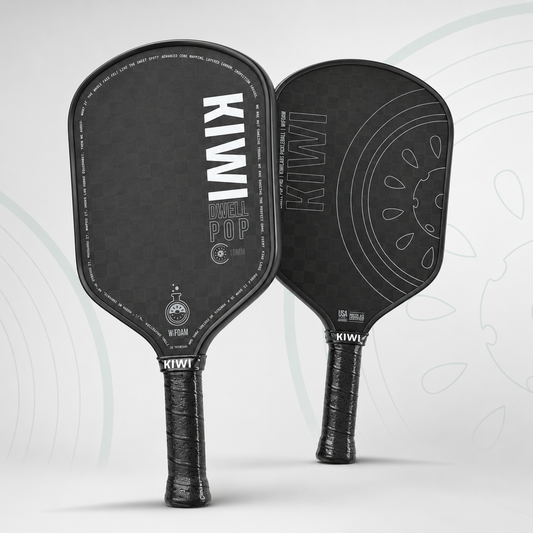
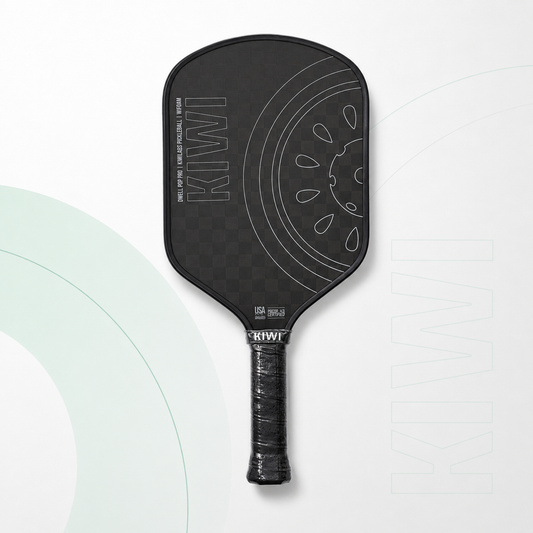
Player-first brands such as Kiwi Labs Pickleball have pushed the market in a better direction: modern raw carbon and foam-based construction, performance-focused shapes, and serious value without treating every player like a captive audience. The goal is not to buy the most expensive paddle. It is to buy the one whose feel and construction make your next level of play more repeatable.
Give Yourself Time to Adjust
Moving to carbon fiber can expose habits that a softer, less responsive paddle used to hide. Your counters may come off hotter. Your topspin may dip sooner. Your resets may initially travel deeper than expected. Give yourself several sessions to adjust before deciding a paddle is not for you.
Use that time intentionally. Hit serves and returns for depth, work on third-shot drops, practice defensive resets against pace, and spend time in kitchen exchanges. Pay attention to your misses. If the ball consistently launches too high, you may need more control or a softer build. If it dies off the face and your opponents are comfortably attacking, you may want more pop or a more stable, powerful construction.
The best paddle does not make every shot effortless. It gives your good shots a higher ceiling and your imperfect shots a better chance of staying in the point. Find the carbon fiber paddle that does that at a price that respects your game, then let your practice turn the technology into results.