


Are Expensive Pickleball Paddles Worth It?

A $250 paddle can feel incredible for one player and completely unnecessary for another. The difference is not just a logo, a pro endorsement, or a slick box. It is about whether the paddle’s materials, construction, shape, and feel solve problems you actually notice on the court. So, are expensive pickleball paddles worth it? Sometimes. But price alone is a lousy way to predict better performance.
The smarter question is this: what are you paying for, and will it help your game? A player who struggles to keep drives in, reset hard shots, or create spin may benefit from better paddle technology. A new player still learning contact and footwork may get more value from court time than from jumping straight to a flagship model.
What Higher Paddle Prices Should Buy You
A premium price should reflect meaningful performance, not vague claims about being "elite." Better paddles commonly use raw carbon fiber faces, thicker or more refined core designs, edge foam, thermoformed construction, or full-foam builds. Each can change how the paddle plays, especially its sweet spot, spin potential, stability, power, and touch.
Raw carbon fiber, for example, is popular because its textured surface can grip the ball longer at contact. That extra dwell time helps players shape drops, rolls, cut serves, and dipping passing shots with more confidence. It does not create spin by itself - technique still wins - but it can make good mechanics more repeatable.
Construction matters just as much. Thermoformed paddles are often built for a firmer, more connected feel with added pop and stability. Foam around the perimeter can expand the usable hitting area and reduce twisting on off-center contact. Full-foam paddles may deliver a distinct blend of dwell, forgiveness, and response. These are real design choices, not just marketing terms, when they are executed well.
A higher-priced paddle should also feel consistent. You should not need to perfectly strike the center every time to hit a controlled reset or a deep return. A larger, more stable sweet spot is one of the most practical upgrades an improving player can feel right away.
Are Expensive Pickleball Paddles Worth It for Your Level?
For beginners, the answer is usually not yet. Early improvement comes from learning to track the ball, move efficiently, use a compact swing, and understand soft-game positioning. A dependable entry-level paddle with a forgiving face and comfortable grip is enough to build those foundations. Spending more than necessary before you know whether you prefer power, control, or an all-court setup can be wasteful.
For intermediate players, the value equation changes. This is where many players begin to recognize the limits of a basic paddle. Maybe your drives lack enough spin to dip at an opponent’s feet. Maybe your paddle feels unstable when blocking a hard body shot. Maybe you can execute a good drop in practice but cannot trust it under pressure. A better-built carbon fiber paddle can give you more predictable feedback and a wider margin for error.
Competitive players may have the strongest case for spending up, but even they should stay skeptical. At a certain point, a $50 difference between paddles may come down to a very specific feel preference rather than a major jump in performance. The right paddle can sharpen a player’s strengths, but it cannot replace decision-making, patience at the kitchen line, or disciplined shot selection.
Price Does Not Equal Performance
The pickleball market has trained shoppers to associate the highest price with the best paddle. That is convenient for brands, but it is not always true. A premium retail price can include expensive sponsorships, large distribution costs, aggressive advertising, and legacy-brand markup. None of those improve your backhand counter.
That does not mean every affordable paddle is a bargain. Low-cost models can suffer from inconsistent quality, dead spots, poor edge protection, weak handles, or surface texture that wears too quickly. The goal is not to buy the cheapest paddle. It is to find a paddle with proven materials and construction at a price that makes sense.
Look beyond the headline price and evaluate what is actually in the paddle. Is the face genuine carbon fiber? What core thickness is used? Is the build designed for control, power, or balance? Does the paddle have perimeter weighting or foam support for stability? Are specifications such as weight and grip size clear? Transparency is a much stronger signal than inflated MSRP.
The Features That Make a Noticeable Difference
Not every technical feature produces the same on-court result. If you want more spin and a connected feel on drops and dinks, prioritize a quality carbon fiber face and a build that promotes dwell time. If you want more put-away power without feeling wild at the kitchen, look for a stable construction with enough mass and a sweet spot that holds up on fast exchanges.
Core thickness is another key decision. Thicker paddles, often around 16 mm, generally give players more control, a softer feel, and better stability on blocks and resets. Thinner paddles tend to feel quicker and more powerful, though they can be less forgiving. Neither is automatically better. A player who lives in hand battles may like a fast, lively response, while a player focused on drops and patient point construction may prefer more plush control.
Shape also affects value. Elongated paddles offer extra reach and leverage on serves and drives, but can have a narrower sweet spot. Standard or hybrid shapes often feel more stable and maneuverable, especially in quick kitchen exchanges. Buying a paddle that fits your game is worth more than buying the newest shape because a reviewer called it powerful.
When Paying More Is Not Worth It
An expensive paddle is a poor investment if you are buying it to fix a technique issue. If your dinks sit up, the cause may be too much swing or poor balance, not your paddle face. If your drives sail long, a more powerful paddle may make the problem worse. Equipment should support skill development, not cover up fundamentals.
It is also not worth paying extra for features you do not use. A power-focused paddle can be frustrating for a player who values touch above all else. A soft, control-oriented paddle may leave an aggressive player wanting more finish on overheads and counters. Be honest about how you score points and where you lose them.
Durability deserves attention, too. Paddle performance can change over time, especially with heavily used thermoformed or foam-based designs. A big price tag is easier to justify when the paddle delivers consistent play and the brand stands behind it with a reasonable return policy. A test period matters because the real test is not five warm-up balls. It is how the paddle performs after a week of drops, resets, overheads, and fast hands against your usual opponents.
How to Find Premium Value Without Paying for Hype
Start with your current game, not a pro player’s game. Decide whether you need more control, more power, more spin, or a more forgiving sweet spot. Most players benefit from an all-court paddle that delivers enough pop to attack while staying stable and controlled at the kitchen.
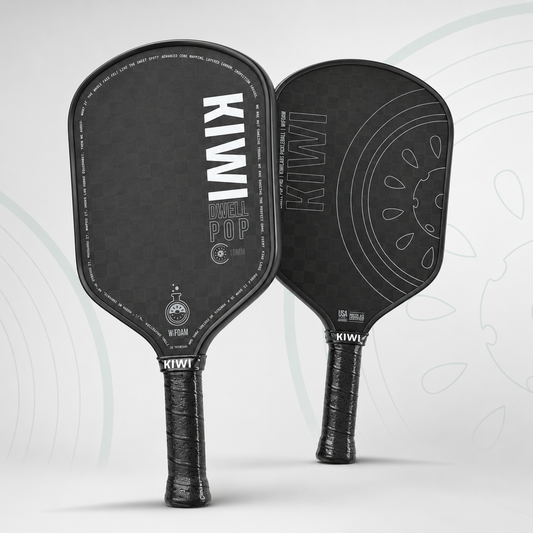
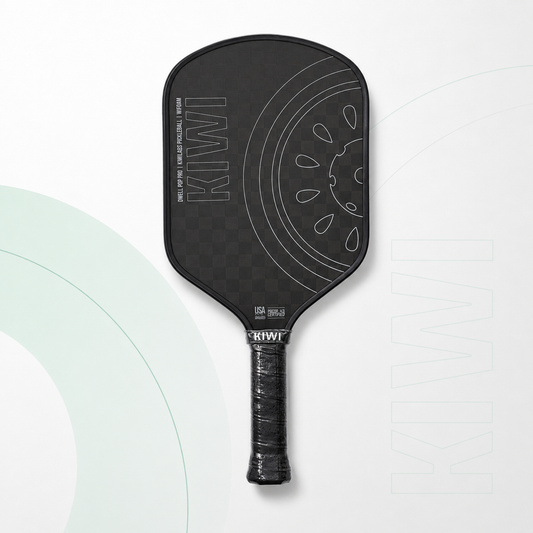
Then compare construction and not just brand names. Modern direct-to-consumer paddle brands can often offer raw carbon faces, thermoformed builds, foam-supported sweet spots, and competitive-level performance for less than large legacy labels. That is where Kiwi Labs Pickleball focuses: giving players advanced paddle technology without treating premium pricing as proof of quality.
Finally, give yourself room to evaluate the paddle honestly. Pay attention to your third-shot drops, blocked counters, deep returns, spin serves, and confidence on off-center contact. If a paddle makes those shots more predictable, it has value. If it only makes your bag look more expensive, keep shopping.
The best paddle is not the most expensive one on the rack. It is the one that gives you more confidence to swing freely, soften the hard ball, and make the next shot with purpose.