


Edgeless Versus Edged Pickleball Paddle Guide

A paddle’s edge can look like a minor design detail until you catch a fast drive near the sideline, scrape the court on a low pickup, or miss a dink off the frame. The edgeless versus edged pickleball paddle decision affects more than appearance. It can influence usable hitting area, swing feel, durability, and what happens when the ball meets the outer inch of the face.
Neither construction automatically makes a paddle better. The right choice depends on where you miss, how often you play, and whether you value maximum face coverage or an added layer of perimeter protection. Here is what players should actually consider before buying.
Edgeless Versus Edged Pickleball Paddle: The Difference
An edged paddle uses an edge guard, typically a polymer bumper that wraps around the paddle’s perimeter. The guard protects the core and face material from chips, cracks, and damage caused by court contact or paddle clashes. Most traditional and modern performance paddles use some version of this construction.
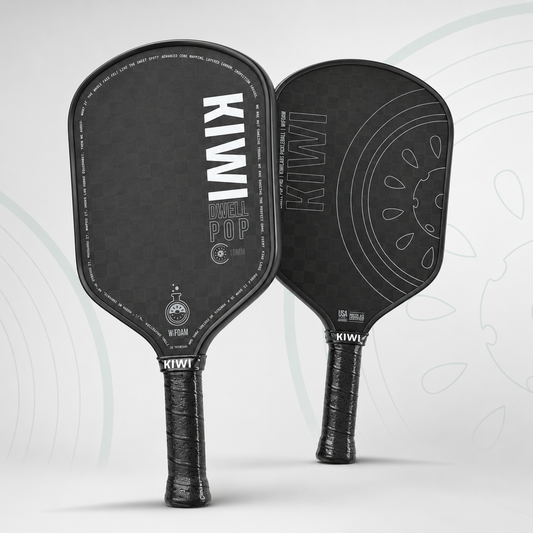
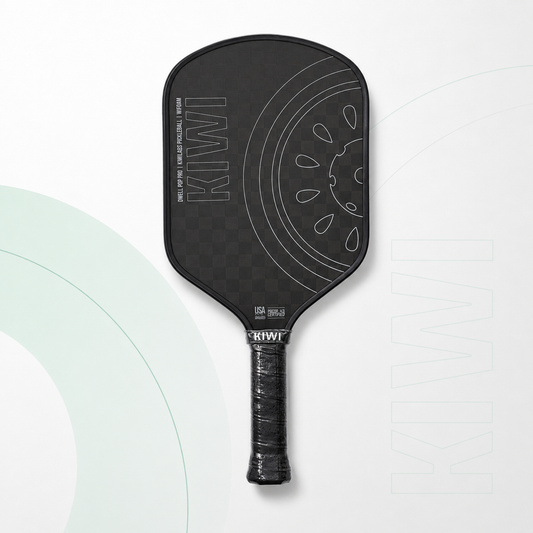
An edgeless paddle removes the raised perimeter guard. Its face material runs closer to the edge, creating a cleaner, more open-looking hitting surface. Some edgeless designs use reinforced perimeter construction, while others depend on their face and core layup to manage durability. “Edgeless” does not mean “fragile,” but it does mean the edge has less sacrificial protection when it contacts hard surfaces.
The distinction matters most at the margins. A well-struck ball in the center will not suddenly play differently because a paddle has an edge guard. But the perimeter is where design choices become noticeable: blocked speed-ups, reaching volleys, defensive resets, and those slightly late shots that catch more frame than face.
Why Players Choose an Edgeless Paddle
The biggest attraction is usable face area. Without a bulky bumper covering the perimeter, the ball can contact more of the paddle’s playable surface. For players who occasionally catch shots near the edge, that extra exposed carbon fiber can make the paddle feel more forgiving.
Edgeless paddles can also feel quick and clean through the air. Eliminating a raised guard may reduce drag slightly, though overall aerodynamics depend far more on paddle shape, thickness, balance point, and head weight. A widebody paddle with no edge guard will not necessarily swing faster than a narrow, aerodynamic edged model.
At the kitchen line, many players like the visual simplicity. The face appears larger, and there is no obvious bumper dividing the striking surface from the outer perimeter. That can create confidence on quick hand battles, especially for players who prefer to use every bit of width available on a block or counter.
There is a trade-off. The exposed edge is more vulnerable to cosmetic wear from court scrapes, accidental paddle taps, and contact with fences or posts. If you play aggressively, share a court with frequent paddle clashes, or tend to scoop balls off the surface, an edgeless paddle asks for more care.
Does Edgeless Mean a Bigger Sweet Spot?
Not automatically. This is one of the most common misunderstandings in paddle shopping.
The sweet spot is primarily determined by the paddle’s core, perimeter weighting, face construction, thickness, and overall shape. An edgeless design can provide more usable outer-face contact area, but it cannot overcome a poorly tuned core or a small, unstable paddle head.
A high-quality thermoformed or foam-supported paddle can deliver a large, stable sweet spot with an edge guard. Likewise, an edgeless paddle may still feel unstable if it is too light in the head or built with a thin, less forgiving core. Look at the full construction story, not just the perimeter.
Why an Edged Paddle Still Makes Sense
An edge guard is practical protection, and for many players, it is the smarter choice. Pickleball paddles take abuse. They get clipped on the court during stretched-out dinks, knocked together during doubles confusion, and tossed into bags alongside balls, water bottles, and gear. A guard absorbs a portion of that everyday punishment before it reaches the face and core.
That protection is especially valuable for beginners and active recreational players. Newer players tend to contact the court more often as they learn low-ball pickups and transition-zone resets. They may also care more about getting a paddle that stays looking and playing solid through plenty of learning reps.
An edged construction does not mean you are accepting outdated technology. Many premium raw carbon paddles use edge guards alongside advanced features such as thermoforming, foam-injected perimeter designs, textured faces, and thick control-focused cores. Those technologies can improve stability, dwell time, spin potential, and power far more meaningfully than the presence or absence of a bumper alone.
The Feel at the Perimeter
A properly built edged paddle can feel exceptionally stable on off-center contact. The guard itself is not the source of stability, but paddles with perimeter foam or carefully weighted outer regions often resist twisting when the ball catches toward the side.
That matters on defensive blocks. When an opponent drives hard at your right hip, you do not always have time to find the center of the face. A stable paddle helps keep that block low and controlled instead of sending it floating upward for an easy put-away.
The downside is that a traditional guard can slightly reduce exposed face area. On a very thin edge guard, the difference is small. Still, players who prioritize every possible millimeter of striking surface may prefer an edgeless build.
Performance Factors That Matter More Than the Edge
Comparing paddle edges is useful, but it should not overshadow the specs that shape your game every rally. Start with core thickness. Thicker paddles, often around 16 mm, typically offer more control, a softer feel, and greater forgiveness on resets and dinks. Thinner paddles usually produce a crisper response and more pop, which can help aggressive players finish points but may demand cleaner hands.
Next, consider shape. Standard and widebody shapes generally offer a broader, more forgiving sweet spot. Elongated paddles provide extra reach and leverage on serves and drives, but their narrower heads can be less forgiving toward the corners.
Face material matters too. A quality raw carbon fiber face gives the ball texture to grip during brushing contact, supporting topspin serves, dipping drives, and sharper cut dinks. Construction affects how that face feels. Thermoformed paddles often bring more power and a firmer response, while full-foam or foam-enhanced designs can create a more dampened, stable feel with better vibration management.
Finally, pay attention to swing weight, not just listed static weight. Two paddles can both weigh 8.0 ounces, yet the one carrying more mass toward the head can feel slower in hand exchanges and more powerful on drives. An edgeless perimeter will not fix a paddle whose balance does not match your game.
Which Paddle Type Fits Your Game?
Choose an edgeless paddle if you want the cleanest possible perimeter, value exposed face area, and are willing to be more careful with your gear. It can be an appealing option for players who love fast hands, prefer a modern open-face look, and want every available inch of paddle face working for them.
Choose an edged paddle if you want everyday durability and a proven construction that performs across all skill levels. It is often the more practical route for players who grind through frequent sessions, play competitive doubles with plenty of hand battles, or want less concern about occasional court contact.
For most players, the best answer is not based solely on the edge. A control-first player should prioritize a forgiving core, stable perimeter, and manageable swing weight. A power player should look for a paddle with enough pop and face stiffness to drive through the court without losing touch. A developing all-court player should seek a large sweet spot, spin-friendly face, and construction that does not force a choice between control and pace.
That is the value of a well-designed performance paddle: no inflated price tag, no vague claims, and no single feature pretending to solve every part of your game. Kiwi Labs Pickleball builds around the features that show up in real points - spin, sweet spot size, dwell time, pop, and reliable all-court control.
Protecting Either Paddle Construction
No paddle is indestructible. Store it out of extreme heat, avoid leaving it in a car, and use a cover or padded paddle compartment during transport. Do not strike the ground after misses, tempting as it may be, and inspect the perimeter occasionally for chips, separation, or unusual rattling.
If an edged paddle’s guard becomes lightly scuffed, that is usually normal wear. If an edgeless paddle develops a small cosmetic mark, it does not automatically mean performance has changed. The concern is structural damage: a spreading crack, a soft spot, delamination, or a loose edge that continues to worsen.
The edge is one part of the paddle, not the whole performance equation. Pick the construction that matches how you play and how you treat your equipment, then let your core, face, shape, and balance do the real work. The best paddle is the one that gives you confidence to take the next dink early, reset the hard drive, and swing freely when the opening appears.