


How to Improve Dink Accuracy and Win More Hands

The dink that misses by three inches rarely feels like a major error. But at the kitchen line, those small misses create the exact balls your opponents want: a volley above the net, an easy speed-up, or a chance to move you off balance. Learning how to improve dink accuracy is not about babying the ball. It is about building a repeatable contact point, choosing smarter targets, and using a paddle that gives you enough feel to trust your hands under pressure.
Why Dink Accuracy Breaks Down
Most dink errors are not caused by a lack of touch. They come from rushed feet, a late contact point, or a player trying to place the ball perfectly before they have earned a balanced position.
At the kitchen, accuracy starts below the waist. If your feet are reaching, your upper body has to compensate. That often leads to a wristy push, a paddle face that opens at contact, and a dink that floats too high or drifts wide. The fix is not a bigger swing. It is getting your body to the ball early enough that your paddle can make a simple, quiet motion.
The other common mistake is aiming at the line. A crosscourt dink that lands inches from the sideline looks great when it works, but it gives you a tiny margin over the net and a long distance for the ball to travel. In a competitive game, high-percentage placement beats highlight-reel placement.
How to Improve Dink Accuracy With Better Contact
Your most reliable dink comes from a contact point in front of your body, with a stable paddle face and a compact lift through the ball. Think of the paddle as carrying the ball toward your target, not chopping under it or stabbing at it.
Start with your paddle head near chest height and your hands out in front. As the ball drops into your strike zone, bend from your knees, stay relaxed through your shoulder, and let the paddle move forward and slightly upward. The motion should be short. If your backswing grows, the timing becomes harder to repeat.
For most neutral dinks, contact the ball around knee height or a little below. Contacting too low forces you to add more lift, increasing the chance of a pop-up. Contacting too high often means you waited too long or let the ball travel too close to your body. Either way, reset your feet before trying to fix your hand.
A soft grip matters, but “soft” does not mean loose. Use enough pressure to keep the paddle stable, then avoid squeezing harder during contact. Many players tighten their grip the moment they see a difficult ball, which turns a controlled dink into a jab. Stay connected through your fingers and let the paddle’s face do its job.
Pick Safer Targets Before You Chase Winners
The best dink target depends on the rally, but your default should give you room for error. Crosscourt dinks are usually the highest-percentage choice because the net is lower in the middle and the diagonal path is longer. You have more court to work with, which makes it easier to keep the ball unattackable.
Aim roughly a paddle width inside the sideline and a few feet inside the kitchen line. That target is not timid. It forces your opponent to hit up while keeping your ball away from the easy middle volley. Once you can land that shot repeatedly, start changing the ball’s shape and location.
A good pattern is to move an opponent wide with two or three crosscourt dinks, then send a controlled ball toward their inside foot. The inside-foot dink can jam their body and make it difficult to choose between a backhand reset and a forehand speed-up. Do not force it if the ball is below the net and you are stretched. Accuracy is a decision-making skill as much as a hand-skill.
When you dink down the line, give yourself even more margin. The line dink has a shorter path and a higher net relative to its route. Use it when you have balance, when your opponent is leaning crosscourt, or when you want to change the visual pattern. It is a useful change-up, not the shot to hit five times in a row just because it worked once.
Let Your Feet Protect Your Paddle Face
Watch skilled players at the kitchen and you will notice how often they take small adjustment steps. They do not plant their feet and reach. They shuffle, set, and strike from a position where their shoulders and paddle stay square to the intended target.
Use a split step as your opponent contacts the ball. This small hop puts you on the balls of your feet and gives you a quicker first move in either direction. Then take short lateral steps instead of crossing over whenever possible. Crossing your feet can work on a wider ball, but it makes it harder to stop, balance, and keep your chest forward.
After every dink, recover to a ready position with your paddle in front. Do not admire the shot. A dinking exchange can flip in one ball, especially against opponents who recognize a floating return early. Your feet should finish the shot with you, then immediately prepare for the next one.
Use Height and Depth as Your Accuracy Checkpoints
A dink is accurate only if it lands in the right place and arrives with the right shape. A ball that lands near your target but sits high is still an invitation to attack.
Give yourself two checkpoints: clear the net with a safe margin, then land the ball deep enough that your opponent must let it drop. For a neutral dink, the ball should arc just high enough to travel safely over the net, then descend into the kitchen rather than sailing toward the baseline. If it is landing short, you may be decelerating through contact. If it is landing long, your paddle face may be too open or your swing may be too large.
Depth is especially valuable against aggressive players. A shallow dink lets them take the ball early and pressure you with a roll volley. A deeper dink pulls them closer to the kitchen line and reduces how much they can attack from above the net.
Train Accuracy With Consequences
Casual dinking builds touch, but structured practice builds repeatability. Try a crosscourt drill where both players must land five consecutive dinks past the middle of the kitchen before either player can speed up. If either ball goes into the net, wide, or high enough to attack, restart the count.
For a more demanding version, create four target zones using cones or court markers: crosscourt deep, crosscourt inside foot, middle, and down the line. Call a target before each ball. This forces you to read the ball, move your feet, and commit to a clear visual target rather than simply keeping the rally alive.
You can also practice the following four-ball sequence:
- Crosscourt deep dink
- Crosscourt deep dink
- Inside-foot dink
- Reset back to crosscourt
Paddle Feel Can Make Precision Easier
Technique drives accuracy, but equipment affects how consistently you can execute it. A paddle with a predictable response, a generous sweet spot, and enough dwell time can help the ball stay on the face fractionally longer, giving you better directional control. That matters most on off-center contact, which happens constantly in fast hands battles and extended dink rallies.
There is a trade-off. A very powerful paddle can feel lively, but if its response is too jumpy for your touch, soft shots may launch deeper than intended. On the other hand, an overly muted paddle can make it harder to create depth when you are defending. The right setup depends on whether you need more control, more pop, or a balanced all-court feel.
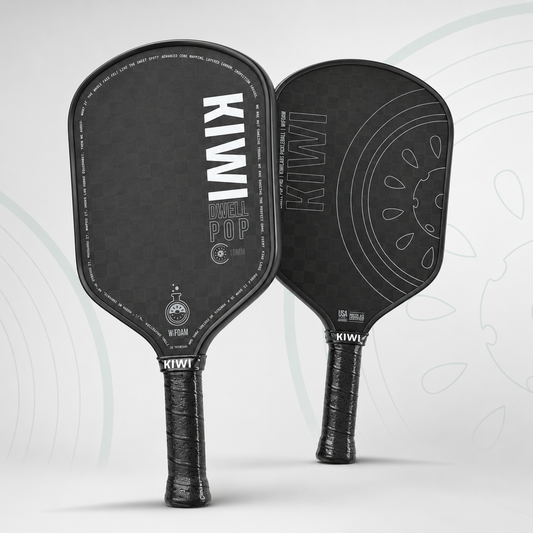
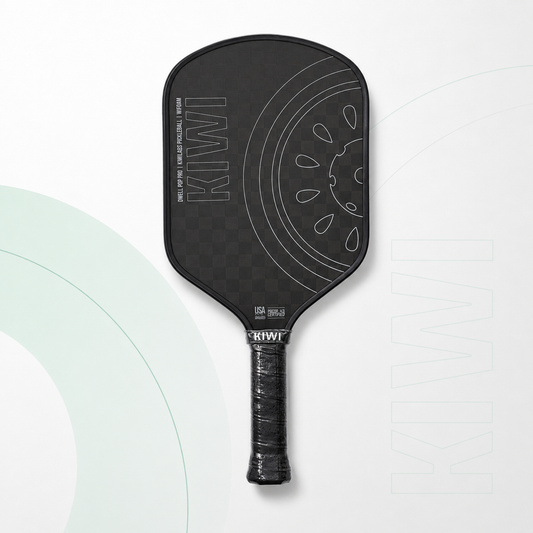
Kiwi Labs Pickleball designs raw carbon and thermoformed options around that balance, with large sweet spots and control-focused feel without charging legacy-brand prices. Still, no paddle replaces clean footwork and a disciplined target. The paddle should support your mechanics, not become an excuse for skipping them.
The next time a dink misses, resist the urge to immediately change your swing. Ask a better question: Was I balanced, was the ball in front, and did I choose a target with enough margin? Solve those three problems one rally at a time, and the kitchen will start feeling a lot less crowded.