


How to Improve Resets With a Paddle That Helps

A hard drive catches you late, dips toward your shoelaces, and suddenly your third-shot drop has turned into a firefight. That is the reset moment. Learning how to improve resets with paddle control is one of the fastest ways to stay in points you used to lose, especially against opponents who love attacking the transition zone.
A reset is not a flashy winner. It is a deliberate soft shot that takes pace off an attack and sends the ball back into the kitchen, ideally unattackable. The goal is simple: turn their advantage into a neutral ball. The challenge is that it demands touch, balance, a stable paddle face, and the discipline not to fight speed with more speed.
Start With the Right Reset Mindset
Most missed resets begin before the ball reaches the paddle. Players see a fast ball and instinctively swing harder, open the face too much, or try to hit a perfect winner from below net height. That usually creates the exact pop-up your opponent wants.
Think of a reset as a catch-and-place shot. You are receiving energy, not generating it. Your job is to soften the incoming ball, guide it over the net with margin, and make it land in an area that prevents the next attack.
That means accepting a trade-off. A high-quality reset may not be a perfect kitchen-line dink every time. If you are stretched, off balance, or dealing with heavy topspin, a slightly deeper, lower-pace reset is better than forcing a delicate shot that floats. Survival first. Neutrality second. Offense comes after you earn your way back into the point.
Use a Compact Motion and Soft Hands
The best resets look almost boring because there is very little going on. Your paddle starts in front of your body, your elbow stays relatively close to your side, and the motion comes from a small lift rather than a full backswing.
Keep your grip pressure light, around a 3 or 4 out of 10. A tight hand makes the paddle behave like a wall, sending pace right back toward the other team. A relaxed hand lets the paddle absorb the ball. You still need enough firmness to keep the face from twisting, but squeezing the handle is not stability.
For balls below the net, use a subtle upward path. Let your legs do part of the work by lowering your base before contact, then rising smoothly. Avoid flicking your wrist. Wristy resets can work in a scramble, but they are hard to repeat under pressure and tend to launch the ball too high.
The contact should happen out in front of your body whenever possible. If the ball gets beside or behind your hip, your options shrink and your paddle face becomes much harder to control. Move your feet first, even if it is only a quick shuffle to create space.
Match Your Paddle Face to the Incoming Ball
Paddle angle is the steering wheel of the reset. Against a flat drive, a slightly open face helps lift the ball into the kitchen. Against a topspin-heavy ball that is already dropping, you may need a more open face and a softer touch. Against a ball above net height, keep the face more neutral and block it forward rather than trying to scoop it up.
The common mistake is opening the face without reducing the swing. An open face plus a big push produces a ball that sits up. Open the face only as much as the ball requires, then use the smallest motion that gets it over the net.
Reset to a Smart Target, Not Just Anywhere
A reset is strongest when it limits your opponents' next swing. The safest target is often the middle of the kitchen, particularly when both opponents are at the line. The middle creates hesitation, reduces their angle options, and gives you more room for error than a sharp crosscourt reset.
If one opponent is leaning aggressively toward the middle, a softer ball to their outside foot can be effective. If you are crosscourt from a player with an extreme forehand roll, do not automatically feed that pattern. A reset to the body or through the middle may be less glamorous but far more reliable.
Depth matters, but not in the way many players think. A reset that lands close to the kitchen line is ideal because opponents must lift their next ball. Yet a ball that lands six inches short is still useful if it stays low. A reset that reaches the line but bounces chest-high is an invitation to attack.
Improve Your Position Before You Need the Reset
Resets are harder when you are moving backward, standing tall, or caught with your paddle down. Better positioning makes the same touch feel dramatically easier.
In the transition zone, stay in an athletic stance with your weight slightly forward and your paddle up around chest height. This does not mean freezing your paddle at one spot. It means being ready to adjust without starting from your knees. As you move toward the kitchen, use controlled split steps and stop before you hit whenever you can.
Do not rush through the transition zone with your paddle hanging near your thigh. Skilled opponents attack movement. If they see you taking a big step, they will aim at your feet or outside shoulder because they know your platform is unstable.
When a drive comes at your feet, get low with your legs instead of folding at the waist. Bending forward shifts your head and shoulders over the ball, often causing you to lift with your arm. A lower base lets you maintain eye level and make a cleaner, quieter contact.
Choose a Paddle That Does Not Fight Your Touch
Technique drives the result, but paddle construction affects how forgiving that technique feels. A paddle with a stable face and a generous sweet spot is easier to reset with when contact is slightly off center. That matters because transition-zone resets are rarely struck perfectly.
Control-oriented paddles generally help players absorb pace and keep the ball on the face longer. That added dwell sensation can make it easier to feel the ball rather than simply deflect it. A highly poppy paddle can still reset well, but it requires cleaner hands and more deliberate grip pressure. If you tend to overhit defensive blocks, too much pop may make your reset window smaller.
Weight and balance also matter. A head-heavy paddle can add put-away power, but some players find it slower to stabilize against rapid attacks. A paddle that feels maneuverable in your hand can make late adjustments easier, particularly in hand battles and scrambling resets. There is no universal answer: a player who struggles with stability may prefer more mass, while a player who is late to contact may benefit from faster handling.
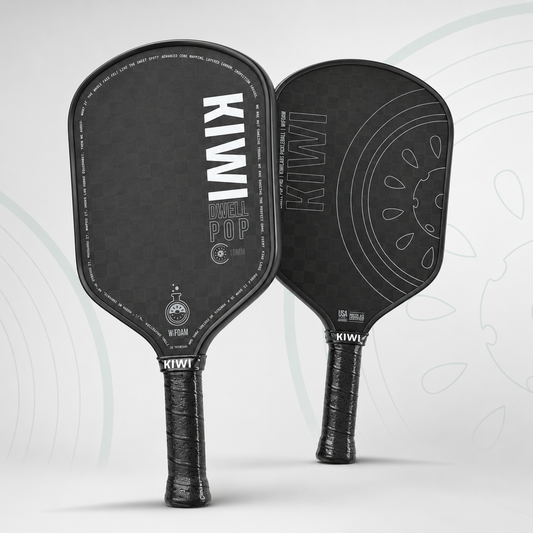
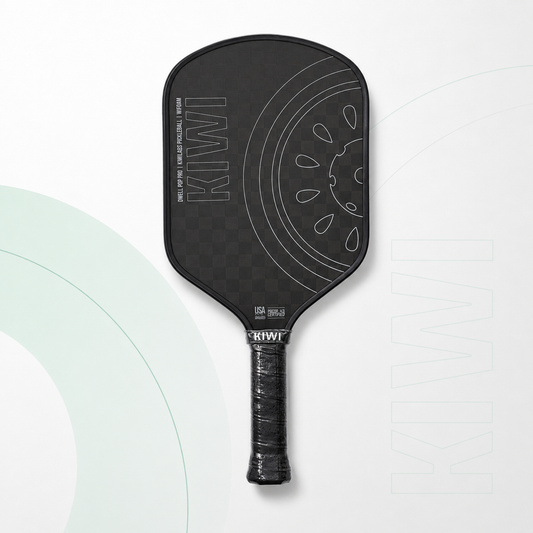
Kiwi Labs designs its carbon fiber paddles around the parts of the game that decide close points: usable sweet spot size, face stability, spin, and control without the inflated price tag that has become too common in pickleball gear.
Drills That Build Resets Under Pressure
You do not need a complicated drill menu. You need enough repetition to teach your hands that soft does not mean weak.
Start with a cooperative reset drill at the kitchen line. Have a partner feed controlled drives to your forehand and backhand while you block each ball into the kitchen. Focus on a quiet paddle, light grip, and low arc. Do not try to win the drill. Aim for ten resets in a row that bounce below your partner's waist.
Next, move into the transition zone. Begin a few feet behind the kitchen line while your partner attacks from their side. Reset one ball, take a small step forward, then reset the next. This teaches the skill that matters most in games: absorbing pace while advancing with balance.
Finally, add uncertainty. Have your partner vary drives between your body, feet, forehand, and backhand. Call out your target before the feed: middle, crosscourt, or outside foot. This forces you to read the ball and select a solution instead of rehearsing one comfortable shot.
Measure the Right Result
Do not judge a reset only by whether it lands in the kitchen. Track whether the next ball is attackable. If your opponent can comfortably speed up, roll, or punch the reset at your partner, the ball was probably too high or too predictable.
A successful reset buys you time, lowers the temperature of the rally, and lets you regain court position. Some of the best ones will look like ordinary soft shots. That is the point. When opponents stop getting easy attacks from your transition balls, you have turned defense into a real part of your game.
The next time a drive comes screaming at your feet, resist the urge to do more. Set your base, soften your grip, keep the stroke compact, and give the ball a low, simple destination. Your reset does not need to be spectacular. It needs to make the next ball yours to play.