


How to Select Paddle for Spin

If you are searching for how to select paddle for spin, skip the hype and start with one fact: spin does not come from grit alone. A paddle can feel rough in your hand and still underdeliver in actual play if the shape, dwell time, stability, and swing feel are working against you. The best spin paddle is the one that helps you brush the ball confidently, repeat that contact point, and keep enough control to use spin on more than just serves.
That matters because spin is not a party trick in pickleball anymore. It is how players create safer speed-ups, heavier topspin drops, sharper passing shots, and backhands that stay annoying instead of attackable. If you want more action on the ball, you need to think beyond marketing labels and look at how the whole paddle is built.
How to select paddle for spin without falling for marketing
The first thing to understand is that spin is part technique, part paddle design. No paddle can manufacture spin if your swing path is flat and late. But the right paddle absolutely makes it easier to grab the ball, hold it a fraction longer, and send it off the face with more rotation.
That is where a lot of brands oversimplify things. They shout about surface texture and stop there. Surface matters, but spin-friendly performance is really a mix of face material, paddle shape, balance, core response, and how stable the paddle stays through contact. A paddle that checks only one of those boxes can still leave you with inconsistent results.
Start with the paddle face
If spin is a priority, raw carbon fiber should be high on your list. It tends to create a more natural, reliable grab on the ball than slicker fiberglass faces. It also usually pairs better with control-oriented feel, which matters because players generate their best spin when they can swing with confidence instead of steering every shot.
Not all carbon faces feel the same, though. Some paddles feel crisp and fast off the face, while others pocket the ball a little longer. That second category often gives players a better sense of bite, especially on topspin rolls, third-shot drops, and dipping drives. More dwell time does not magically create RPMs, but it can make your contact feel more connected and easier to repeat.
If you are choosing between a very poppy paddle and a more controlled raw carbon paddle, think honestly about your game. If you already hit hard and struggle to keep topspin drives in, the more controlled option is often the smarter spin choice.
Shape changes spin more than people realize
Elongated paddles are popular with players chasing spin because they usually offer extra reach and a little more whip through the hitting zone. That can help on serves, one-handed backhands, and aggressive topspin drives from the baseline. If you create spin with racquet-head speed - or paddle-head speed, in this case - an elongated shape can feel lively and dangerous in a good way.
The trade-off is forgiveness. Elongated paddles usually have a narrower face and a smaller sweet spot than wider-body designs. If you are an intermediate player still cleaning up contact consistency, a wide-body or hybrid shape may actually give you more usable spin. Why? Because off-center hits kill confidence, and confidence is a huge part of producing spin under pressure.
Hybrid shapes are often the sweet spot for a lot of players. You keep enough reach and speed to accelerate through the ball, but you gain a more stable and forgiving face. For all-court players, that balance is hard to beat.
Core feel matters for spin control
The paddle core influences how long the ball seems to stay on the face, how much feedback you feel, and how predictable your shots are at different speeds. If you want spin that holds up in real points, not just warmups, look for a paddle with controlled response and solid stability.
A softer, more controlled core can help with spin on touch shots because it gives you a little more pocketing and directional confidence. That is useful at the kitchen when you are rolling dinks crosscourt or shaping a reset with underspin. A firmer, more explosive core can still generate great spin, but it often rewards cleaner mechanics and faster hands. Players who love speed-ups and driving through the court may prefer that livelier response.
This is where "best" really depends on skill level and style. Beginners and early intermediates often get more practical spin from a paddle that feels stable and forgiving. Advanced players with polished mechanics may want a thermoformed or more powerful build that lets them attack with heavier pace and rotation.
Weight and balance decide how fast you can brush
Static weight matters, but balance matters more than most players think. A paddle that feels sluggish at the tip can make it harder to accelerate cleanly through contact, especially on quick hand battles and topspin flicks. A paddle that feels too light can be easy to whip, but unstable on counters and blocked returns.
For spin, you usually want a setup that feels fast enough to brush the ball aggressively without losing face control. That often means a moderate overall weight with balanced or slightly head-light handling. If your paddle feels like work, your swing will slow down. If it gets pushed around on contact, your spin will be harder to place.
This is why demoing or at least comparing swing feel is worth more than obsessing over one published weight number. Two paddles can weigh almost the same and feel completely different in play.
Grip and handle shape are part of the equation
Players chasing spin often focus on the face and forget the hand connection. If your grip circumference is too large, wrist action and hand speed can feel restricted. If it is too small, you may lose stability or squeeze too hard, which hurts touch.
Handle length matters too. A slightly longer handle can help players who use a two-handed backhand or want more leverage on topspin drives and serves. But if extra handle length comes with a face shape you do not control well, it is not automatically a win.
The right grip setup should make it easy to change angles, accelerate smoothly, and stay relaxed. Tension is the enemy of spin.
How to match spin paddle features to your game
If you are a newer player, do not buy the most aggressive paddle on the market just because someone said it produces huge spin. You will get more out of a paddle with a generous sweet spot, raw carbon face, and controlled response. That kind of build helps you learn topspin mechanics without spraying balls long.
If you are an improving intermediate, look for a hybrid or elongated paddle that blends dwell time with enough pop to punish weak balls. This is the stage where spin starts becoming tactical, not accidental. You are shaping thirds, rolling dinks, and using topspin to add margin over the net.
If you are a stronger competitive player, your choice depends on whether you win with pressure or precision. Pressure players may prefer a more explosive thermoformed paddle that still offers high-friction carbon face performance. Precision players often lean toward a more connected, controlled feel that lets them vary spin and pace without losing the kitchen game.
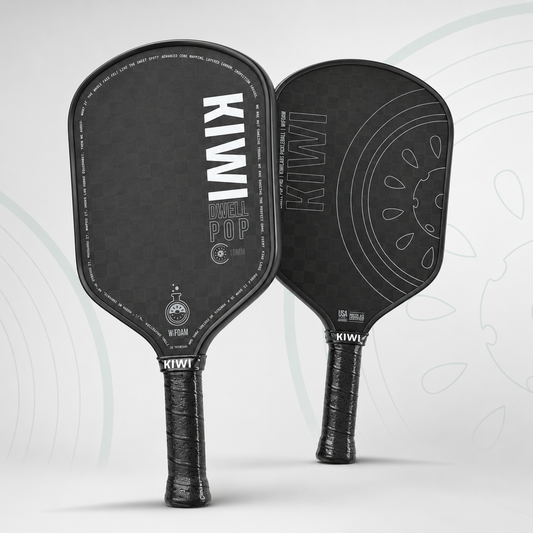
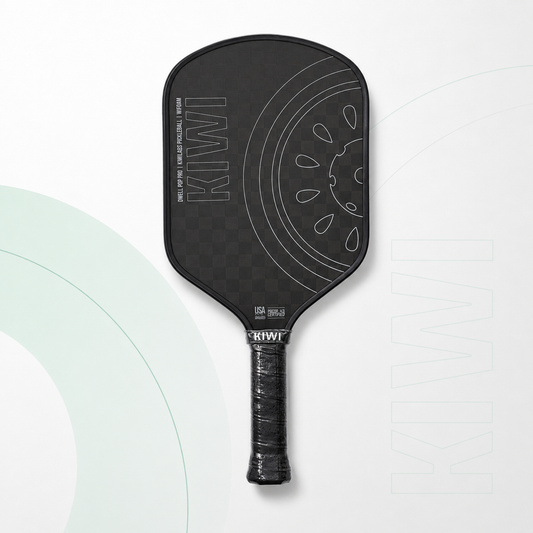
A good example of smart value in this category is a modern raw carbon build that gives you strong spin access, a large sweet spot, and all-court control instead of charging luxury pricing for familiar buzzwords. That is where brands like Kiwi Labs have pushed the market forward.
Mistakes players make when selecting a paddle for spin
The biggest mistake is buying based on one reviewer's RPM number without considering play style. Lab testing can be useful, but your ability to create repeatable spin in matches depends on comfort, timing, and confidence. A paddle that ranks well on paper can still be wrong for your hand speed or contact habits.
Another mistake is going too powerful too soon. A very lively paddle may help the ball jump off the face, but if you cannot control launch angle, your topspin will not save you often enough. Spin works best when it supports shape and placement, not when it is trying to rescue bad feel.
Finally, do not ignore durability of spin performance. Some surfaces feel great early and fade fast. A well-built carbon fiber paddle with dependable texture and solid construction usually delivers more trustworthy long-term value than a flashy surface treatment that drops off quickly.
What to look for before you buy
When you narrow your options, ask simple questions. Does the paddle have a raw carbon or similarly spin-friendly face? Is the shape forgiving enough for your current level? Does the core feel controlled enough for dinks and resets, or is it all pop? Can you swing it fast without losing stability? Does the handle fit how you actually play?
Those questions beat buzzwords every time. Spin is useful only when you can access it from all parts of the court - on serves, drives, rolls, counters, and soft game exchanges. The right paddle should help you do that more often, not just make one shot look better in a demo clip.
A better spin paddle is not always the roughest, the priciest, or the loudest one in the category. It is the one that gives you bite, confidence, and enough control to keep swinging freely when the point gets tight. Choose that, and the spin will show up where it actually matters.