


Raw Carbon Paddle Review for Real Players

A raw carbon paddle can make your serve dip harder, give your roll volleys more bite, and make touch shots feel more predictable. It can also be an expensive disappointment if the paddle’s shape, core, weight, and construction do not fit your game. That is the real point of a raw carbon paddle review: the surface matters, but it is not the whole paddle.
For players moving up from a basic fiberglass or composite face, raw carbon is usually a meaningful performance jump. The best versions pair high friction with a stable face and a forgiving sweet spot. The worst versions lean on the words “raw carbon” while delivering an inconsistent feel, a small usable hitting area, or a price that has more to do with branding than on-court results.
What a Raw Carbon Face Actually Changes
Raw carbon fiber is a textured carbon face designed to grip the ball at contact. That grip helps create spin without requiring a huge, exaggerated swing. On a third-shot drop, it can help you shape the ball down into the kitchen. On a topspin drive, it helps the ball dip after it clears the net. On a slice return, it can make the ball stay lower and travel with more skid.
The key word is texture. Many high-performing raw carbon paddles use a peel-ply process, where a textured layer is pulled away during manufacturing and leaves a naturally rough carbon surface behind. That differs from a paddle with a sprayed or painted grit coating. Applied grit can play well initially, but it may wear down faster depending on the finish and how often you play.
Raw carbon does not automatically mean maximum spin, though. Face texture is only one part of the equation. Ball dwell time, core compression, swing path, and how cleanly you strike the ball all affect the result. A paddle that holds the ball on the face for a fraction longer can make spin feel easier to access, even if another model tests with a similar surface texture.
Raw Carbon Paddle Review: Feel, Spin, and Power
Most players notice three things first: the feel on soft shots, the spin on aggressive swings, and the paddle’s response when the pace picks up.
Control at the kitchen line
A quality raw carbon face tends to give players a connected, confidence-building feel on dinks, resets, and short angles. The ball does not simply spring away. Instead, there is enough feedback to judge whether you caught the ball cleanly and enough grip to shape it deliberately.
That said, “soft” is not always the same as “controlled.” A very plush paddle can be excellent for drops and resets but leave some players wanting more put-away power. A stiffer, thermoformed raw carbon paddle may feel firmer on touch shots, yet offer more stability when absorbing a hard drive. Players who face fast hands battles often appreciate that extra structure.
Core thickness matters here. A 16 mm paddle generally provides more cushion and forgiveness than a thinner 13 mm or 14 mm model. It is often the safer choice for players who prioritize drops, blocks, dinks, and defense. Thinner paddles can feel faster and more direct, with extra pop for counters, but they ask for cleaner hands at the kitchen line.
Spin that shows up in actual points
Spin is useful only when it creates a better ball. Raw carbon earns its reputation because it can help players produce those better balls more consistently.
Topspin serves can push opponents deeper. A dipping drive can force a defensive volley instead of a clean counterattack. A sharp cut can turn a routine dink into a ball that pulls an opponent wide or dies low near the sideline. For intermediate players, this may be the biggest upgrade: not just more spin, but more margin over the net and more options from the same setup.
Do not expect a new surface to repair poor mechanics overnight. If you open the face too much on a roll volley or hit your drive late, the paddle cannot manufacture a perfect shot. What it can do is reward better technique with noticeably more action on the ball.
Power, pop, and stability are separate things
These terms get thrown together, but they describe different performance traits. Power is the paddle’s ability to drive the ball deep with a full swing. Pop is the quick rebound you feel on punches, counters, and compact swings. Stability is how little the paddle twists when contact lands away from the center.
A raw carbon paddle can be control-oriented, power-oriented, or balanced. The surface alone does not decide it. Thermoformed construction, perimeter weighting, foam-injected edges, core material, and paddle shape all influence the final result.
A widebody paddle often gives you a larger, more forgiving sweet spot. An elongated paddle can add reach and leverage on serves and drives, but it may feel less stable near the outer edge unless the construction is dialed in. If you routinely mishit backhand blocks toward the tip or edge, a forgiving widebody shape may improve your results more than chasing the highest spin number.
Construction Details Worth Checking
Marketing terms can make every paddle sound like a breakthrough. Look past the headline and consider how the construction fits your needs.
A unibody or thermoformed paddle can feel solid and powerful, especially through drives and counters. It is a strong option for players who want more pace without moving into an overly stiff, uncontrollable feel. But thermoformed paddles vary widely. Some are lively and crisp; others are more muted and control-focused. The same label does not guarantee the same response.
The edge system also matters. Foam around the perimeter can expand the sweet spot and improve twist resistance. Full-foam builds can create a distinct feel with added dwell and a more uniform response across the face. Neither design is universally better. A player who wants quick hand speed may prefer a lighter, more maneuverable setup, while a player who gets pushed around by hard hitters may value more mass and stability.
Weight deserves equal attention. Many all-court players land comfortably around the middle weight range, where the paddle remains fast enough for hand battles but carries enough mass to keep drives from knocking it around. A slightly heavier paddle can add stability and plow-through, but it may fatigue the wrist or elbow over long sessions. If you have had arm discomfort, prioritize a comfortable swing weight and a handle shape that lets you hold the paddle without gripping too tightly.
Is Raw Carbon Worth Paying For?
For a beginner learning basic contact and positioning, a raw carbon paddle is not mandatory. A well-made entry paddle can do the job while you learn scoring, shot selection, and kitchen movement. But once you are trying to hit reliable drops, add topspin, reset hard drives, and win points with placement rather than luck, raw carbon becomes easier to justify.
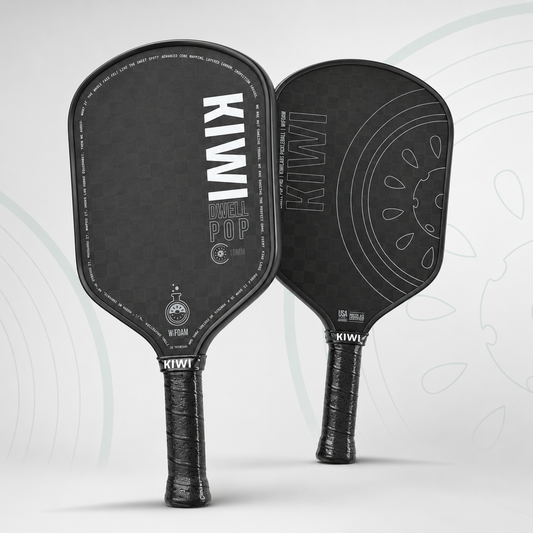
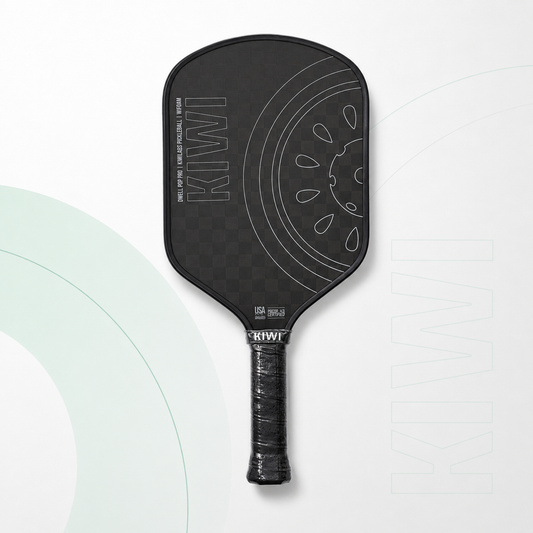
The bigger question is whether the price matches the build. Premium paddle pricing has often been inflated by logos, sponsorships, and the assumption that serious players will pay whatever the market asks. That is changing. Direct-to-consumer brands such as Kiwi Labs Pickleball have pushed advanced carbon faces, modern core construction, and larger sweet spots into a more realistic price conversation.
A good value paddle should not feel cheap in the hand or vague on contact. It should explain its materials clearly, offer a construction built for the style of play it claims to support, and give you a reasonable way to evaluate it on court. If a brand cannot tell you what makes its paddle stable, spin-friendly, or control-oriented, the “raw carbon” label is not enough.
Who Should Choose One?
Raw carbon is a strong fit for recreational players who want better touch without giving up attack potential, improving intermediates building a more intentional spin game, and competitive players who need reliable performance under pace. It is particularly useful for players whose games depend on third-shot drops, topspin drives, roll volleys, and defensive resets.
Choose a thicker, more forgiving raw carbon model if your priority is control and consistency. Choose a thinner or more aggressively thermoformed model if you want faster counters and more pop, provided you are comfortable managing a livelier face. Choose an elongated shape for reach and attacking leverage, or a wider face for a more generous sweet spot and easier blocking.
Before buying, be honest about the shots that cost you points. If your drives lack shape, seek a spin-friendly face. If your resets fly long, favor dwell and a thicker core. If your paddle twists against hard speed-ups, prioritize stability over a flashy surface claim. The right raw carbon paddle is the one that makes your most common difficult shot feel less difficult by the end of a long game.