


Top Paddles for Doubles That Win at the Net

Doubles is won in the cramped, fast space between the kitchen line and your next reset. That is why the top paddles for doubles are not simply the paddles with the most power. They help you absorb a hard drive, keep a dink low, create shape on a speed-up, and still put away the ball when your opponents leave one too high.
A great singles paddle can reward reach and baseline pace. A great doubles paddle has a tougher assignment: it needs to be stable under pressure, fast enough for hand battles, and predictable enough that your partner knows what ball is coming back. The right choice depends on your role and technique, but a few performance traits consistently separate a useful doubles paddle from an expensive marketing story.
What Makes a Paddle Great for Doubles?
The best doubles paddles balance control and offense rather than chasing one at the expense of the other. A paddle that feels explosive on a clean overhead may become a liability when you are blocking a body shot at the kitchen. Likewise, a paddle with beautiful touch can leave you working too hard to finish a point.
Start with four traits that matter most in real doubles play:
- A generous, forgiving sweet spot for resets, off-center blocks, and rushed volleys.
- Enough twist stability to keep the face from wobbling when opponents attack your hands.
- A textured carbon surface that helps you add spin to serves, drops, rolls, and speed-ups.
- Controlled pop that gives you finishing power without turning every dink into a guessing game.
Top Paddles for Doubles: Choose by Your Game
There is no single best paddle for every doubles player. The better question is what kind of ball you want to create and where you need the most help.
For the control-first kitchen player
If you win points through patient dinking, third-shot drops, and clean resets, look for a paddle with a plush or connected feel, a large sweet spot, and moderate pop. These paddles tend to hold the ball on the face slightly longer, giving you more confidence to soften pace and place the ball near your target.
A wider body shape is often a smart fit here. It gives you more usable surface area near the center and upper corners, where many defensive blocks happen. A wider paddle may give up a little reach compared with an elongated model, but for players who spend most rallies at the kitchen, the forgiveness is usually worth it.
Avoid assuming that a soft-feeling paddle has no offense. With a grippy raw carbon face, you can still generate a nasty roll volley or a dipping speed-up. The difference is that the paddle lets you choose when to add pace instead of forcing pace into every contact.
For the aggressive hand-fight player
If you love quick counters, punch volleys, and attacking the middle, you need a paddle that comes through fast without getting pushed around. Look for a balanced swing weight, stable construction, and enough pop to turn a compact swing into a threatening ball.
This is where many players get fooled by static weight alone. Two paddles can weigh the same on a scale, yet one feels much slower because more weight sits toward the head. A slightly head-heavy paddle can add leverage on drives, but a more balanced setup is often easier to reload during rapid-fire exchanges.
For aggressive doubles players, the best option is usually not the hottest paddle available. Extreme pop can make hands battles exciting, but it can also send counters long and make delicate drops harder to control. Choose usable pop - power you can access with a short, confident stroke.
For the player who needs more depth and finishing power
Some players have solid touch but struggle to drive through the court, keep serves deep, or punish floaters. An elongated paddle or a firmer thermoformed-style build can help create more leverage and pace. The added reach is also useful when defending wide dinks or poaching balls in the middle.
The trade-off is clear: elongated paddles can feel less forgiving outside the sweet spot and may swing more heavily than wide-body designs. If you are late on hand exchanges, do not buy more reach and power until you have considered swing weight. A powerful paddle only helps when you can get the face in position.
For the improving all-court player
Most recreational and intermediate players should prioritize forgiveness before specialization. You may not yet know whether your long-term game will lean toward soft control or aggressive counters, but you already know that cleaner contact makes every shot better.
A balanced, all-court carbon fiber paddle with a large sweet spot, reliable spin, and medium power is the safest high-performance choice. It gives you room to develop your third-shot drop, learn to reset hard attacks, and experiment with speed-ups without feeling like your equipment is fighting you.
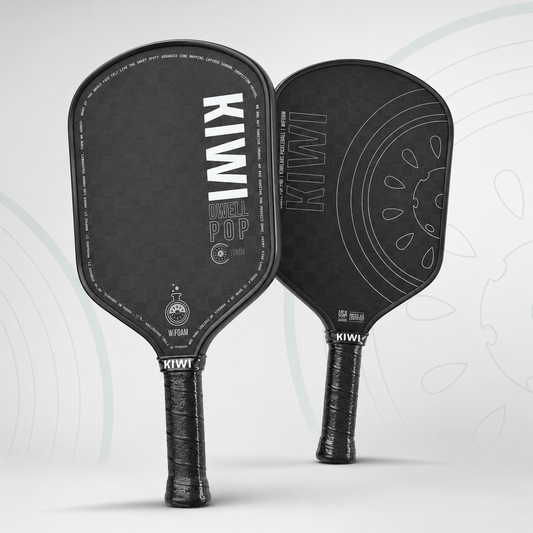
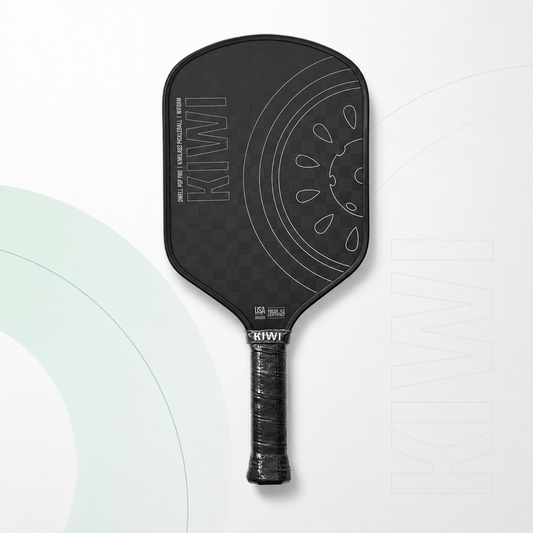
Kiwi Labs designs its paddle lineup around that useful range of feel - from approachable all-court options to advanced raw carbon, thermoformed, and full-foam builds for players who want more specific control, dwell time, or pop.
Shape, Core, and Surface: The Details That Change Doubles Play
Paddle descriptions can make every model sound elite. The construction details are where the differences become real.
Paddle shape
Wide-body paddles generally offer the largest and most forgiving hitting area. They suit players who value blocks, resets, and consistent kitchen play. Hybrid shapes split the difference, delivering more reach than a wide body while retaining a broad enough face for dependable contact. Elongated paddles offer maximum reach and leverage, often favored by players who drive, attack, and cover more court.
Do not treat shape as a rule. A well-designed elongated paddle can still be stable, and a wide paddle can still have serious pop. But shape gives you a useful starting point before you get lost in product claims.
Core feel and dwell time
A paddle with more dwell time lets the ball stay on the face fractionally longer. That feeling can make drops, dinks, and topspin rolls easier to shape. Firmer, poppier constructions release the ball faster, which can create more offensive pace with a compact swing.
Neither is automatically better. If opponents regularly overpower your counters, a little more pop may help. If your drops run deep and your resets sit up, a more controlled feel may make a bigger difference than extra power.
Carbon fiber surface and spin
Spin is a doubles weapon because it changes the bounce and shrinks your opponents' margin. A topspin roll can dip at feet. A heavy slice return can stay low. A shaped speed-up can pull a defender off balance instead of merely hitting the ball harder.
A quality raw carbon fiber face gives players the grip needed to create those shots, but the surface alone will not fix poor mechanics. Think of spin as a multiplier. When your contact and swing path are sound, a grippy surface gives you more action and more confidence to target tighter windows.
Do Not Buy a Doubles Paddle Based on Power Alone
The most common gear mistake in doubles is equating a loud, hot paddle with a better paddle. Power is useful, especially when you can attack a high ball or counter an opponent's speed-up. But the average rally is not decided by one clean overhead. It is decided by the reset that stays low, the dink that does not drift wide, and the block that gives your team time to regain the kitchen.
Before buying, be honest about the shots that cost you points. If hard drives jam you, prioritize stability and a larger sweet spot. If you are always a step late in hand battles, look for a quicker, more balanced swing feel. If you create opportunities but cannot finish them, move toward a firmer build with more accessible pop.
Price deserves the same scrutiny. Premium materials and thoughtful construction cost money, but inflated pricing is not a performance feature. Compare the face material, core design, shape, weight range, return policy, and actual on-court fit. The smartest paddle is the one that improves your game without making you pay for a logo.
Test for the Shots You Actually Hit
If you can demo a paddle, skip the temptation to judge it on five booming drives. Hit third-shot drops, backhand dinks, defensive blocks, and counter volleys. Ask whether the face stays stable when contact drifts toward the edge. Notice whether you can soften the ball without opening the paddle face too much. Then test a few attacks to make sure control has not come at the cost of a put-away ball.
Your ideal doubles paddle should make the kitchen feel calmer and the attack window feel clearer. Find that combination, and the next tight game will be decided less by your equipment and more by the smart shot you are ready to hit.