


Best Paddles for Third Shots That Build Control

A third-shot drop that lands softly in the kitchen can change the entire point. So can a third-shot drive that pins the returner back and creates an easier fifth shot. The best paddles for third shots help you execute both with less guesswork: enough touch to take pace off the ball, enough spin to shape your arc, and enough stability to keep contact clean when the return is deep or heavy.
That does not mean there is one magic paddle for every player. A former tennis player who attacks third-shot drives needs a different feel than a doubles player who wins with patient drops and resets. The right choice comes down to your swing, your preferred third-shot pattern, and whether your current paddle is costing you consistency.
What Makes the Best Paddles for Third Shots?
Third shots expose the weak points in a paddle quickly. You are often striking the ball from behind the baseline, moving forward, and trying to control a ball that is below net height. A paddle can feel great during casual hand battles yet feel erratic when you need to send a high, soft ball into a small target.
The first priority is a predictable response. Look for a paddle with a generous, stable sweet spot, especially if you tend to contact third shots toward the upper half of the face. Off-center hits do not disappear with a better paddle, but a more stable construction reduces the twisting and dead-ball feel that turn a near-perfect drop into a sitter.
The second is dwell time. This is the sensation of the ball staying on the face just long enough for you to guide it rather than simply launching it. Paddles with a more controlled, connected feel make it easier to roll the ball, soften your hands, and add margin over the net. Dwell does not mean the paddle has no power. It means you can access power without every compact swing feeling overly jumpy.
Spin matters, too. A quality raw carbon fiber face or another high-friction surface gives you more ability to brush up the back of the ball on drops and roll drives. More spin can pull a third-shot drop down into the kitchen or make a drive dip at the opponent's feet. Still, spin is a performance tool, not a substitute for a smooth swing path and correct paddle angle.
Start With Your Third-Shot Pattern
Before shopping by buzzwords, be honest about the shot you hit most often. The best paddle is the one that improves your highest-frequency decision, not the one with the loudest power claim.
For players who live on third-shot drops
Choose control first. A 16 mm paddle is often a strong starting point because a thicker core typically feels more forgiving and muted than a thinner, stiffer build. That extra forgiveness can help you absorb pace on returns and take a confident, relaxed swing instead of trying to baby the ball over the net.
A standard or hybrid-shaped paddle is also worth considering. Compared with a long, narrow elongated shape, these designs commonly offer a wider hitting area and more stability through the center of the face. If your drops sometimes leak wide or pop up when you are stretched, that broader, steadier platform can be more valuable than an extra inch of reach.
Do not confuse soft feel with a dead paddle. A good control paddle should still send the ball deep enough to clear the net safely. You want easy depth, not a face that forces you to over-swing from the baseline.
For players who drive, then crash the kitchen
If your default third is a drive, prioritize a clean release and enough pop to threaten the returner's body or hip. A 14 mm paddle, or a responsive 16 mm thermoformed paddle, can give you a faster, more direct ball off the face. The trade-off is real: as pop rises, touch can demand better hands and more disciplined mechanics.
An elongated shape can also make sense for players who use a two-handed backhand or like to attack from the baseline. The added reach helps on wide returns, while the longer face can support a more aggressive swing. Make sure it does not feel too head-heavy, though. A paddle that drags through your swing may create power, but it can make the transition from a drive to the next reset much harder.
For players who mix drops and drives
Most improving players need an all-court paddle, not a one-trick weapon. Look for medium-to-high stability, a spin-friendly face, and controlled pop. This kind of paddle lets you disguise a drop and a drive from a similar setup, which is one of the most useful ways to make the return team hesitate.
A balanced hybrid shape and a midweight build are usually safe bets here. They provide enough mass to handle a deep return without becoming sluggish in fast kitchen exchanges. If you are unsure whether you are a drop player or a driver, this is the category that gives you room to develop both shots.
Core Thickness, Shape, and Swing Weight
Paddle specs matter because they change what your hands feel at contact. They should guide your decision, not replace it.
A thicker 16 mm core generally favors control, forgiveness, and a softer impact sensation. It is a smart fit for players learning to drop consistently, players who want better resets, and anyone whose current paddle feels too hot. A thinner 14 mm core often delivers a crisper, quicker response that suits attacking players, but it can punish a rushed or tense drop.
Shape affects the sweet spot and maneuverability. Widebody and hybrid paddles tend to feel stable and easy to square up. Elongated paddles offer reach and leverage, but the sweet spot may feel more concentrated and the head can feel heavier. Neither is automatically better. If you frequently catch third shots near the edge, stability deserves more weight than reach.
Then there is swing weight, one of the most overlooked factors in third-shot performance. Static weight tells you what the paddle weighs on a scale. Swing weight tells you how heavy it feels as you move it. A higher swing weight can help carry a soft drop deep and keep the paddle from twisting on contact. Too much can slow your hands and make it difficult to transition into the kitchen. Players who feel late on resets should not assume a heavier paddle will solve their problem.
Modern Construction Can Improve Feel, Not Fix Technique
Thermoformed frames, foam-injected edges, and full-foam builds have changed what players can expect from a paddle. Done well, these technologies can increase stability, expand the usable sweet spot, and create a more connected feel on slow shots. That is valuable when you are trying to hit the same third-shot drop ten times in a row.
But construction should match your needs. Some thermoformed paddles feel powerful and stiff, which can be excellent for drives but demanding on delicate dinks. Some full-foam designs offer impressive dwell and consistency, yet a player who wants immediate punch may prefer a livelier response. Marketing labels alone do not tell you how a paddle will play.
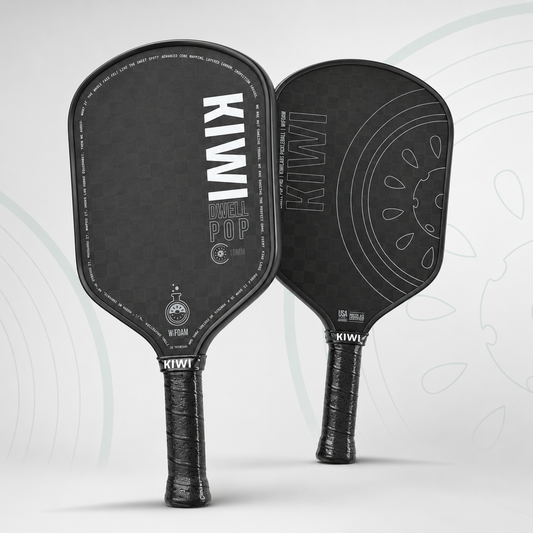
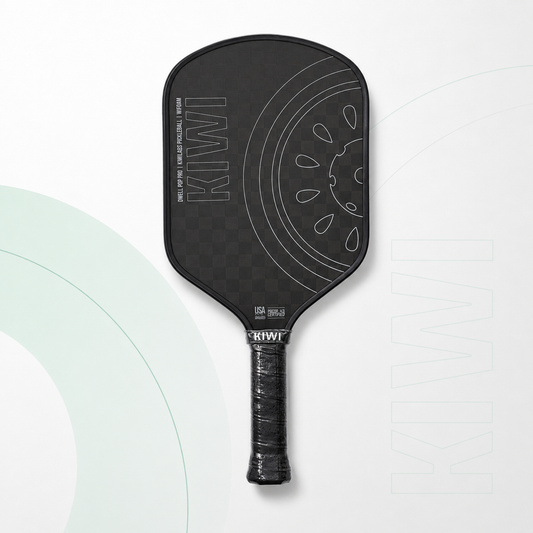
Within Kiwi Labs' lineup, the beginner-friendly Citrus 2.0 and advanced Slice 1.5, Circuit, and DwellPop Gen 4 give players different routes into modern paddle performance. The productive question is not which name sounds most advanced. It is whether the paddle's sweet spot, face feel, and power level fit the third shot you are actually trying to improve.
Test Your Paddle With One Simple Drill
A new paddle earns its place when it improves repeatability. At the next open play or practice session, feed yourself or have a partner return ten balls deep to your forehand and ten to your backhand. Hit the same third-shot drop target each time: clear the net with margin and land near the kitchen line.
Pay attention to the misses. If balls routinely land short, you may need more stability or a little more pop. If they sail long despite a compact swing, the paddle may be too reactive for your current touch. If good contact feels inconsistent across the face, prioritize a larger sweet spot before chasing more spin or more power.
Repeat the test with drives. A strong all-court paddle should let you swing through a drive without feeling like you have to brace for an uncontrollable launch. It should also let you hit the next ball with confidence when the drive comes back fast.
The right third-shot paddle will not turn a rushed swing into a perfect drop. What it can do is give your best mechanics a larger margin, a cleaner response, and the confidence to choose the right shot instead of simply surviving the return.