
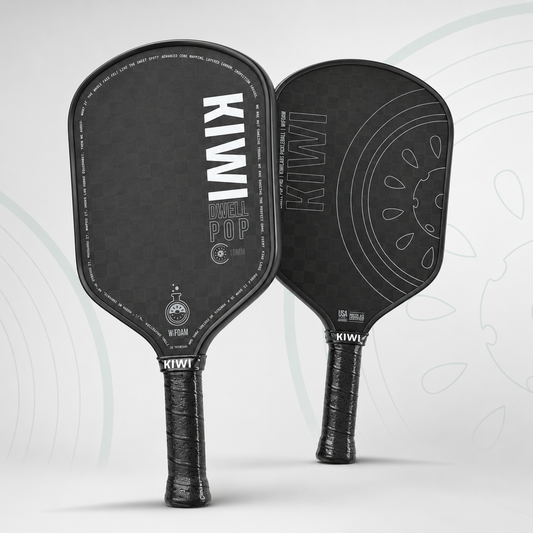
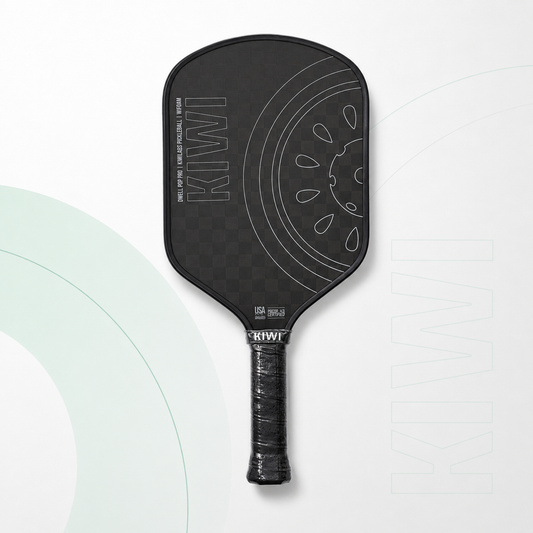


Carbon Paddle Testing Beyond the Spec Sheet

A paddle can post a huge spin number, carry a raw carbon face, and still feel wrong the moment a fast drive hits near the edge. That is why carbon paddle testing matters. The goal is not to crown one “best” paddle from a spreadsheet. It is to understand how construction, measurements, and actual play combine to affect the shots you hit every game.
For players who research gear before buying, test results can cut through inflated marketing. But only if you know what each result measures, what it misses, and which numbers matter for your game.
What Carbon Paddle Testing Should Actually Tell You
Good testing answers practical questions. Will this paddle help you create more shape on a third-shot drop? Does it stay stable when you block a hard speed-up? Can you drive through the court without feeling like every reset flies long? Does the sweet spot stay useful beyond the exact center of the face?
A carbon fiber paddle is not automatically a power paddle, a control paddle, or a spin machine. “Carbon” describes part of the face construction, not the complete playing experience. The core material and thickness, thermoforming process, edge reinforcement, foam placement, face texture, balance point, and overall shape all change the result.
That is where a serious test process earns its value. It separates a materials claim from a performance claim.
Start With the Measurements That Shape Feel
Static weight gets the most attention because it is easy to understand. Most players want a paddle that feels quick enough at the kitchen but substantial enough to handle pace. Still, two paddles at 8.1 ounces can swing very differently.
The difference usually comes down to balance and swing weight. Swing weight describes how heavy a paddle feels when it moves through the air. More mass toward the head generally raises swing weight, which can add plow-through on drives and serves. The trade-off is slower hand speed during firefights and more fatigue for some players over a long session.
Twist weight is another useful measurement, especially for players who miss the center occasionally, which is all of us under pressure. A paddle with stronger resistance to twisting is more stable on off-center blocks, counters, and resets. It may not make your hands faster, but it can make a rushed contact feel less punishing.
These numbers are not a verdict. A player who thrives on quick counters may prefer a lower swing weight, while a player who wants deeper serves and heavier baseline drives may gladly accept a little more heft. The right number depends on your mechanics, strength, and the shots you use to win points.
Measure the Sweet Spot, Not Just the Center
Every paddle feels good when the ball lands dead center. The better question is what happens an inch above center, toward the sides, or low on the face during a defensive pickup.
Sweet spot testing should include repeated impacts across the hitting area, not a single clean strike. Listen for changes in sound, feel for vibration, and watch how much ball speed drops on imperfect contact. A large, consistent sweet spot gives players more confidence to reset from awkward positions and redirect pace without over-gripping the handle.
Thermoformed construction, perimeter weighting, and foam-enhanced designs can improve stability and forgiveness, but they can also alter feel. Some players love a more solid, connected response. Others want softer feedback that helps them sense the ball at the kitchen. Neither preference is wrong. The mistake is assuming that a bigger sweet spot guarantees a muted or plush paddle.
Spin Tests Need Real Context
Spin is one of the biggest reasons players choose a carbon-faced paddle. A quality textured carbon surface can help the ball grip the face for a fraction longer, creating more rotation on serves, rolls, topspin drives, and cut dinks.
A controlled spin test usually tracks revolutions per minute on similar swings. That makes it useful for comparing paddles under the same conditions. But a top RPM result does not mean every player will suddenly hit sharper angles. Technique still decides whether you brush up the back of the ball, keep the face stable, and accelerate through contact.
It also matters how the spin feels. Some paddles make it easy to access shape with a compact swing at the kitchen. Others reward a faster, more aggressive stroke from the baseline. Face texture durability matters too. A paddle should not deliver its best grip for a few weeks and then fade into a smooth, ordinary face.
Look for tests that pair spin data with real shot outcomes: can a topspin drive dip inside the baseline, can a roll volley pull an opponent wide, and can a sliced return stay low? Those are the moments where spin becomes a point-winning tool rather than a marketing badge.
Pop, Power, and Control Are Not the Same Thing
These terms get blended together constantly, but they describe different parts of paddle performance.
Pop is the quick rebound you feel on short swings, such as counters, punch volleys, and speed-ups. A paddle with more pop can make a compact stroke surprisingly dangerous. It can also demand cleaner touch during dinks and resets because the ball leaves the face faster.
Power is more about how a paddle performs when you take a full swing. Core compression, paddle stiffness, swing weight, and construction all influence whether you can generate easy depth and pace from the baseline. A powerful paddle does not necessarily have the most pop, and a poppy paddle is not always the best choice for players who rely on full, smooth drives.
Control is the ability to predict launch, depth, and placement. It comes from more than a soft core. A paddle can feel controlled because it has a broad sweet spot, a predictable response across the face, enough dwell time to shape the ball, and a balance that suits your hands. If you constantly baby the ball to keep it in, the paddle is not delivering control for you, regardless of its label.
Test the Shots You Cannot Afford to Miss
The most useful on-court test is not a highlight-reel drive. It is the sequence that exposes a paddle’s weaknesses.
Hit several third-shot drops from different depths. Reset hard balls at your feet. Block counters near the sideline. Exchange quick hands volleys without trying to overpower every ball. Then serve, return, and drive with your normal effort level. A paddle that only shines when you swing perfectly is less valuable than one that stays predictable when the point gets messy.
Pay attention to your adjustment period. A new paddle may need an hour or two before its balance and response feel natural. But if you are still spraying dinks long, mishitting defensive blocks, or losing confidence in your counters after several sessions, do not explain away the mismatch. The paddle may be excellent for another player and still be wrong for your style.
Why Construction Transparency Matters
Carbon paddle testing is more credible when brands explain what is inside the paddle, not just what is printed on its face. Raw carbon fiber, composite layers, polymer honeycomb cores, injected foam, thermoformed edges, and full-foam builds all create different responses.
For example, a thicker core often gives players more forgiveness and a softer impact feel, though the final result depends on the entire build. A thinner core may feel faster and livelier, but it can require more touch. Thermoformed paddles can bring impressive stability and power, while foam-focused designs may change dwell time and the way the paddle responds on soft versus hard contact.
There is no magic construction word that replaces testing. At Kiwi Labs Pickleball, the better approach is to connect materials to player outcomes: more usable spin, a larger sweet spot, more confidence on resets, or more pace when a put-away is there.
Use Test Data to Buy Smarter
Treat published numbers as a shortlist tool, then match them to your priorities. If your hands are late in quick exchanges, prioritize maneuverability and stability over maximum power. If your drives lack depth, a little more swing weight and a firmer response may help. If you already generate pace but struggle with drops and resets, look for consistent launch and a forgiving face rather than chasing the hottest paddle available.
The smartest carbon paddle testing combines measurable data with honest court time. Numbers can reveal why a paddle behaves the way it does. Your dinks, counters, serves, and resets reveal whether that behavior helps you play better.
Choose the paddle that makes your reliable shots more reliable and gives your developing shots room to improve. That is performance worth paying for.