


How Paddle Shape Changes Reach and Control

A passing shot clips the outside edge of your paddle by an inch. At the kitchen, that inch can feel like the difference between extending the point and watching it end. That is the practical answer to how paddle shape changes reach: a longer paddle gives you more coverage, but the extra length also changes where the paddle feels stable, quick, and forgiving.
Shape is not a cosmetic choice. It affects your contact point on wide balls, your ability to defend drives, your leverage on serves, and the speed of your hands in a firefight. The right answer depends on where you need help most - and what trade-offs you are willing to make.
How Paddle Shape Changes Reach on the Court
A standard pickleball paddle can be up to 17 inches long. Manufacturers use that fixed limit in different ways. An elongated paddle puts more of that length into the face, while a wider, standard-shaped paddle keeps the face shorter and spreads more material across its width.
An elongated paddle usually measures around 16.5 inches long and 7.5 inches wide. Compared with a standard shape closer to 16 inches long and 8 inches wide, it can add roughly half an inch of usable reach at the end of your arm. That does not sound dramatic until you are stretched toward the sideline, reaching for a hard drive at your feet, or trying to volley a lob before it pushes you off the kitchen line.
That added length helps most on balls you cannot perfectly set up for. Think wide returns, defensive blocks against a powerful opponent, and one-handed backhands where every bit of extension matters. It also lets you contact serves and groundstrokes slightly farther in front, creating more leverage through the ball.
But reach is only useful if you can control the face at contact. A paddle that feels slow or unstable can turn that extra half-inch into mishits. Shape has to work with your hand speed, technique, swing path, and the kind of points you play most often.
Elongated Paddles: More Extension and Leverage
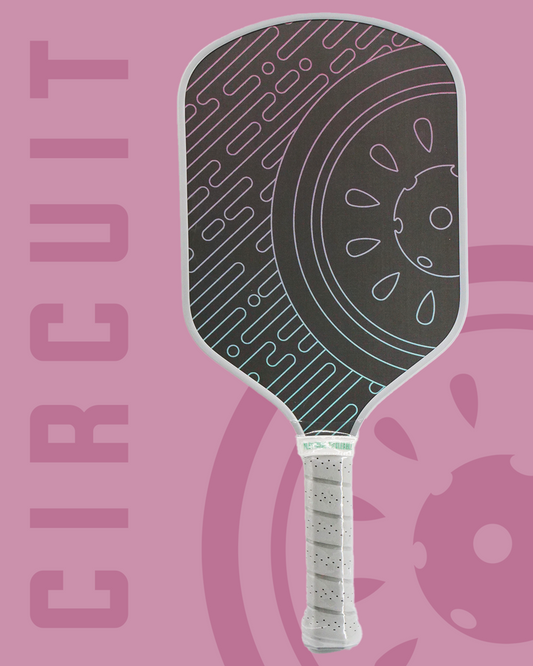
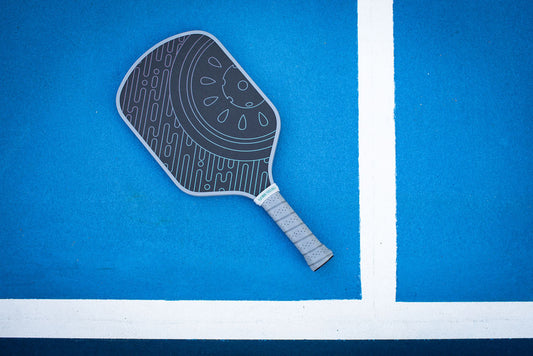
The elongated shape is built for players who want their paddle to play bigger. Its longer face extends your defensive range and creates a more stretched hitting surface for drives, passing shots, and overheads. From the baseline, the shape can feel especially natural because it supports a longer swing and a more tennis-like contact point.
The leverage benefit is real. With more face length above the hand, the paddle has a longer lever arm. When you accelerate through a serve or drive, that can translate to more pace and easier depth. Players who like to attack from the baseline or punish high balls often appreciate the added extension.
Elongated designs also tend to suit two-handed backhands well. The longer handle commonly paired with this shape gives your second hand more room, while the extended face helps you reach through the shot. For players transitioning from tennis, that combination can feel familiar fast.
The trade-off is maneuverability. More length places more mass farther from your hand, increasing swing weight even when the scale weight is similar. A 7.9-ounce elongated paddle and a 7.9-ounce standard-shaped paddle may not move the same. The elongated option can feel slower when you are reacting to quick exchanges, especially if it is head-heavy.
Its sweet spot may also sit higher on the face. That is great when you strike the ball cleanly out front, but it can be less forgiving when you block a drive near the lower portion of the paddle or catch a dink off-center. Modern thermoformed construction, perimeter weighting, and foam-enhanced designs can improve stability, but they do not erase the physics of a longer frame.
Standard Shapes: Faster Hands and a Wider Target
A standard or widebody paddle gives up a bit of length to create a broader face. The result is often a more centered, forgiving sweet spot and a faster feeling in hand. For the player who spends most points at the kitchen, those qualities can matter more than maximum extension.
The wider face gives you extra margin from side to side. That helps when your contact is not perfectly centered - a common reality during fast hand battles, reset attempts, and low volleys that arrive at your body. A wider paddle is not automatically more forgiving, since core thickness, construction, and weight distribution still matter, but its geometry is working in your favor.
Standard shapes also tend to feel more balanced. With less material stretched toward the tip, the paddle can rotate faster from forehand to backhand. You may notice it on speed-ups, counters, and compact punch volleys where there is no time for a big swing.
For many doubles players, that quicker response is worth more than the extra reach of an elongated paddle. Pickleball rewards being ready at the kitchen line. If a paddle lets you reload faster and keep the face stable through repeated exchanges, it can help you win more points than a small increase in length ever would.
Reach Is More Than Overall Length
Paddle length matters, but it is not the full reach story. Handle length changes where your hand sits relative to the face. A longer handle can place the hitting surface a touch farther from your body, and it gives two-handed players more usable grip space. A shorter handle can make a paddle feel more compact and easier to manipulate, particularly for players who choke up for touch shots.
Swing weight matters just as much. A long paddle with a moderate swing weight may still feel responsive. A shorter paddle with heavy weighting near the tip can feel sluggish despite its compact dimensions. If you are comparing paddles, do not stop at static weight. Ask whether the paddle feels head-light, balanced, or head-heavy during real exchanges.
Your ready position also shapes the value of reach. A player with efficient footwork, a compact volley, and a paddle held out front may not need an elongated model to cover the court. A player who regularly gets jammed, reaches late on backhands, or struggles to retrieve balls near the sideline may gain more from added length.
Choose Shape Based on Your Game, Not the Spec Sheet
Start with the moments where your current paddle comes up short. If you are consistently a step late on wide balls, struggle to defend hard drives, or want more leverage on serves and groundstrokes, an elongated shape is worth serious consideration. It can give aggressive all-court players a longer strike zone without requiring a longer swing.
If your biggest frustration is losing kitchen exchanges, catching balls off-center, or feeling slow when counters come back fast, a standard shape may be the better performance move. Its wider face and quicker handling can build confidence where doubles points are often decided.
There is also a middle ground. Hybrid shapes aim to offer more reach than a traditional widebody while retaining a more forgiving and maneuverable feel than a full elongated paddle. For improving players, that balance can be the smartest place to start. You get meaningful court coverage without making every quick volley feel like work.
At Kiwi Labs Pickleball, shape should be evaluated alongside the full build: face material, core thickness, weight distribution, handle length, and sweet spot design. A raw carbon face can help you create spin, but the shape determines how naturally you get that face to the ball. A thick core can improve control, but it needs a shape and balance you can move confidently at speed.
Test the Shape in Your Highest-Pressure Shots
When you try a new paddle, do not judge it only on warm-up drives. Put it through the shots that expose its shape. Hit wide defensive blocks, quick forehand-backhand counters, low resets from the transition zone, and reach volleys near the sideline. Then move to serves and overheads to see whether the added leverage feels useful or simply harder to control.
Pay attention to your miss pattern. If balls drift off the edge during fast exchanges, you may benefit from a wider, more forgiving face. If you are barely missing balls you can almost reach, extra length may be the upgrade that changes those points. The best paddle shape is not the longest or widest on paper. It is the one that gives you more clean contacts when the rally gets fast, low, and uncomfortable.