
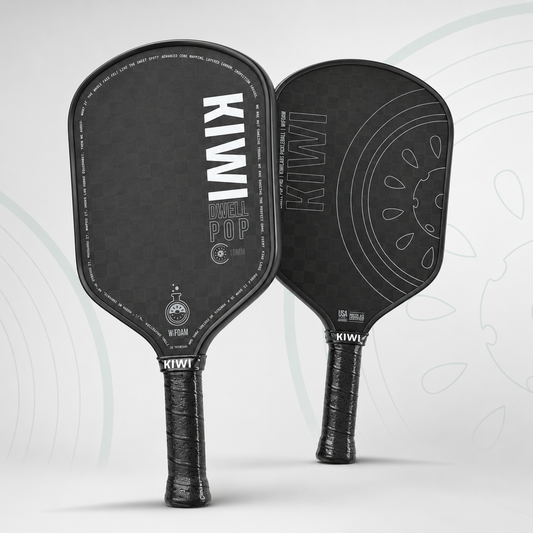
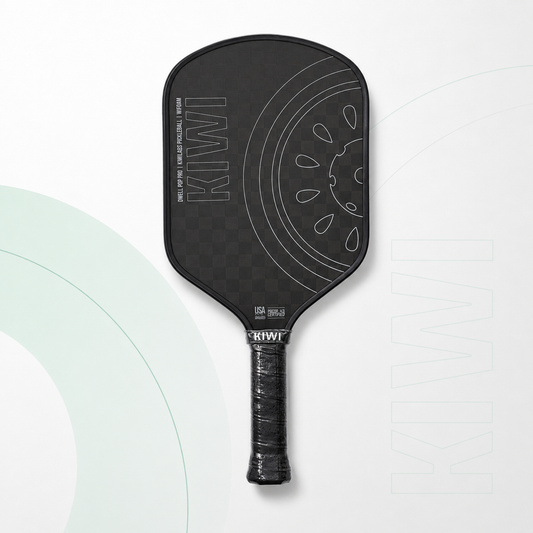


How to Evaluate Paddle Pop Before You Buy

A paddle can feel great during five warm-up drives and still be the wrong paddle once the game speeds up. That is why learning how to evaluate paddle pop means looking beyond a product page claim or a loud sound at contact. The real question is simple: does the paddle help you attack the right ball without making resets, drops, and kitchen exchanges harder than they need to be?
Pop is a valuable performance trait, especially for players who want quicker counters and more dangerous put-aways. But more pop is not automatically better. The best fit depends on your swing, your ability to control pace, and the shots that break down most often in your game.
What Paddle Pop Actually Means
Paddle pop is the ball's quick rebound off the face, particularly on compact swings. A paddle with high pop can send the ball back with surprising speed when you block, counter, flick, or punch volley. You do not always need a huge backswing to create offense.
That makes pop different from raw power. Power is more about what happens when you take a full swing on a serve, drive, or overhead. A powerful paddle may reward big acceleration from the baseline. A poppy paddle feels lively even when your motion is short and the ball arrives fast.
There is overlap, of course. Many modern thermoformed and foam-injected paddles deliver both power and pop. Still, separating the two helps you shop with more precision. If your drives already have plenty of pace but your hand battles at the kitchen feel late, pop may be the missing ingredient. If your counters fly long, more pop could magnify the problem.
How to Evaluate Paddle Pop on Court
The most useful test is not a single hard swing. It is a sequence of shots that exposes how a paddle behaves under pressure. If you can demo a paddle, give yourself at least one full session rather than judging it from a few minutes of casual hitting.
Start with punch volleys from the transition zone. Have a partner drive controlled balls at your body and use a compact block or punch. Does the ball get back deep with minimal effort? Does it leave the face quickly enough to pressure your opponent? That is usable pop.
Next, test rapid-fire counter exchanges at the kitchen line. Focus on your reaction rather than your highlight-reel winner. A paddle with more pop should help you redirect pace with a short stroke. But pay attention to whether the ball launches too easily when contact is slightly high, off-center, or late. Great pop feels explosive when you choose it, not random when you do not.
Then move to resets. From the transition zone, absorb a hard drive and try to drop the ball softly into the kitchen. This is where the trade-off becomes clear. A very lively face may require softer hands and cleaner touch to keep resets from floating long. Players with solid hands may love that responsive feel. Players still building consistency may prefer a more controlled response, even if it gives up a little instant offense.
Finally, hit speed-ups from below net height and from a neutral dink. Notice whether the paddle produces pace without forcing you to over-swing. Also notice where the ball lands. A fast ball that clips the tape or sails long is not an advantage. The right paddle helps you create a controllable attack window.
Do Not Judge Pop by Sound Alone
A crisp, loud paddle can feel powerful, but sound is not a reliable measure of pop. Core construction, face stiffness, ball type, indoor versus outdoor conditions, and even the surrounding court can change the sound dramatically.
Instead, judge ball speed relative to your effort. On the same compact counter, does one paddle produce a noticeably faster, deeper reply? On a soft block, does it rebound more actively? Those are better indicators than acoustics.
Also compare paddles using the same ball whenever possible. Outdoor balls tend to be harder and can make a paddle feel different than a softer indoor ball. Cold weather can reduce ball liveliness, while hot weather can make the entire game feel quicker. Testing two paddles side by side is far more revealing than trying one today and another three weeks later.
Construction Clues That Influence Pop
Paddle construction does not guarantee a specific feel, but it offers useful clues. Thermoformed paddles often use a more rigid perimeter structure, which can create a firmer, more responsive impact feel. Foam-enhanced or full-foam designs can also deliver fast rebound and stability, depending on how the foam, core, and face work together.
A raw carbon fiber face is often associated with spin and connected feel, but carbon alone does not tell you how poppy a paddle will be. The core thickness, core material, edge construction, weighting, and face layup all matter. That is why two raw carbon paddles can play nothing alike.
Thickness introduces another trade-off. Thinner paddles commonly feel quicker and more direct, which can support pop and hand speed. Thicker paddles often provide more dwell time and a softer, more controlled response. That does not mean every thin paddle is uncontrollably hot or every thick paddle is soft. It means you should treat thickness as one clue, then verify the feel on court.
A larger, more stable sweet spot matters too. Pop is only useful if it shows up on the balls you actually hit. A paddle that explodes in the center but dies near the edge can be frustrating in fast hands battles. Look for consistent rebound across the practical hitting area, especially toward the upper half of the face where many counters and blocks happen.
Match Paddle Pop to Your Game
Beginner and improving players often benefit from moderate pop paired with a forgiving sweet spot. You want enough pace to make serves, returns, and put-aways easier, but not so much rebound that every dink and reset feels touchy. Control builds confidence, and confidence lets you swing freely.
Intermediate players who spend more time in competitive kitchen exchanges may want additional pop for counters and speed-ups. At this stage, the question becomes whether the paddle's response matches your hands. If you can consistently soften the ball when needed, a livelier paddle can add a real offensive gear.
Advanced players may seek high pop because they can use it selectively. They know when to absorb pace, when to roll a counter, and when to finish a ball. Even then, the best competitive paddle is rarely the one with the highest possible rebound. It is the one that keeps your attack dangerous while preserving the touch required for drops, dinks, and resets.
Consider your usual opponents, too. If your games are full of bangers and rapid exchanges, quick counter-pop can pay off immediately. If your group plays patient, dink-heavy pickleball, a paddle with more dwell and control may win more points over a full match.
A Simple Scorecard for Comparing Paddles
After each demo, write down your impressions before the next paddle blurs them together. Rate the paddle from one to five for counter pace, put-away ease, reset control, sweet spot consistency, and comfort over a two-hour session. The last category matters. A paddle that feels electric for 20 minutes may become difficult when fatigue makes your contact less precise.
Be honest about unforced errors. If a paddle gives you three spectacular counters but costs you six missed drops, that is useful data. Do not blame every miss on the paddle, but do look for patterns across repeated shots. The goal is not to find the hottest face. It is to find the response that raises your average level.
Kiwi Labs designs paddles around the balance serious players actually need: spin-friendly carbon faces, modern construction, generous sweet spots, and performance that does not require legacy-brand pricing. Whether you prefer a more controlled all-court feel or a quicker, more aggressive response, test for the shots that decide your points.
The paddle worth keeping is the one that gives you confidence when the ball comes fast - and enough touch to make the next soft ball land exactly where you intended.