


How to Hit Deeper Serves in Pickleball More Often

A short serve gives the returner a runway. They can step in, drive with their feet set, and put your team under pressure before the point has even reached the kitchen. A deep, controlled serve changes that equation. If you want to know how to hit deeper serves, the answer is not simply swinging harder. It is building a repeatable motion that sends the ball deep with margin, shape, and enough pace to keep the returner honest.
The best deep serve is not necessarily the fastest ball you can hit. It lands in the back third of the service box, clears the net comfortably, and forces the returner to move through the ball near or behind the baseline. That one extra step can make their return shorter, slower, or less accurate - exactly what your team needs to establish the kitchen first.
Start With the Right Deep-Serve Target
Trying to paint the back line is the fastest way to donate free points. Your primary target should be the final three to five feet of the service box, not the line itself. That gives you depth while leaving room for normal variations in contact, wind, and court conditions.
Aim through the center of your target, not at its farthest edge. For a right-handed player serving from the even court, a reliable starting target is deep through the opponent's backhand side or toward their inside hip. The same principle applies from the odd court. You are looking for a target that makes a clean, aggressive return less comfortable.
Serving deep to the backhand is usually the higher-percentage play, especially against players who can punish a forehand return. But do not become predictable. If every serve travels to the same corner at the same speed, a good returner will start leaning early. Mix in a body serve, then go back deep to the backhand. The goal is pressure through placement, not random variety.
How to Hit Deeper Serves Without Over-Swinging
Most serves that land short have one of two causes: contact occurs too late, or the player tries to add power with only the arm. Both create a low, rushed ball that often clips the net or lands around the service line.
Start with a stable base. Stand balanced with your weight slightly forward, knees soft, and your non-paddle side helping you track the ball. Let the ball drop to a consistent height, then make contact slightly in front of your body. If contact drifts behind your lead hip, the paddle face tends to open or you compensate by flicking your wrist. That can add height, but rarely adds reliable depth.
Use a smooth low-to-high swing path. The paddle should travel forward first, then gradually upward through contact. Think of sending the ball out toward your target rather than lifting it straight up. A deep serve needs enough net clearance to be safe, but a towering moon ball gives the returner too much time to set their feet.
Your legs and torso should supply the engine. As you swing, transfer your weight from your back foot toward your front foot and let your shoulders rotate naturally. This is a compact motion, not a full tennis serve. You do not need a huge backswing. In fact, a shorter, connected backswing makes timing easier and gives you a more consistent contact point.
A useful cue is: smooth back, strong through. Take the paddle back under control, then accelerate through the ball without squeezing the handle too tightly. Tension slows the paddle and makes the face harder to control.
Use Height as Your Safety Margin
Players often try to hit a deep serve on a flat line barely above the tape. It feels powerful when it works, but it has almost no margin. A better serve crosses roughly two to four feet above the net, depending on your pace and spin. That shape gives the ball time to travel deep without forcing you to hit a perfect laser.
If your deep serves keep sailing long, do not immediately slow down. First check your paddle face. A face that is too open sends the ball upward and long. Close it slightly, keep your contact in front, and maintain a forward swing path. If the ball hits the net, add a little lift from your legs and brush more upward through the back of the ball.
Add Topspin for Depth That Drops In
Topspin is one of the best tools for serving deeper with confidence. By brushing up the back of the ball, you create forward rotation that helps the serve dip into the court. That means you can swing with more intent while still keeping the ball inside the baseline.
You do not need a dramatic wrist snap. Start by letting the paddle move from low to high and finish toward your target. As your comfort grows, add a small amount of upward brushing action. The ball should feel like it is rolling off the paddle face, not being slapped.
There is a trade-off. More topspin can create a heavier, dipping serve, but too much brushing can reduce forward drive and leave the ball short. For most recreational and intermediate players, a serve with moderate topspin and solid forward extension is the sweet spot. It gets depth, clears the net safely, and makes the ball less predictable off the bounce.
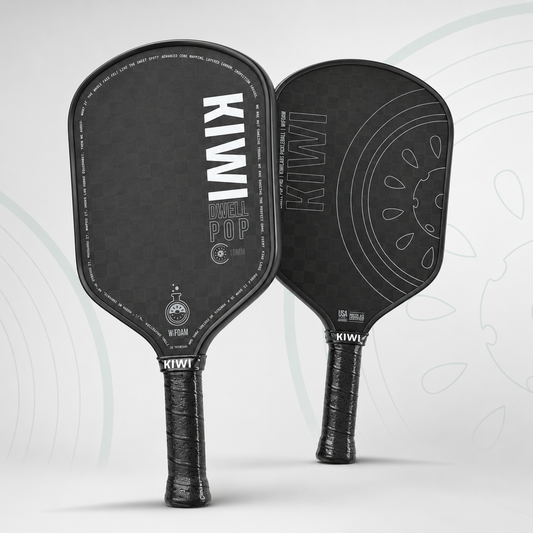
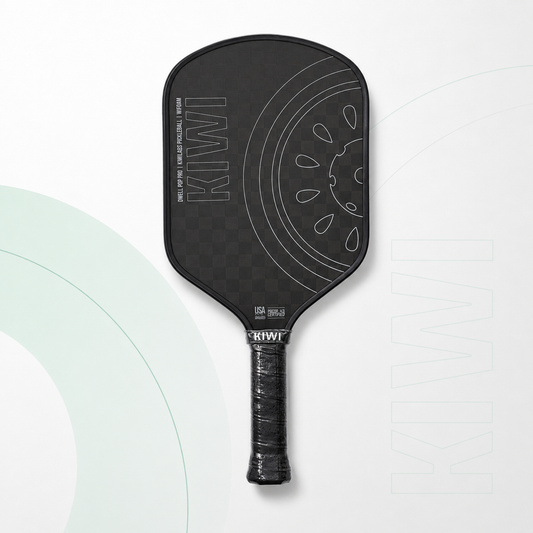
Paddle face and dwell time matter here. A paddle with a consistent sweet spot and a textured raw carbon surface can make it easier to feel the ball and generate controlled spin. But gear is not a substitute for mechanics. Even a high-performance paddle cannot fix late contact or an aimless target. Kiwi Labs designs for spin, control, and usable power because those are the traits that help a player repeat a shot under pressure, not just hit one highlight serve.
Build a Serve That Works Against Different Returners
A deeper serve should adapt to the player across the net. Against a returner who camps far behind the baseline, use more pace or a body serve to take away their clean swing. Against someone who stands close to the line, a higher, deeper topspin serve can push them back and force contact on the move.
Pay attention to their preferred side. Some players have a weak backhand but compensate by running around it. In that case, serving deep toward the body can jam the pivot and limit their options. If they are quick and athletic, avoid serving the same outside corner repeatedly. Move them side to side, then use depth to keep them from stepping into a return.
The score matters too. At 0-0 or when you have a lead, use your dependable deep serve. At a critical point, this is usually not the moment to test a low-percentage ace attempt. A serve that lands deep 80 percent of the time is far more valuable than a risky bomb that creates occasional winners and frequent faults.
Fix the Most Common Reasons Serves Land Short
If your serve repeatedly lands near the service line, diagnose the pattern instead of just trying harder. A short serve often comes from decelerating before contact. Players see the ball, worry about missing long, and slow the paddle down. Commit to a smooth finish toward the target.
Another common issue is dropping the ball too low or changing the drop height every time. That makes your strike zone inconsistent. Use the same simple release on every serve and wait for a contact height you can repeat. The ball does not need to bounce high. It needs to arrive where your paddle can move through it cleanly.
Finally, watch your finish. If your paddle stops near your hip, you probably are not transferring energy forward. Finish with the paddle extending toward the court, then rising naturally. Your follow-through does not create the serve after the fact, but it reveals whether your swing traveled through the ball.
Practice Depth With a Clear Standard
Do not spend ten minutes serving with no feedback and call it practice. Put a visual marker, such as a spare ball or a piece of court-safe tape, about four feet inside the baseline. Your job is to land serves beyond that marker while keeping them in the correct half of the court.
Start with 20 serves to one target. Track only makes that land in your deep zone. Then switch sides and repeat. Once you can consistently land 14 to 16 out of 20 deep, add a second target such as the backhand corner or body line. This creates intent and shows whether your serve holds up when you change placement.
For a more match-ready drill, serve in sets of five. Before each ball, call your target out loud: deep backhand, deep body, or deep middle. If you miss short, do not rush the next rep. Reset your feet, choose the target again, and make the same controlled motion. Pressure habits are built through deliberate repetition, not by spraying balls faster.
A deeper serve will not win every point outright. What it can do is make the next ball easier: a weaker return, more time to reach the kitchen, and fewer opponents attacking with both feet planted. Treat the serve as your first opportunity to shape the point, then give it the same attention you give your drops, resets, and drives.