


Pickleball Paddle Price Value Guide for Buyers

A $250 paddle can be a great buy. A $250 paddle can also be a logo, a launch campaign, and a promise you cannot feel on court. The difference comes down to construction, fit, and whether the paddle gives you measurable help with spin, control, power, and consistency. This pickleball paddle price value guide cuts through the price tags so you can spend for performance, not hype.
What a Pickleball Paddle Should Cost
For most players, the useful price ranges break down more clearly than the marketing does. Entry-level paddles generally sit below $80, solid performance paddles often land around $80 to $150, and advanced carbon fiber paddles commonly run from $150 to $250 or more.
That does not mean every player needs to spend $200. A newer player may gain more from a forgiving paddle, a few lessons, and court time than from the hottest pro-level release. But once you are working on third-shot drops, faster hands battles, reliable resets, or heavier topspin serves, paddle construction starts to matter more.
The smartest question is not, "What is the most expensive paddle?" It is, "What features will improve the shots I actually hit?" A paddle that gives you a larger usable sweet spot and cleaner feedback can be worth far more than one loaded with buzzwords.
The Pickleball Paddle Price Value Guide: What You Are Paying For
Price should track technology that changes play. It should not simply track a recognizable name, a pro sponsorship, or an annual cosmetic refresh. Here is where your money should go.
Face material and spin potential
Composite and fiberglass faces can be fun, lively, and perfectly workable for casual play. They are often found at lower price points because the materials and build process are less costly. The trade-off can be less predictable touch and lower spin potential compared with quality carbon fiber options.
Raw carbon fiber faces have become a major performance benchmark for good reason. Their textured surface can help the ball stay on the face longer, giving players more opportunity to shape serves, rolls, drops, and passing shots. But "carbon fiber" alone is not a value guarantee. The weave, surface treatment, face consistency, and how the face works with the core all affect real-world results.
A well-built carbon paddle in the mid-price range can deliver the spin and control that used to require a much bigger budget. That is where direct-to-consumer brands have put real pressure on legacy pricing.
Core thickness and feel
Core thickness directly influences how a paddle behaves. Thinner options, often around 13 mm or 14 mm, tend to feel quicker and more explosive. Players who attack speed-ups, drive aggressively, and want extra pop may prefer that response. The downside is that touch shots can feel less forgiving if your contact is inconsistent.
Thicker cores, commonly 16 mm, are usually built for control, stability, and a softer feel. They can help absorb pace on resets and create more confidence on drops and dinks. They are not automatically low-power paddles, though. A well-designed 16 mm paddle can still produce serious put-away power when its construction supports energy return.
Full-foam and advanced foam-injected builds add another layer. These designs can expand the sweet spot, stabilize off-center contact, and create a distinct blend of dwell time and pop. That added engineering may justify a higher price, provided it is not being used as a vague label with no on-court benefit.
Construction that holds up under pressure
A cheap paddle can feel impressive for a few games and disappoint months later. Durability is part of value. Look closely at the overall build, including edge treatment, handle connection, core bonding, and how the paddle is reinforced around the perimeter.
Thermoformed paddles, which use heat and pressure to bond components, are popular because they can produce a firmer, more connected feel with excellent power and stability. Perimeter foam can further widen the sweet spot. These are meaningful upgrades when executed well, especially for intermediate and competitive players.
Still, thermoformed is not a magic word. Some players prefer a plush, more controlled response over a crisp, powerful one. The best construction for you depends on whether you lose more points from balls sitting up or from shots sailing long.
Where Players Waste Money
The paddle market loves a premium story. Limited colors, pro signatures, and dramatic claims can be entertaining, but they should not carry more weight than specs and playability.
Do not pay extra just because a paddle is marketed to tournament players. If you are still building consistency at the kitchen line, an ultra-powerful paddle may make your game harder, not easier. More pop can punish a late or tight grip just as easily as it can finish a point.
Be cautious with paddle bundles that include accessories you do not need. A cover, balls, or an overgrip have value, but they should not distract from an underwhelming paddle. Also watch for low-priced paddles with big claims but no meaningful detail about the face, core, thickness, or construction. Transparency is a value feature.
Finally, do not assume an expensive paddle is automatically more durable. Read the return policy, warranty terms, and verified player feedback. A brand that stands behind its equipment reduces the risk of trying a new paddle style.
Match Your Budget to Your Game
A player buying their first serious paddle should prioritize forgiveness over maximum power. In the $80 to $150 range, look for a comfortable grip, a balanced swing weight, a generous sweet spot, and a face that supports spin. You want a paddle that helps you learn clean contact without feeling dead or disposable.
Improving intermediate players often get the strongest value in the $120 to $200 range. This is where modern carbon faces, thicker control-oriented cores, thermoformed builds, and perimeter foam become accessible without the legacy-brand markup. If you play multiple times a week and notice where your current paddle holds you back, this range can make a genuine difference.
Competitive players may reasonably spend above $200, but only with a specific reason. Maybe you need a fast, aerodynamic shape for hand battles. Maybe you want a stable, full-foam paddle that keeps your resets quiet while giving drives more force. Maybe a particular handle length fits your two-handed backhand. At that point, the purchase should be about fit, not status.
Test Feel, Not Just Specs
Specs narrow the field, but they do not finish the job. Two paddles with the same thickness and face material can play completely differently. Weight distribution changes hand speed. Shape changes reach and forgiveness. Handle geometry changes confidence on backhands, rolls, and counters.
When you demo or test a paddle, pay attention to four shots: a soft dink, a defensive reset, a third-shot drop, and a full-speed drive. If the paddle only feels good when you swing hard, it may not be the all-court tool you need. If it feels stable on resets but leaves every attack floating, it may be too control-focused for your style.
Give yourself more than a few minutes. A paddle that feels exciting on the first drive can reveal an overly hot face after an hour of kitchen exchanges. Conversely, a control paddle can feel muted at first before you realize how much cleaner your drops and blocks have become.
A Better Way to Judge Value
Real value is performance per dollar over the life of the paddle. A $140 carbon fiber paddle that improves your spin, expands your sweet spot, and stays consistent through regular play is a stronger purchase than a $260 model that adds little to your game.
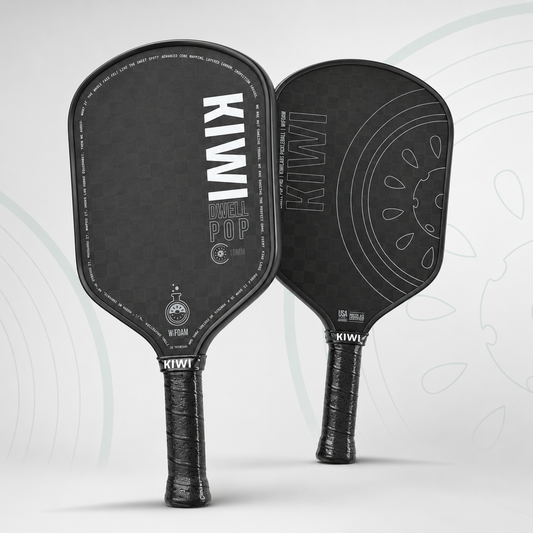
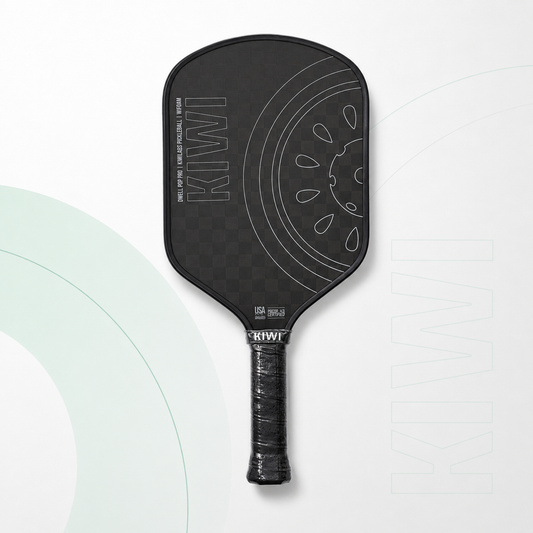
Kiwi Labs Pickleball is built around that exact idea: modern materials and advanced paddle technology should be accessible to players who care about results, not inflated price tiers. Whether you prefer a forgiving all-court paddle or a thermoformed, raw carbon, full-foam option with more pop, the right fit should feel like an upgrade in your hands, not a stretch in your budget.
Before you buy, name the one part of your game you want to improve most. Then choose the paddle construction that supports it. Your next paddle should earn its price every time a reset lands softly, a roll dips at your opponent's feet, or a drive finally carries the pace you intended.