


Thermoformed Paddle Review for Competitive Players

A useful thermoformed paddle review should tell you more than whether a paddle feels powerful on a few clean drives. The real question is whether that power stays playable when you are defending hard, resetting a fast ball at the kitchen line, or trying to keep a third-shot drop out of the net. Thermoformed paddles can be a major upgrade, but they are not automatically the right fit for every player.
They have earned their reputation because modern thermoforming can bring more stability, a larger usable sweet spot, and more put-away potential than many traditional paddle builds. It can also produce a firmer, livelier response that asks more from your hands. For players who want better performance without paying legacy-brand prices for a logo, understanding that trade-off matters.
What a thermoformed paddle actually is
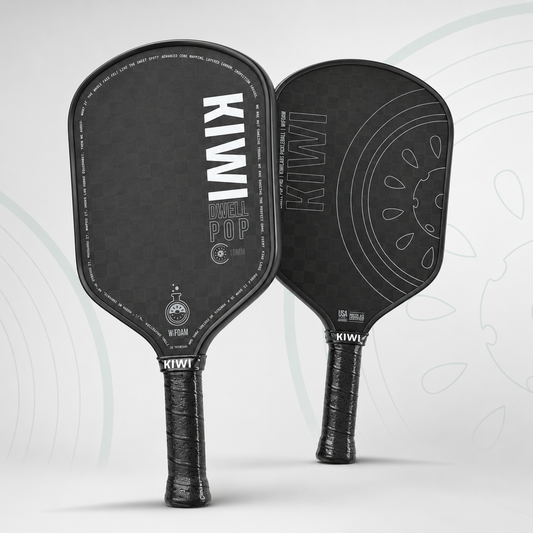
Thermoforming is a construction process, not a single paddle spec. In broad terms, the paddle is assembled under heat and pressure so its carbon fiber face, core, and perimeter structure become a more integrated unit. Many thermoformed paddles also use foam around the edge of the core and a carbon-wrapped perimeter.
That construction changes how the paddle handles impact. Instead of feeling hollow or unstable when you contact the ball near the outer edge, a well-built thermoformed paddle tends to feel more connected and solid. The frame is better supported, which can help the face resist twisting on off-center contacts.
This is why thermoformed construction has become such a talking point among intermediate and competitive players. It is not marketing magic. The technology can create meaningful gains in stability and usable forgiveness. But the details still matter: core thickness, foam amount, face texture, shape, swing weight, and handle length all affect the final result.
Thermoformed paddle review: where the performance shows up
The best way to judge a thermoformed paddle is by the shots that expose weak equipment. Everyone looks good when they strike a waist-high forehand in the middle of the face. A paddle earns its place when the point gets fast, awkward, and messy.
Power and depth from the baseline
Thermoformed paddles are often associated with power, and that reputation is fair. The firmer perimeter structure can help the paddle transfer energy efficiently, especially on serves, drives, overheads, and aggressive counters. You may notice easier depth on returns and more pace on balls that you do not fully swing through.
For an advancing player, that extra output can create a real advantage. A deep return can keep opponents from attacking early. A controlled drive can earn a weaker fifth shot. A counter that gets through the middle can change a hands battle immediately.
The catch is that not every thermoformed paddle feels the same. Some are built for maximum pop and can launch the ball quickly off the face. Others prioritize dwell time, using their construction to create stability without making every touch shot feel explosive. If you already struggle to keep drives and counters inside the lines, do not assume the hottest paddle will improve your game.
Spin that serves a purpose
Raw carbon fiber faces and textured carbon surfaces are common in this category for a reason. They can grip the ball well enough to produce shape on serves, dipping drives, rolling volleys, and cut dinks. A thermoformed paddle will not manufacture technique, but it can give a player with a brushing swing more confidence to use spin aggressively.
The most useful spin is not always the biggest number on a spec sheet. It is the spin that helps your ball land where you intended. A heavy topspin serve that pulls an opponent off balance, a drive that dips at their feet, or a sharp crosscourt dink can create better decisions on the next ball.
Look for a face that feels consistent across the usable hitting area. If spin disappears when you catch the ball slightly toward the edge, the paddle may be less forgiving than its marketing suggests.
Stability and sweet spot size
This is where thermoforming can feel different from an older or entry-level paddle. At the kitchen line, a stable paddle gives you a better chance of absorbing pace without the face opening up. On a block or reset, that can mean the ball stays low instead of floating high enough for an easy put-away.
A larger effective sweet spot also helps during fast exchanges. It does not mean every mishit becomes perfect. It means contacts away from the center are less likely to flutter, twist the paddle, or die short. That is a feature players feel immediately when defending body shots and reacting to rapid-fire volleys.
Still, do not confuse a stable frame with a soft feel. Some thermoformed paddles are stable but firm, particularly in thinner cores or power-focused elongated shapes. If your game depends on delicate dinks and soft resets, spend as much time evaluating touch as you do evaluating overheads.
The trade-offs buyers should know
A strong review should not pretend thermoformed construction has no downside. The same responsive feel that makes a paddle dangerous on a speed-up can make it less forgiving for players with inconsistent touch. If you are used to a plush, muted paddle, a firmer thermoformed model may initially feel like it sends the ball too far on drops and dinks.
Swing weight is another factor. Perimeter reinforcement and elongated shapes can create excellent plow-through, but they can also make the paddle slower to maneuver. Players who rely on quick hand battles, compact backhand counters, and rapid grip changes may prefer a standard-shaped paddle or a build with more manageable swing weight.
There is also a learning curve. A lively face rewards clean mechanics, but it can punish a rushed punch volley or an overly big backswing at the kitchen. That does not make the paddle bad. It means the construction should fit the player, not just the latest trend.
Who should choose a thermoformed paddle?
Thermoformed paddles make the most sense for improving intermediates and competitive players who want more stability, spin, and controlled offense. They are especially compelling if you have started hitting consistent drives, can recognize attackable balls, and want a paddle that holds up when points speed up.
They can also be a smart choice for recreational players who simply want more forgiveness on off-center hits. In that case, avoid chasing the most powerful version available. A thicker core and an all-court setup are often easier to control while still delivering the stable, connected feel that makes thermoformed paddles appealing.
Beginners should be more selective. A thermoformed paddle is not too advanced for a newer player, but a very hot model can make basic touch harder to develop. A balanced paddle with a large sweet spot will usually support learning better than a power-first paddle that turns every compact swing into a launch.
How to compare models without getting fooled by specs
Start with your current frustration. If your paddle twists on blocks, prioritize stability and a generous sweet spot. If your drives lack depth, look for enough pop to help from the baseline. If your drops sail long, focus on control, core thickness, and a face with usable dwell time rather than raw power.
Then consider shape and feel. Elongated paddles can offer reach and leverage on serves, but may carry more swing weight. Standard shapes can feel quicker in hand battles and often place the sweet spot closer to where many players naturally strike the ball. A 16 mm core generally offers more control and a softer feel than a thinner build, though design choices can change that outcome.
Finally, judge value by construction and on-court results, not price alone. Premium materials, carbon faces, perimeter foam, and thoughtful tuning should not require an inflated price tag. Kiwi Labs Pickleball builds around that idea: players deserve modern paddle technology that improves spin, control, and confidence without treating high performance like a luxury category.
A thermoformed paddle is worth considering when its feel matches the shots you want to hit more often. Choose one that helps you stay calm in the soft game, stable under pressure, and dangerous when the right ball arrives. That is a better test than any buzzword on a product page.